
DECISION GUIDE · DAYS BEFORE STOPS
A seven-day itinerary is easy to picture as seven complete sightseeing days. In reality, a late arrival, car pick-up, supermarket stop, early departure and car return all sit on the same calendar. The most common disappointment is not missing one attraction; it is saying “hurry up” every day, until even the black sand beach or hot spring you most wanted to see becomes little more than a car park, a photo and the drive back.
ICENAVI DECISION FIT · TRIP LENGTH
Trip length is not an attraction quota; it is what each night can protect
These scores measure how well your usable nights can absorb the South Coast, Ring Road, accommodation stops and fixed activities. They are not an official itinerary ranking; recheck flights, roads, seasons and operating dates.
Subtract arrival, car pick-up, car return and an early flight first; then you can see what three, five, six and seven nights can each realistically carry.
Four to five nights are enough to make the South Coast the main route, choosing between Vík, waterfalls, black sand beaches and Jökulsárlón by the number of nights available, without promising yourself a Ring Road.
Six nights may be enough to drive Route 1 all the way around, but long transfers take away stops, rest and bad-weather alternatives first; being able to finish the drive is not the same as enjoying it.
Seven nights begin to give you sensible accommodation stops, but Snæfellsnes, the Westfjords and Lake Mývatn still require extra nights; they are not included automatically.
In winter, with an ice cave, young children or a dislike of moving bags, shift towards the cautious plan. A fixed meeting time takes away a night’s flexibility; if you have not decided how many activities to lock in, read the first-time Iceland activity booking limit before allocating your usable nights.
The right number of days is not simply the longest one. Protect the nights you least want to lose, then let the next page take care of the route.
Turn “days” into usable nights before you choose a route
Look at the flights before looking at an itinerary map online. A day when you land in the afternoon or evening usually covers luggage, car pick-up, water and the first night’s accommodation; an early departure requires fuel, the rental-car process, luggage and the terminal. These two calendar spaces still matter, but they serve a different purpose. Treat them as ordinary sightseeing days and your itinerary starts owing time from day one.
I would write down four answers first: will you collect a car after landing, will you return it before departure, where does the fixed activity meet, and how many nights can actually be moved around? Until that is clear, there is no need to debate clockwise versus anticlockwise around Iceland. If your accommodation plan is still hazy, how to divide Iceland’s accommodation nights separates arrival, transfer and departure nights; it needs doing before searching for the cheapest hotel every night.
| Usable nights you really have | Protect this scope first | The regret most likely at this length | Read next |
|---|---|---|---|
| 3 nights Usually 4 calendar days | Reykjavík base plus the Golden Circle, or the western South Coast plus one night in Vík | Trying to fit Jökulsárlón, the Blue Lagoon and the eastern South Coast into the same trip | How to leave room to return on a 4-day South Coast trip |
| 4–5 nights Usually 5–6 calendar days | Go deeper on the South Coast; whether you reach Jökulsárlón depends on the flights and your fourth or fifth night | Assuming one extra night will naturally complete the Ring Road | How to count a complete day in a 5-day plan |
| 6 nights | The Ring Road only has a workable shape in summer, with stable roads and an acceptance of long transfers | Mistaking “we can drive the loop” for “we have time to stop” | Is a rushed 6-day Ring Road worth it? |
| 7 nights or more | Use the Ring Road as the main route, then decide whether to give nights to Snæfellsnes, the East or the North | Assuming seven nights include every detour and bad-weather backup | How to allocate 6 nights across 7 days; if you are considering one more night, read the time trade-off between 7 and 8 days |
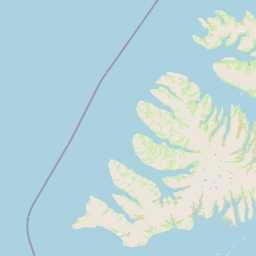
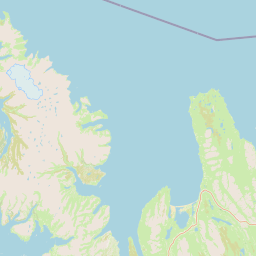
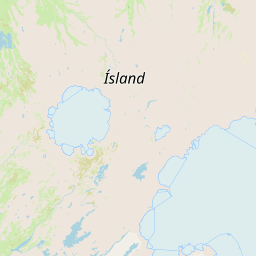
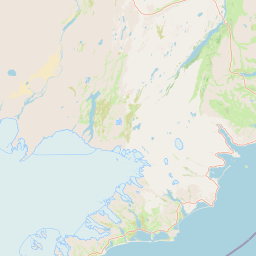
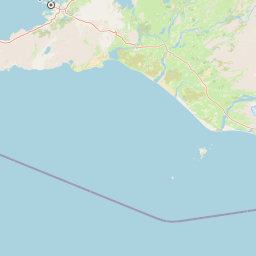
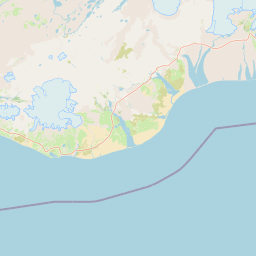
Put the names back on the actual geography and the difference becomes clearer: Vík is only the early part of the South Coast; Jökulsárlón, Höfn, the East, Lake Mývatn and Akureyri do not line up for one afternoon. The points below use real coordinates on an Iceland base map, so you can see which accommodation areas the Ring Road actually crosses instead of mistaking a circle on a map for a one-day journey.
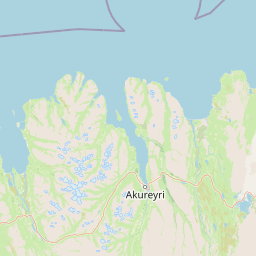
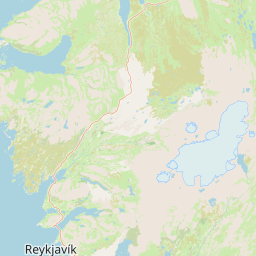
Four days is a route choice, not a miniature Ring Road
For a trip of around three nights, the most comfortable approach can feel slightly disappointing: choose one main route and save the other for next time. To keep driving down, stay in Reykjavík and choose the Golden Circle or a day tour from the city; to see black sand beaches and waterfalls, give one night to Vík, but do not also demand a calm return to the airport after visiting Jökulsárlón. On a map it looks like one line. On the ground it includes parking, paths, meals, wind and changing light.
This is not a timid version. Keeping the South Coast to two days and one night gives you a chance to pause between attractions instead of using a waterfall as a motorway service station. If you are wondering whether one night in Vík is worthwhile, read the accommodation and farthest-point trade-off for two days and one night on the South Coast; it answers the same time question one step further on: where will you sleep tonight?
Five or six nights adds options—and new ways to overfill the plan
The best use of an extra night is usually breathing room, not another early start. A five-day, four-night version can cover the South Coast more completely, or keep some open space for the Blue Lagoon and Reykjavík; still, work backwards from the final night. If day five is an early flight, staying in Vík and returning to Keflavík the night before is usually not “efficient”; it moves the risk onto flight day.
Six nights is the point where honesty matters most. You can complete Route 1, but there is rarely room for Snæfellsnes, the Westfjords, a long hike and leisurely dinners every night. Visit Iceland lists the Ring Road as 1,322 kilometres and recommends at least seven days; that does not mean six days is absolutely impossible. It means that with six, you should know that you are trading away time to stop and adapt. If you have not decided whether to drive or would rather move less luggage, how to arrange five to seven days without a car offers a genuinely different framework.
Seven nights gives the Ring Road a workable shape
Seven nights is not a luxury version of the Ring Road; it is the point at which each night can begin to do a sensible job. The South, East, North and West can each set up the next day without returning to the same road every night. Even then, Snæfellsnes, the Westfjords, Lake Mývatn and Húsavík are not quick side trips. Adding them means driving another stretch of Iceland, not stopping for ten minutes beside Route 1. If your answer has become nine calendar days, read the nine-day Snæfellsnes trade-off table, which deals only with whether the one extra night should go to the West; at ten days, read the recoverable buffer night in a 10-day Iceland trip.
If children are joining a seven-night trip, the number of days does not automatically grant permission to drive the Ring Road. Divide each day into arrival, long transfer, fixed activity or recoverable day first; then you can see which night is genuinely buying time for the family. The shorter-tomorrow test for a seven-day family trip checks whether your accommodation can still handle a late start, rain or a changed activity time. With older travellers, bring the cost of getting in and out of the car, toilets and luggage into the plan earlier; the road pace for travelling with older adults reallocates driving, bases and day tours from that perspective.
The useful question at this point becomes which area deserves an extra night, rather than how many names you can still fit today. The North links Akureyri and Lake Mývatn; the southeast affects whether you continue east or return to Vík after Jökulsárlón. With seven days but only one main route in mind, read whether a seven-day self-drive should choose the South Coast, Snæfellsnes or the Ring Road; it turns “see a lot” into a route decision. If you have already chosen the Ring Road, compare how direction affects the first two nights; once the direction is set, use whether to head east or return to Vík after Jökulsárlón to settle the actual overnight stop.
Season and fixed bookings quietly remove time
Summer’s long daylight hours do give you more room, but they do not shorten the distances; in winter, roads, wind and light need to be part of the itinerary. SafeTravel also warns that Iceland’s weather and road conditions can change quickly, and advises checking current conditions before driving. This is not a safety sentence to paste into the footer: when six nights appear in a winter plan, treat them as “South Coast plus a buffer”, not “just enough for the Ring Road”.
Ice caves, snorkelling and full-day tours also change the answer. They are not a square on an attraction list; they have meeting times, a night before and after, and cancellation terms. If an ice cave is the centre of the trip, read ice-cave season and flexible dates first; if the Blue Lagoon is fixed, put it back into the arrival-day or departure-day comparison instead of forcing it in after the hotels are booked.
A practical way to choose: decide what you are willing to leave out
If black sand beaches and a slower South Coast are the things you least want to lose, four to five nights are enough for a complete trip. If Jökulsárlón, the North and the road itself matter most, take seven nights as the starting point. If you simply do not enjoy long drives every day, a Reykjavík base with one or two good day tours may give you as much as a hurried Ring Road. Iceland is not an exam; you do not have to answer every question.
Only then return to booking. Once you know which version you are taking, confirm whether a 2WD or 4WD fits the route, whether each night’s accommodation is in the right direction, and when fixed activities meet. If you are still stuck on a navigation time that “doesn’t look long”, the real time budget for daily driving in Iceland adds stops, activities, check-in and buffer. That order removes a lot of regret built around something that looked “on the way”.
Related reading
If you have four days or three nights, go straight to a 4-day Iceland South Coast itinerary; it puts the return journey and one night in Vík on the same timetable. With five days, the 5-day version deals with where the extra night should go. If you have only three days, do not force a four-day plan into one fewer night; the first-and-last-day trade-off for a three-day Iceland trip removes flights and airport transport first, then chooses the one complete outdoor day worth keeping.
More reading
If you have not decided whether to drive, use the decision order for a first Iceland independent trip to line up flights, car, accommodation and activities; if the South Coast is confirmed as your main route, return to the South Coast destination page and divide it by farthest point and accommodation stop.
References
- Visit Iceland: The Ring Road (the official planning note on Route 1’s 1,322-kilometre length and at least seven days; adjust it to actual conditions before departure).
- Visit Iceland: Planning a trip to Iceland (official trip-planning gateway).
- SafeTravel: How to Drive in Iceland (driving guidance on changing current weather and road conditions).
- OpenStreetMap contributors (the geographic base map for the Route 1 accommodation-stop locations in this article).
Q&A | Questions to settle before departure
Can you drive the Ring Road in five nights?
You might complete it, but finishing is not the same as enjoying it. Subtract arrival, the car hand-back, short daylight and fixed bookings before choosing a deeper South Coast route or a quicker loop.
What should you cut first when the trip is too short?
Remove detours and cross-region backtracking first. Keep one proper outdoor day, then protect accommodation that can still be changed if the weather turns.
References
Recheck flights, roads, activities and accommodation terms for your travel dates; the official source list in the article remains available above.