
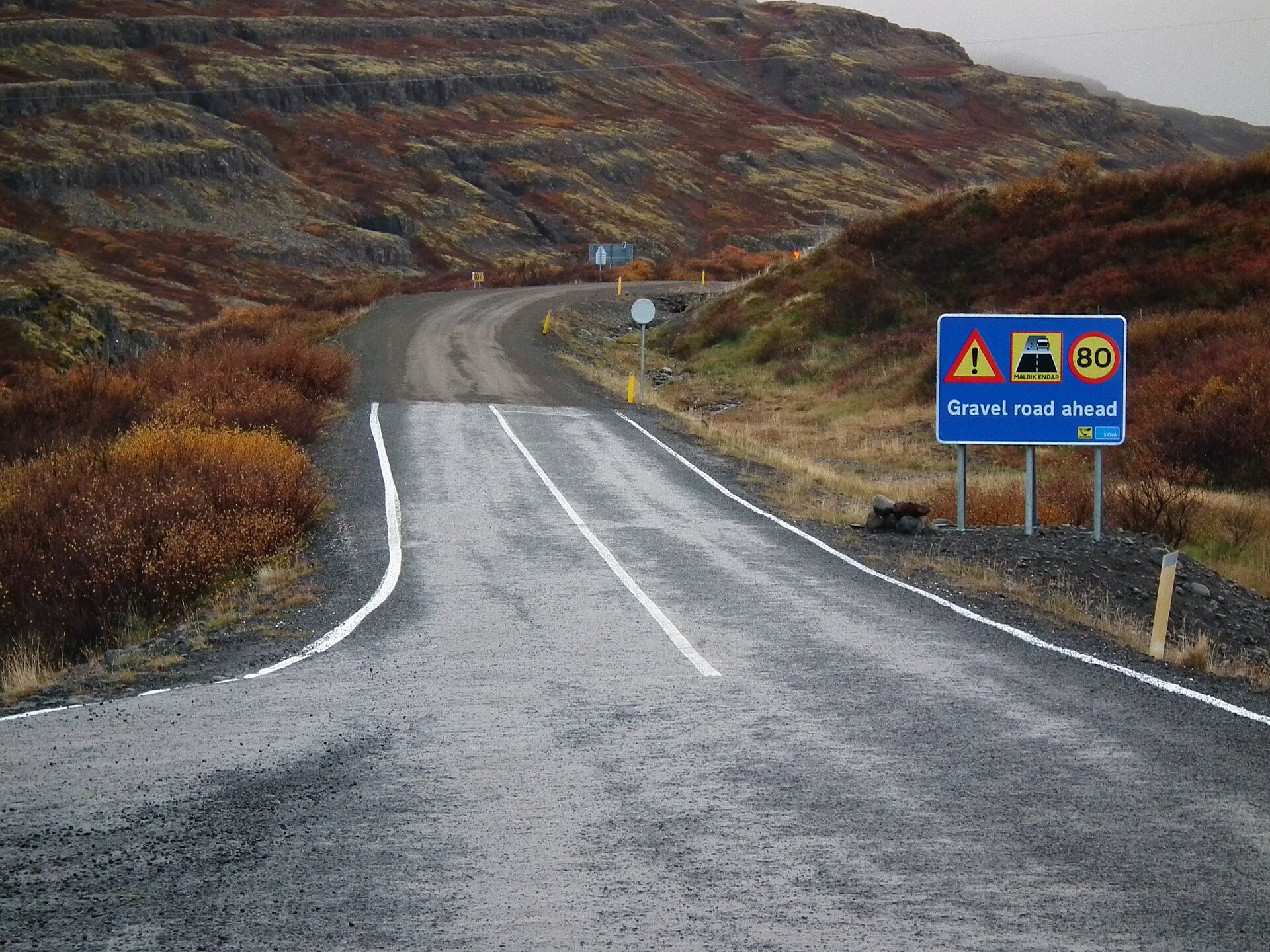
Treat the surface and the contract as separate problems
Slow before asphalt turns to gravel, not after the tyres begin to wander. Leave extra space behind the car ahead and reduce speed before oncoming traffic so loose stones have less force. Before departure, save the rental agreement sections covering Gravel Protection, glass, tyres, underbody damage and water crossings. A gravel transition can take away grip, and speed can make the vehicle unstable; the contract does not promise a “safe speed”.
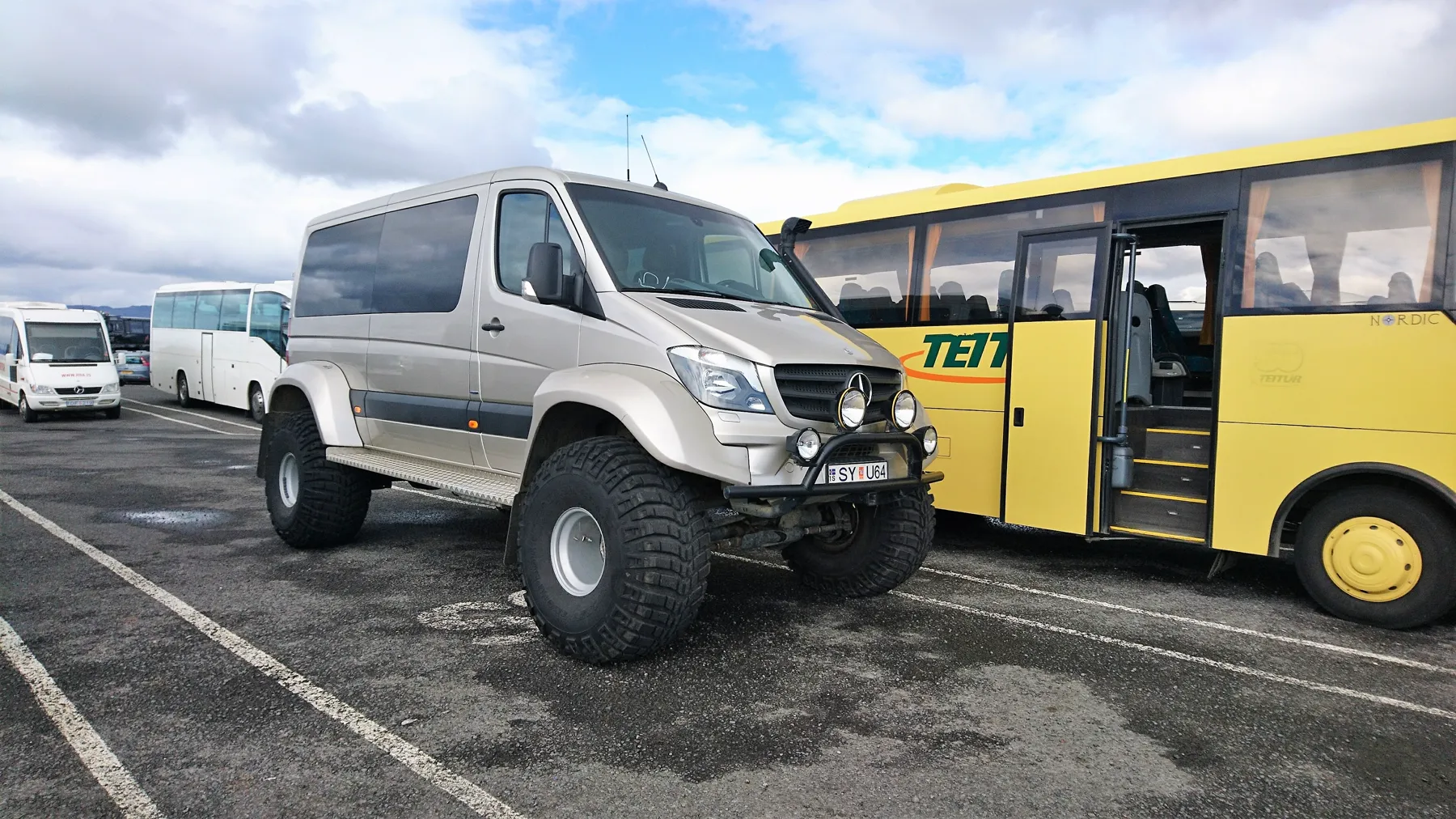
ICENAVI DRIVE FIT · GRAVEL ROADS
What can the vehicle and the cover actually solve?
These scores are editorial judgements for gravel-road decisions, not rental-company ratings. Recheck the surface, speed, following distance, road access, glass and underbody terms, and weather for your departure date.
The shift from asphalt to gravel, wheel ruts, standing water and loose stones call for early, smooth deceleration and gentle steering. Do not let the minutes remaining on a navigation app override what you can see on the road.
If you can see stones being thrown up by the tyres ahead, move farther back. When vehicles meet, use the available width and your sightline to decide where to yield instead of forcing the car onto a soft edge to maintain speed.
Gravel Protection, Windshield, Tyres, Underbody and water damage are often handled separately. The terms from one supplier cannot be applied to every rental company.
SUV, hybrid and 4x4 labels do not grant road access. Confirm that your vehicle class may legally use the F-road, gravel branch road and insurance scope you intend to take.
When strong wind, blowing dust, standing water or driver fatigue appears, stop and check official road information, remove a branch road or change the overnight base. Skipping one stop can still be the complete decision.
An ordinary gravel section may be manageable when the conditions are clear. Once road access, visibility, distance or cover becomes uncertain, the benefit of continuing may no longer justify the exposure.
When many people meet gravel for the first time, the first reaction is not fear but: “The navigation says 18 minutes, so we can just keep going.” Someone in the car may be looking for the next attraction while the driver suddenly hears stones striking the wheel arch. At that moment, the useful skill is not memorising a kilometre limit. It is recognising that the road has changed: the surface is loose, the sightline is narrower, the vehicle ahead may throw stones backwards, and braking and steering need to begin earlier than they would on a smooth road.
Ten seconds before the asphalt ends: make these four moves
- Ease off in a straight line.Let the vehicle settle before reducing speed gently; do not stamp on the brakes while entering a bend.
- Increase the gap ahead.If you can see stones being thrown up by the vehicle in front, you are still too close.
- Keep the steering steady.Gravel creates small movements through the wheels. Avoid large corrections to chase every stone or rut.
- Save the view for a proper stopping place.SafeTravel advises leaving the road and stopping in a safe location if you want to take photographs or look at the scenery. Crawling along the roadside is not a photography plan.
These steps are simple; the one most easily forgotten is the first. The sense of speed from the asphalt continues into the gravel while the available grip has already changed. When someone in the car says “just go a little slower”, I would translate that as: look at the surface now, and put the phone away.
| What you see | What to do | Do not try to compensate by | Why |
|---|---|---|---|
| A sign reading Gravel road ahead | Ease off in a straight line, slow steadily and increase the gap | Braking sharply at the entrance to a bend | Grip may fall first at the transition |
| The vehicle ahead is raising obvious dust | Leave a much longer gap, and wait if necessary for the dust to clear | Following closely so you “cannot get lost” | Stones and visibility can deteriorate at the same time |
| An oncoming vehicle is about to pass | Slow early and yield according to the road width and sightline | Cutting sharply onto a soft shoulder | The shoulder may not support the wheels and vehicle weight |
| Deep ruts, standing water or a pile of loose stones | Keep the steering smooth and decide whether it is safe to cross | Making a large steering movement to avoid slowing down | A large correction can destabilise the vehicle |
Following distance is not courtesy; it is part of your windshield budget
On gravel, following too closely may damage the windshield before it leaves an obvious mark on the bodywork. The tyres of the vehicle ahead throw stones backwards. If you are in their path, the stones do not disappear simply because the rental company offers Gravel Protection. Slowing down and increasing the gap are driving decisions; cover deals with responsibility after an incident. One cannot replace the other.
The same applies when vehicles meet. On a narrow road, use the width, sightline and shoulder to decide which vehicle has the better place to yield. Do not force both cars towards a soft edge just to preserve your speed. If the other vehicle is already close, it is better to stop steadily where you can see the surface than to steer and guess how deep the shoulder might be. Icelandic road markings and shoulders are not continuous in the way they are on urban roads. A road can look wide in a photograph and feel entirely different from inside the car.
Glass, paint, tyres and underbody: treat four types of loss separately
Rental pages often compress several protections into a handful of abbreviations, which can lead to a dangerous conclusion: “I bought insurance, so gravel is no longer my concern.” Blue Car Rental’s terms provide a specific example: under its terms, Gravel Protection may address paint, glass or light damage caused by gravel, while a cracked windshield may still carry an excess. Tyres, wheels, underbody damage, water crossings and driving on prohibited roads may have separate exclusions or responsibilities. These are the published terms of one supplier and should not be applied to Avis, Hertz or any other rental company.
| Damage or risk you see | Terms to look for | Most common misreading | Evidence to save before departure |
|---|---|---|---|
| Stone marks on the paint, front end or lights | The scope of Gravel Protection / GP | Treating GP as full cover for every road-related loss | Screenshots of the payment page, rental terms and excess |
| A crack or break in the windshield | Windshield / glass and excess / deductible | Assuming glass and paint always have the same excess | Photographs of all four corners of the glass and existing cracks at pickup |
| Damage to tyres, wheels or underbody | Tyres, wheels, underbody and roadside assistance | Assuming that because the car can drive on gravel, cover automatically includes it | Vehicle restrictions, road access and incident-reporting instructions |
| Sand, volcanic ash or wind pulling open a door | Sand and ash, wind damage and SAAP | Treating flying gravel and a sandstorm as the same incident | The supplier’s definitions and same-day warnings |
| An F-road, river crossing or leaving a marked road | Road restrictions, F-road, water damage and off-road | Using extra cover as a substitute for vehicle or road access | The rental company’s vehicle permissions and road-opening notices |
For a fuller explanation of cover, return to Iceland rental-car insurance and exclusions. That guide explains how cover and excess are separated; this page focuses on how to reduce the chance of an incident. If your real situation is dry ground and strong wind on the South Coast, do not treat it as another gravel section. Check the pre-departure warning process for blowing sand. If you are considering an F-road, read Highland 4WD vehicles and road access as well; do not use the name Gravel Protection as a substitute for the correct vehicle and road permission.
ICENAVI’s gravel-road risk board: should you continue today?
A gravel surface does not automatically mean you must turn around. But when several warning signs appear together, the benefit of continuing begins to fall below the possible cost to the vehicle and the day’s plans. Stop somewhere safe and use the table below as a checklist; there is no need to turn the decision into a test of courage.
| What has appeared | Recommendation | Next step |
|---|---|---|
| It is a short section, the weather is stable, the rental terms allow it, and the driver can read the surface clearly | Proceed slowly | Reduce speed, increase the gap, and stop only in a safe place |
| The gravel section is longer than expected, but the road and visibility ahead remain clear | Recalculate the time rather than rushing to catch up with the navigation app | Remove the next optional stop so the overnight base remains within an acceptable arrival time |
| Strong wind, blowing dust, standing water or ruts prevent you from holding a steady line | Stop in a safe place and pause the journey | Check official road and weather information; turn back or change accommodation if necessary |
| The rental terms prohibit the road, or you do not know whether it is an F-road | Do not enter | Choose an authorised road, shuttle or guided excursion instead of guessing at the junction |
| The driver is tense, passengers are urging you on, or the windshield already has a crack | Put safety and incident reporting before the attraction | Stop, record the condition, contact the supplier and rearrange the day’s route |
SafeTravel’s road pages remind drivers to recheck weather and road conditions. Umferdin’s road information is updated using input from road-management staff, contractors and measuring equipment, with update periods that vary by season. These are departure-day sources, not background information to ignore because a navigation app displays a route as possible. Google Maps may also lag behind closures or impassable roads, so I would not replace the official pages with a purple line on a phone. Once a gravel section ends and you find a safe place to stop, the next risk may be the order of opening doors and parking in crosswinds. Do not let “we are already parked” create a new lapse in attention.
Route 1, attraction branches and the Highlands: do not treat every gravel road alike
Roadworks on Route 1 or another major road: focus on slowing down, maintaining distance and watching temporary signs. The section may be short, but traffic and construction vehicles can suddenly increase the amount of loose stone. Do not keep your previous speed simply because the last five minutes were on asphalt.
A branch road to an attraction: include parking, walking and the return journey in your decision. The road to the east side of Dettifoss on Route 864, some Westfjords roads and remote viewpoints all involve more than the gravel surface itself. The overnight base and the weather may determine whether the detour makes sense. The access decision for both sides of Dettifoss separates Routes 862 and 864 by road and season; do not decide from a waterfall photograph alone.
An F-road or Highland section: road access, vehicle class, seasonal opening and water-crossing restrictions must be established first. Driving technique is only the final layer. To understand when ordinary gravel-road experience should not be carried into the Highlands, see the Iceland Highlands destination gateway. If your plan is simply to travel reliably on Route 1 and the South Coast, there is no need to rent the largest vehicle because of one Highland photograph.
ICENAVI · The final gravel-road vote
If you need “we should be fine if we go slowly” to persuade yourself, the answer is usually to stop and check.
Good gravel-road driving is not about completing every section. It is recognising when following distance, cover, road access and today’s timetable no longer work together. Skipping one branch road can leave the windshield intact, the driver rested and tomorrow flexible. That is not a failed trip.
Before pickup, screenshot these ten details
- How does your rental company define Gravel Protection? Are paint, glass and lights treated separately?
- What is the excess for a cracked windshield? Is it different from the paint excess?
- Where are tyres, wheels and underbody damage listed in the terms?
- Are sand, volcanic ash and wind-blown doors covered under Sand and Ash or Wind damage?
- Does the vehicle class you reserved allow the roads you intend to use, especially F-roads or Highland branches?
- At pickup, have you photographed the glass, front end, wheel arches, tyres and visible areas of the underbody?
- Where are the nearest safe stopping places and fuel stations before and after the gravel section?
- If a star-shaped crack appears in the glass, does the supplier want a photograph, a phone call or immediate cessation of driving?
- If wind, visibility or road warnings worsen that day, which attraction can you remove first?
- If you turn around, which accommodation tonight can still accept a late arrival or cancellation?
The point of this checklist is not to turn every stone into a warning. It is to settle in advance the questions that would otherwise make you panic at the roadside. For a daily calculation of driving time, see the Iceland daily driving-time guide. If you will be on the road soon after landing, read KEF pickup and the first drive first. Once you know that the day does not leave enough time to cross a gravel section at a smooth, controlled pace, changing accommodation or choosing a day tour is usually more direct than upgrading to a larger vehicle.
Common questions: do gravel roads always require a 4WD vehicle?
Do gravel roads always require a 4WD vehicle?
No. Ordinary gravel roads and F-roads are different categories. The vehicle class, rental restrictions, weather and surface together determine whether the road is appropriate; SUV or 4x4 lettering alone is not enough.
When is a gravel road most likely to damage a vehicle?
Common trouble spots include the sudden transition from asphalt to loose gravel, following too closely and stopping sharply at the roadside. Ease off early, increase the gap and stop only in a legal, safe place.
Can I drive confidently after buying Gravel Protection?
No. Glass, tyres, underbody damage, water crossings, sand, ash and road restrictions may be listed separately. Check each item against your own rental agreement.
Related reading
Separate the road from the cover
Iceland rental-car insurance: glass, tyres, underbody and sand exclusions2WD or 4WD: gravel roads and F-roads are different questionsKEF pickup: vehicle inspection and the first driveMore reading
Put the gravel section back into the real itinerary
How to read Iceland’s road-condition websitesDaily driving: navigation time is not travel timeSelf-drive or day tour: fallback options for long roadsReferences
References
Road, construction, weather and rental terms change. The following sources were checked on 5 September 2026; before departure, rely on same-day official information and the rental agreement you sign.
- SafeTravel Iceland | How to Drive in Iceland: slowing down before asphalt becomes gravel, gravel-road technique, stopping to view scenery and map restrictions.
- Icelandic Road and Coastal Administration | Pavement: road-map classifications for asphalt, gravel and tracks.
- Traffic Info | Definitions / About: sources of road-condition information, update periods and the limits of automated measurements.
- Blue Car Rental | Terms and conditions: examples covering Gravel Protection, glass, tyres, underbody damage, water crossings, sand, ash and road restrictions; these terms cannot be applied to other suppliers.
- Titoine08 / Wikimedia Commons | Gravel road ahead - Road 60 Iceland: source of the hero image, CC BY-SA 3.0. The photograph was taken in 2012 and only illustrates a surface transition and road sign; it does not represent current road conditions or rental-car cover.
