
ICENAVI DRIVE FIT · SAND & ASH
Check that you can stop safely before you commit to driving east
The scores weigh the separate roles of alerts and road data, wind direction and visibility, parking and door control, insurance boundaries, and the flexibility available in your overnight plan. They are not a live forecast or an insurance promise. Recheck the day’s roads, weather, and rental agreement before departure.
Alerts, roads, parking, doors, and rental terms answer different questions. Bringing them into the same departure decision prevents insurance from replacing a safety assessment.
The Icelandic Meteorological Office covers alerts, SafeTravel covers travel safety, and Umferdin covers road information. None of these pages alone guarantees visibility from inside your car.
Clear skies do not mean a black-sand stretch is stable. The threshold for continuing is being able to see the road, shoulder, vehicles ahead, and the next safe place to stop.
If you cannot park safely in a legal place, or the wind makes it impossible for passengers to control a door, the viewpoint should not remain a non-negotiable stop.
Check SAAP coverage, the excess, and wind-damage exclusions supplier by supplier. Blue Car’s example cannot stand in for the whole market.
Removing the farthest stop and reaching accommodation near Vík, Kirkjubæjarklaustur, or Skaftafell earlier often protects tomorrow’s fixed plans better than pushing the full distance into the evening.
The easiest time to underestimate blowing sand is often not when you see a dramatic “sandstorm”, but when the sky is still blue and everyone thinks Vík is only twenty minutes away. The dark ground beside the South Coast road can look completely still; then the wind shifts and fine sand skims across the surface. A passenger wants to open the door for a photograph while the driver is also watching the door, oncoming traffic, and the view behind. It is not a cinematic disaster. It is an ordinary parking decision that should never depend on luck.
Check four sources because each answers a different question
| Source | What it can actually tell you | What you must not infer | When I would check it again |
|---|---|---|---|
| Icelandic Meteorological Office alerts | Whether an area has an alert, its level, and the stated impact area | No alert means every road segment is suitable for driving | After breakfast and before leaving the next base |
| SafeTravel travel conditions | Travel-safety advice and an entry point for same-day road and weather checks | Yesterday’s screenshot is permission for today | Before crossing each remote stretch |
| Umferdin road information | Road conditions, notices, measurements, and update times | A map colour equals visibility from inside your car | When changing route, turning around, or moving an overnight stop forward or back |
| Rental agreement and protection page | Which types of sand, ash, glass, and wind damage are included or excluded, and the excess | Buying SAAP makes a closed or unsuitable road acceptable | Before payment, at pickup, and after finding damage |
Umferdin’s “Definitions / About” page also notes that data is updated at different times depending on the season and that automated measurements may contain errors. That matters on a sandstorm day: you are looking at one data point in time, not a guarantee that takes responsibility for your visibility or your doors. If you want to separate road colours, closure notices, and SafeTravel’s role before setting out, this reading order for Iceland road-condition websites is more useful than repeatedly refreshing your navigation app.
Once the South Coast map is open, it becomes clear which night should not be pushed
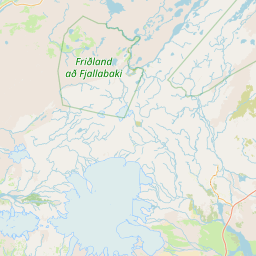
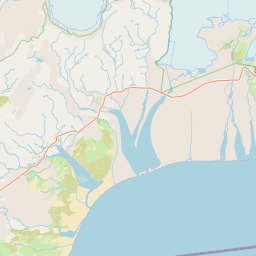
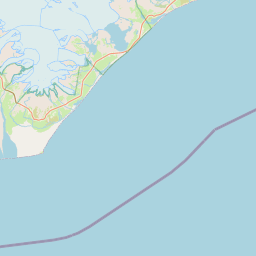
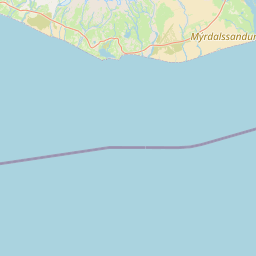
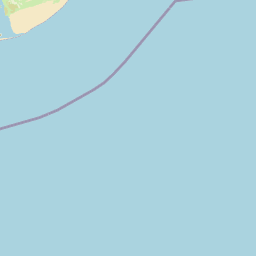
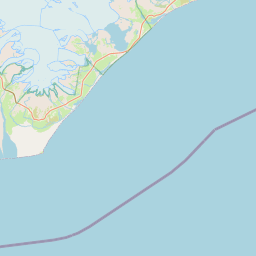
Blue Car’s SAAP information specifically identifies the South Coast, Vík, Skaftafell, and Mýrdalssandur as environments requiring attention. That is the supplier’s risk notice for sand and ash protection, not a forecast for the whole island. The map below places Vík, Mýrdalssandur, Skeiðarársandur, and Skaftafell in their real relationship. It is not a “sandstorm-safe route”. It is a reminder that after Vík, the road continues through long, exposed sections of the South Coast, and your next overnight location changes the alternatives available if you decide to stop.
Response table: spend the first fifteen minutes asking whether you can park safely today
I make the South Coast departure process deliberately plain because the closer you are to leaving, the less suitable memory becomes for filling gaps in your checks. Choose one stop that can be removed without damaging the whole trip, then treat accommodation and fixed activities as limits that cannot simply be extended. If conditions deteriorate halfway along the road, you are removing one item instead of improvising a heroic solution for the whole day.
| Order | Action | If the result worsens | Do not |
|---|---|---|---|
| 1. Check alerts | Note the South Coast area, alert time, and impact description; do not look only at the colour | Put remote stops on the removable list first | Use a friend’s screenshot from last week to argue with today’s data |
| 2. Check roads | Review each road you plan to use in Umferdin and SafeTravel | Treat your accommodation as today’s destination and finish driving earlier | Refresh only the arrival time in Google Maps |
| 3. Check the doors | Will the car face into or away from the wind? Can passengers open the doors safely? Is there legal parking? | Do not get out on the shoulder for photographs; use an official sheltered parking area | Hand a vehicle door over to a gust for one black-sand photograph |
| 4. Check the way out | Decide where you would turn around or stop for acceptable accommodation if visibility or wind worsens | Change the itinerary immediately; the remaining distance is not a test of courage | Wait until you are on a long stretch with nowhere safe to park before discussing it |
“Parking” here does not mean stopping anywhere beside the road. SafeTravel’s driving guidance says to leave the road in a safe place when stopping to enjoy the scenery. If blowing sand means you cannot clearly see the shoulder, vehicles ahead, or the movement of a door, find a genuinely safe place to stop first. You can read this alongside the ten-second gravel-road technique: that article deals with controlling the car when the surface changes; this one deals with whether windblown sand still leaves you a safe place to stop. Once the car is parked and a passenger is preparing to open the door, the next question is no longer about sand data but how to control the door and sequence getting out in a crosswind.
Doors, glass, and paint: three different losses cannot be summed up as “insured”
Blue Car’s public terms provide a useful example, but it must remain specific to Blue Car: SAAP may cover damage to paintwork, windows, lights, plastic, chrome, and wheels caused when sand, volcanic ash, pumice, or other ground material is blown onto the vehicle. Its SAAP page lists an excess of 90,000 ISK and an example price of 1,850 ISK per day. The terms also state that without SAAP, this type of damage may be the renter’s responsibility. Tyres, underbody damage, water damage, and doors blown open by wind must be checked against separate exclusions. Prices and coverage can change; the payment page and the agreement you sign are the final versions.
| What happened | Protect first | Terms to find | ICENAVI assessment |
|---|---|---|---|
| Sand hits the paint or windows | Stop in a safe place and record the time, location, and photographs | Sand and Ash / SAAP, and definitions of exterior and glass | Protection may reduce the financial consequence, but it cannot replace stopping |
| Wind suddenly pulls open a door | The person nearest the door controls it; park where there is sufficient space | Wind damage, door damage, negligence | Protect people and the door first; do not open it on the shoulder for a photograph |
| A tyre, wheel, or underbody is damaged | Stop driving over an uncertain surface and follow the supplier’s accident-reporting process | Tyres, wheels, underbody, roadside | Do not assume coverage from the name SAAP |
| The road is closed or conditions do not suit the vehicle | Turn around, change accommodation, or use organised transport with clear responsibility | Road restrictions, off-road, water damage | No insurance turns a prohibited road into a viable option |
If you are already on the South Coast and see blowing sand before conditions become severe, the most useful action is not to study the excess. Keep everyone inside the car, slow down, increase the distance from the vehicle ahead, and stop in a legal place where visibility is clear. If you need to photograph damage, put the wind direction, door, and road surface after personal safety; no complete photograph is worth exchanging for a bodily injury.
Three outcomes for the day: continue, shorten, or stop
A sand-and-ash decision should not have only two buttons: go or do not go. The middle option is often the most useful on the South Coast: protect your accommodation and tomorrow’s fixed plans, then remove the day’s farthest and hardest-to-reverse stop. Shortening the day is not losing to the weather. It preserves the part of the itinerary you can still use for places that genuinely matter.
ICENAVI · THREE CHOICES ON A SAND-AND-ASH DAY
Windblown sand is enough reason to finish driving early.
Continue: The day’s alerts do not show dangerous conditions, you can see the road and shoulder clearly from inside the car, passengers do not need to open doors in an exposed position, and your rental terms allow the road you are using. Continue slowly and keep time for another check.
Shorten the day: Alerts have not called for a closure, but visibility, wind, or the condition of someone travelling with you has made a remote stop poor value. Remove one black-sand beach or side road and reach accommodation towards Vík, Kirkjubæjarklaustur, or Skaftafell earlier.
Stop: The road is closed, an alert clearly advises against travel, a door cannot be controlled safely, or you cannot stop without obstructing traffic. Contact your accommodation and rental support first; decide afterwards whether the answer is a refund, a date change, or a day tour.
If you originally planned Vík as a mid-route stop and hoped to continue to Jökulsárlón that evening, ask again on a sand-and-ash day: “Do I really need to sleep that far east tonight?” One night or two in Vík examines accommodation buffer; the two-day, one-night South Coast plan lays out the return cost of waterfalls, black-sand beaches, and the glacier lagoon. Checking in early may protect the following day more effectively than buying protection you would never dare use.
Put these eight questions in your phone, not in your head
- What time was the latest road-condition update for the roads we plan to use today?
- Which part of the South Coast does the weather alert cover, rather than the vague phrase “all of Iceland”?
- If visibility drops suddenly, where is the nearest legal parking area?
- Who is checking the sources, and who is driving? Do not hand the phone to the driver before the checks are complete.
- When someone needs to get out, is there enough space and a controllable wind direction around the door?
- Does the rental agreement define sand, volcanic ash, glass, tyres, underbody, and doors separately?
- After removing the farthest stop, which accommodation still makes sense?
- If an activity or hotel cannot be changed, should you cancel one stretch of driving rather than shift the risk onto insurance?
If you cannot answer one of the eight questions, I would shorten the route first. Not every sandstorm causes an accident, but the choice you are really protecting is the ability to stop safely. On departure day, you can decide how much of the South Coast remains only when the road conditions, your vehicle, your companions, and your rental terms have been considered together.
Related reading
Separate the weather risk from the vehicle’s limits
How to choose Iceland rental-car insuranceIceland gravel-road driving: slow down and increase following distance in ten secondsHow to read Iceland road-condition websitesMore reading
Decide how far east tonight should be
One night or two in VíkHow to divide two days and one night on the South CoastHow to rebuild the day when the weather turns without breaking your accommodation planReferences
References
Alerts, road information, rental terms, and prices change. The following sources were checked on 5 September 2026; before departure, use the current official pages, payment page, and rental agreement you sign.
- Icelandic Meteorological Office | Alerts: regional alerts and impact descriptions; an alert does not mean every road is suitable for driving.
- SafeTravel Iceland | How to Drive in Iceland: guidance on rapidly changing weather and roads, stopping in a safe place, and not relying on navigation alone.
- Icelandic Road and Coastal Administration | Definitions / About: road-data update periods, data sources, and possible errors in automated measurements.
- Blue Car Rental | Sand & Ash Protection: the supplier’s risk notices for the South Coast, Vík, Skaftafell, and Mýrdalssandur; SAAP coverage, the 90,000 ISK excess, and the 1,850 ISK-per-day example. These details cannot be applied to other suppliers.
- Blue Car Rental | Terms and conditions: examples of terms covering wind damage, tyres, underbody damage, water damage, road restrictions, and situations without SAAP.
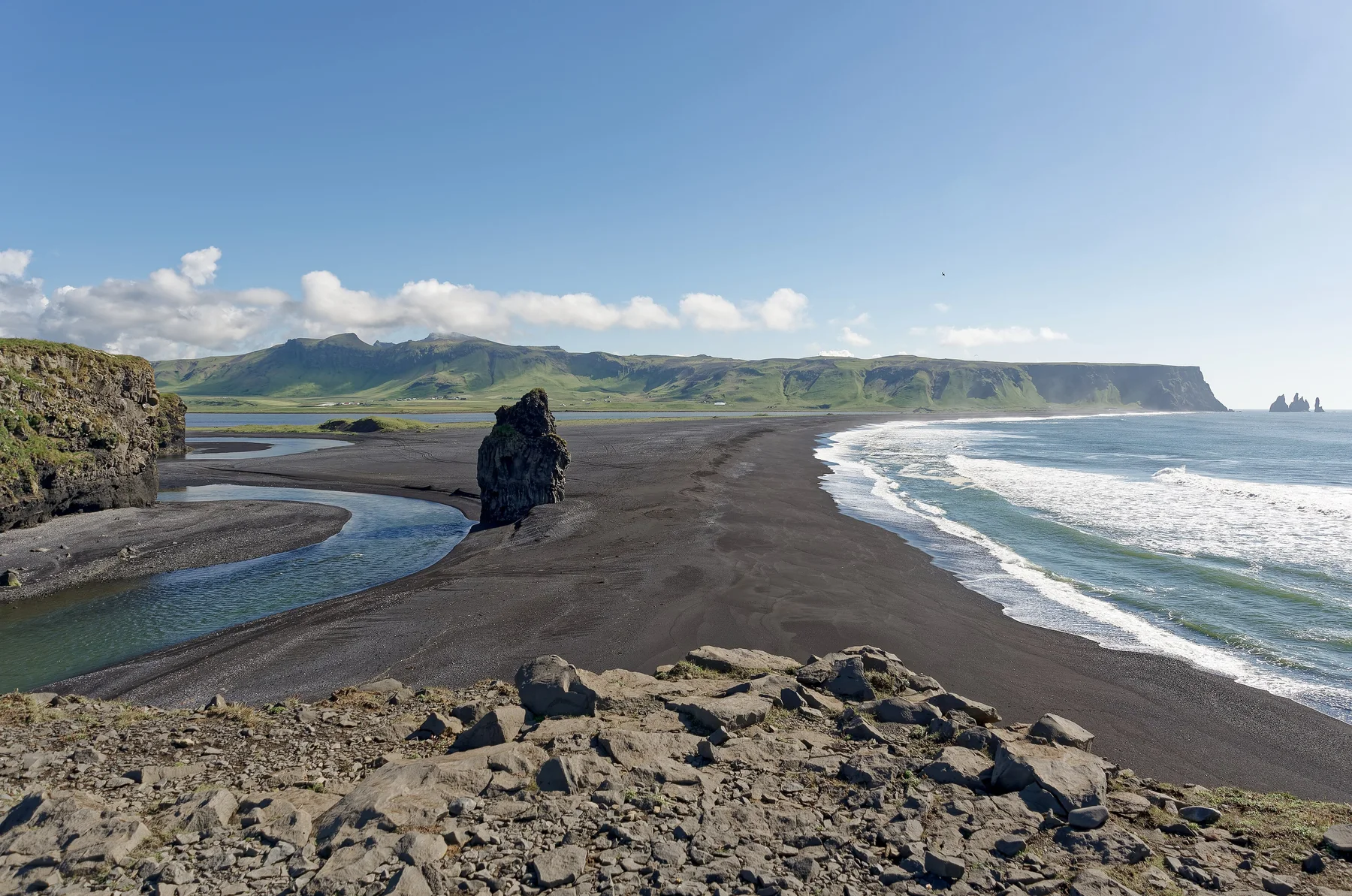
- Hero image: Jakub Hałun / Wikimedia Commons, CC BY 4.0. Photographed in July 2024; it shows a black-sand coast and exposed terrain, not same-day sand, sea, road, or visibility conditions.
- OpenStreetMap: base map and attribution for the South Coast location figure. The four points are included only to explain the relative positions of Vík, Mýrdalssandur, Skeiðarársandur, and Skaftafell; they are not a guarantee of navigation, same-day wind, roads, parking, or insurance coverage.

This page is an L1 transport-decision entry point and does not include a rental-car CTA. Until the supplier, dates, and terms are confirmed, placing a purchase button here would transfer uncertainty to the reader.
Q&A | Questions to answer before departure
If I buy sand-and-ash protection, can I keep driving?
No. Insurance addresses certain losses; it does not make a closed road, poor visibility, or unsafe parking acceptable. Check road conditions and alerts before choosing to continue or stop.
What if the South Coast is windy but the road remains open?
Check visibility, whether the doors can be controlled safely, the shoulder, and the next legal place to park. If any one of these fails, shorten the day’s cross-region drive.