
ICENAVI DRIVE FIT · RING ROAD 4WD
Separate Route 1, side roads and F-roads before choosing the car
These scores consider road type, winter conditions, F-road and insurance boundaries, luggage and fatigue, rental cost and alternatives. They are not a rental-company ranking or a same-day road-access guarantee. Check your route, dates and contract before every departure.
Route 1 does not require a 4WD; an upgrade has a defensible case only when road, season, side roads, luggage and fallback needs all raise the tolerance required.
The vehicle answer for the Ring Road does not carry over to F-roads; the Highlands require separate checks for opening status, vehicle eligibility, water crossings and contract restrictions.
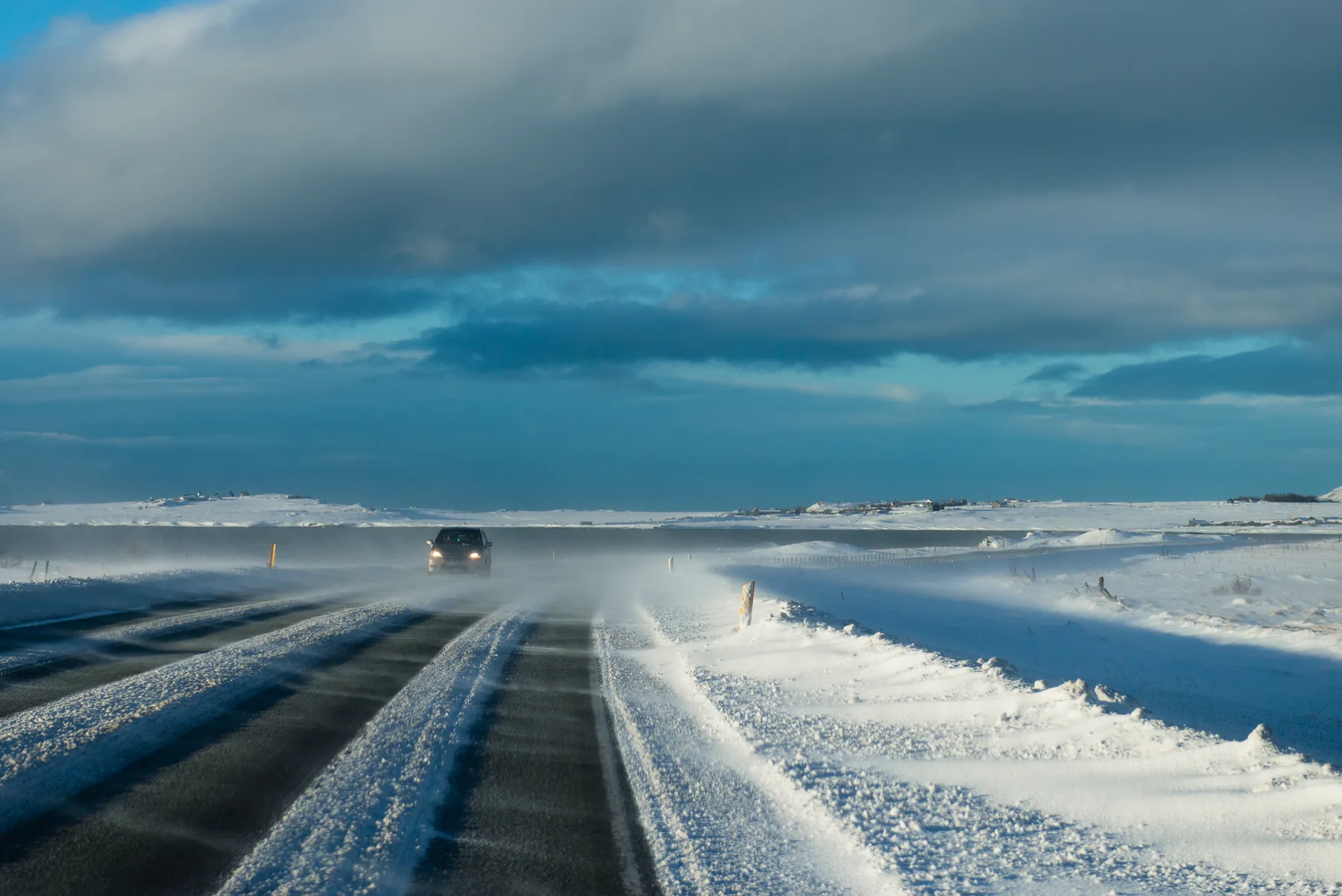
From September to May, elevated roads demand same-day checks of warnings, visibility and closures; a 4WD adds only a little margin when the road is open and the driver remains capable.
A 4WD label does not authorise every Highland road; match the vehicle, tyres, water crossings, gravel conditions and insurance exclusions one by one.
Four people's winter luggage can create boot and rear-visibility problems first. A larger vehicle may help, but shorter drives, a second driver and proper breaks are what reduce fatigue.
An extra night, a larger 2WD, one fewer side road or a driver-led option may buy weather and route flexibility more directly than a 4WD upgrade.
At the rental desk, one question appears again and again: "We are driving the Ring Road, so a 4WD must be steadier, right?" It is a reasonable thought, but it bundles separate problems too quickly. The vehicle requirement for Route 1 in summer, winter conditions on a pass, gravel at a viewpoint, boot capacity and getting back to accommodation before dark are different decisions. Turning every concern into a 4WD can conceal the part of the itinerary that actually needs changing.
Use the existing three-part 2WD/4WD vehicle test as your baseline. This page asks the next question: has the risk of a full Ring Road circuit become high enough to exchange a vehicle upgrade for a little more margin? If you are travelling only the South Coast, the 2WD South Coast route boundary is the sharper guide, because the main South Coast and the northern and eastern passes of a full circuit create different decisions.
A single "Ring Road" label hides at least four kinds of road work
Put Route 1, roadside parking, mountain passes and side roads on one map and the car can look like the only answer. This table separates the jobs. A 4WD becomes worth discussing when the same column grows demanding for your dates and route.
| The real job on the Ring Road | What makes it harder | Where a 4WD may help | What it still cannot replace |
|---|---|---|---|
| Route 1 main-road transfer | Winter snow, crosswinds, closed passes and sustained concentration | More starting and handling margin on suitable open surfaces with low grip | Umferdin conditions, slowing down, turning back and safe parking |
| Gravel side roads to sights | Loose stones, ruts, gradients, parking and rental restrictions | More road choices where the contract allows it and the surface is suitable | Side-road opening status, insurance cover, legal parking or trail conditions |
| Four people and winter luggage | Coats, shoes, food and camera gear fill the boot, leaving the rear seats as temporary storage | A larger contracted vehicle may improve storage and seating comfort | The actual vehicle, luggage capacity and confirmation at pickup |
| Several days of long drives | Fatigue, short daylight, fixed activities and non-refundable accommodation pull against one another | Cabin comfort or a sense of stability may improve, but it is only one factor | Shorter driving days, an extra night, a second driver or cancellation flexibility |
The official answer is clear: Route 1 does not require a 4x4, but passes do not follow your timetable
The Ring Road itself does not require four-wheel drive, yet conditions outside summer still need close attention. Keeping that answer in view prevents the common leap from "Iceland is remote" to "an ordinary Ring Road trip requires a 4WD." In the north, passes such as Holtavörðuheiði, Öxnadalsheiði and Möðrudalsöræfi deserve particular attention from September to May; storms or strong winds can close them even in summer.
That is why I would not declare the vehicle from the month alone. April can bring a clear Route 1 and a snow-covered pass; in August, most of the main road can be comfortable while a scenic spur presents loose gravel, a steep section or a contract problem. The snowstorm stop decision addresses whether to stop today, while winter tyres and pickup equipment asks what evidence the vehicle actually has. A 4WD can add a little surface margin only after both of those questions have a satisfactory answer.
Four situations in which a 4WD is more than reassurance
The list below does not mean one tick should trigger an immediate payment. It turns an upgrade case into something you can check. Pay special attention to the last column: changing accommodation can sometimes solve more than changing the vehicle.
| Trigger | What appears in your itinerary | What a 4WD reasonably does | More effective alternative |
|---|---|---|---|
| Several winter passes | A northern or north-eastern transfer crosses several elevated stretches exposed to snow and wind, with no extra-night buffer | Adds starting and handling margin when officials have opened the road, the vehicle is suitable and the driver is confident | Shorten the day's distance, stay nearer the pass before or after it, and reserve a rescheduling day |
| Several side roads beyond the main route | Your circuit includes Öxi (939), several gravel viewpoints or uncertain surfaces, with clear rental permission | Offers more vehicle choice on eligible gravel roads without treating one spur's surface as the answer for the whole Ring Road | Remove one spur and return the time to Route 1 and accommodation; assess Highland F-roads separately |
| People and luggage genuinely exceed a small car | Four adults, winter clothing, food and camera gear mean a large bag must stay on the rear seat | Improves storage, visibility and long-drive fatigue if the boot and seating evidence for that class is real | Choose a larger vehicle that may not be four-wheel drive, reduce luggage or add a room; first read the basic 2WD/4WD vehicle test |
| Driving ability does not match the route | Your group has not driven on snow or gravel, yet long transfers and fixed activities leave no fallback | Provides only a small improvement; it cannot supply driving experience or rest | Use a shorter route, add a second driver or a night, or hand one section to a driver-led activity |
One combination is easy to overlook. Two experienced drivers, two small suitcases and a summer Route 1 circuit may leave a very thin case for a 4WD. Four adults, four hard-shell cases, a cross-pass transfer in October and a fixed cave-tour meeting the next day create a different problem: it is no longer simply whether a 2WD can move. This is not an argument for the biggest car. It is a way to price the consequences before anxiety makes the decision at the rental desk.
The map's most dangerous illusion: one line cannot show where your fallback disappears
The real OpenStreetMap base layer shows how Reykjavík, Akureyri, Mývatn, Egilsstaðir, Höfn and Vík divide the Ring Road into service bases. It cannot colour an elevated stretch as "4WD required," and it cannot tell you whether it is open today. The pins below are a trip-segmentation tool. If one base-to-base push crosses several passes, ask first whether you can add a night or shorten the leg, and only then whether to upgrade the vehicle.

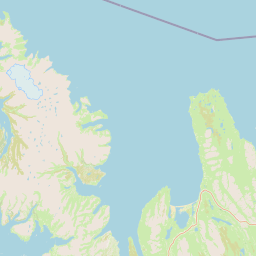
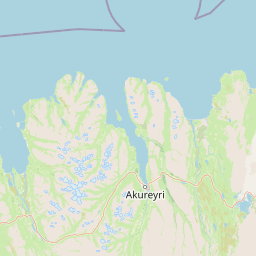
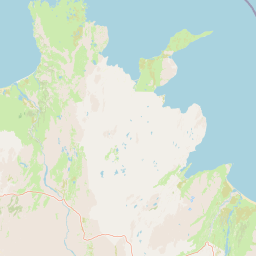
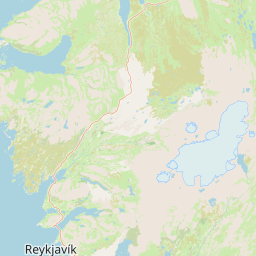
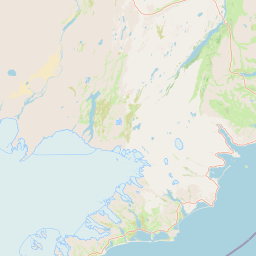
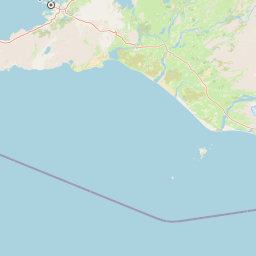
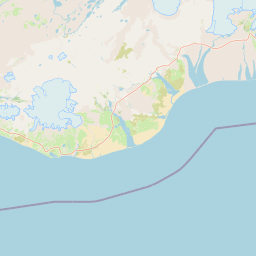
(Reykjavík)Pickup/city fallbackVík
(Vík)South Coast segmentAkureyri
(Akureyri)Before or after northern passesMývatn
(Mývatn)North-east activity baseEgilsstaðir
(Egilsstaðir)Eastern resupplyHöfn
(Höfn)South-east overnight stop
A 4WD, an extra night or a driver-led option: one budget buys different protection
When a 4WD becomes the only upgrade under consideration, it is easy to miss that it buys only a little vehicle margin on suitable surfaces. An extra night buys weather and fatigue buffer; a driver-led activity buys the option to hand one road decision to someone else. The table is not a price list. It identifies the risk each choice addresses.
| Problem to solve | What a 4WD mainly buys | What an extra night mainly buys | What a driver-led option mainly buys |
|---|---|---|---|
| Slippery winter surface | Starting and handling margin in suitable conditions | Time to wait for weather or shorten today's drive | A road decision handled by someone familiar with the conditions |
| A pass may close | It cannot turn a closed road into an open one | Another rescheduling or overnight window | The supplier decides whether to depart under same-day conditions, without guaranteeing the trip |
| Four people's luggage is too much | Possibly a larger vehicle class; check the actual boot | Less daily packing and rushing, but no more cabin space | No self-drive for one section; seating and luggage rules still apply |
| A fixed cave or whale-watching time | It cannot recover a missed meeting | A night closer to the meeting point and a shorter morning drive | Transport arranged around the meeting point; read the cancellation policy |
If you still want a 4WD to cover every row, pause. A resilient Ring Road plan usually keeps some risks from colliding on the same day instead of asking the car to absorb all of them. Navigation and official road-condition roles clarify which tool answers which question; if a road closes, use same-day replanning after a closure rather than making one vehicle carry the whole itinerary.
ICENAVI Ring Road 4WD confidence score: change the itinerary before the vehicle when the score is low
This is not a rental-company rating. Each dimension scores 0 to 2; only a total of 8 makes the 4WD price difference worth comparing. Below 6, first make the accommodation, activities or daily distances more realistic. If the road is closed, the contract does not permit the route or the driver is tired, stop. The score cannot decide for you.
| Dimension | 2 points | 1 point | 0 points |
|---|---|---|---|
| Route evidence | Route 1, side roads and F-roads are separated; "Ring Road" is not standing in for a road name | One or two side roads remain unconfirmed | The route exists only in a screenshot, a blue navigation line or verbal assumption |
| Official status | IMO, Umferdin, SafeTravel and on-site information make sense together | Update time is unclear or pass weather is changing | You have only yesterday's screenshot or "other cars got through" |
| Vehicle and contract | Drive type, tyres, boot, road restrictions and support have a written or on-site answer | You know the class, but have not checked "or similar" or road terms | The rental terms conflict with the planned route |
| Accommodation buffer | You can adjust nights at Vík, Akureyri, Mývatn, Egilsstaðir or Höfn for each leg | The booking can change, but the cancellation deadline is close | Any delay forces night driving or a missed fixed meeting |
| Driver load | Daily distances are realistic, someone helps read updates and the driver rests | A side road and long transfer share a day, but one can still be removed | You need the vehicle, speeding or fatigue to recover time |
A high score means you have enough evidence to compare vehicles; it does not mean you should rent the most expensive one. If the missing point comes from luggage, ask whether a larger 2WD or SUV solves it. If it comes from a pass, ask whether one extra night does. That question is closer to the cost you will actually carry than "Is a 4WD always safe?" If the difference is really boot space or body size, use the small-car and SUV luggage and wind comparison instead of using a 4WD label to answer a space problem.
Ten questions before you pay: do not use a 4WD to fill an unanswered gap
- Have you written Route 1, each side road or each F-road separately, with every road name and number?
- Which high passes will you cross in your travel month, and where can you stay put if one closes?
- Have you recorded the update times for Umferdin, IMO and SafeTravel rather than saving only one image?
- Does the rental contract clearly allow the planned side roads, and have you read the insurance, gravel and water-crossing exclusions?
- Does "4WD" describe the drive system only, or do you have evidence for the actual vehicle, tyres and clearance?
- Can four people's winter luggage fit fully in the boot, without leaving items on the rear seat?
- If you can travel only Route 1 today, do accommodation, supplies and activities still work?
- Before a fixed activity or departure flight, have you kept one night that is not intended to recover distance?
- If the driver is tired, visibility drops or a barrier appears, who has authority to cancel?
- Are you upgrading because the route evidence supports it, or because you do not want to remove an attraction already paid for?
Sometimes the best 4WD decision is the one you never need to use. You may appreciate the extra cabin space on an open main road, then park safely, stay nearby and reassess in the morning when the weather refuses to cooperate. That flexibility is not wasted rental money; it is an evening in which you do not have to prove your courage to a navigation app or your travel companions. For the number of nights and bases in a complete plan, see the eight-day Ring Road buffer. If the Highlands are the real priority, read the F-road, 4WD and water-crossing boundary separately; do not carry Highland eligibility back to Route 1.
Related reading
Separate the vehicle, weather and road questions
2WD or 4WD: the three-part vehicle testWinter tyres and pickup equipment checklistWhen a snowstorm means cancelling self-driveMore to read
Bring Ring Road nights and Highland choices back into the plan
Eight-day Ring Road itinerary and accommodation buffer2WD South Coast route boundaryHow to choose a South Coast day tourReferences
References
Road classifications, weather, conditions and rental terms change. The sources below were checked on 5 September 2026; before paying and before each day's departure, use official same-day pages, on-site signs and your actual contract.
- Visit Iceland | The Ring Road: Route 1 is about 1,322 km, takes at least seven days, does not itself require a 4x4, and comes with winter mountain-pass cautions.
- Visit Iceland | Getting around Iceland: The basic distinction between main roads, the Ring Road and Highland driving.
- Vegagerðin | Road classification: Road classifications for ordinary roads and F1/F2/F3 trails; do not infer F-road rules from the Route 1 answer.
- Umferdin | Definitions / About: Road-condition records, update periods, weather and traffic data, and the limits of automated measurements.
- SafeTravel Iceland | How to drive in Iceland: Winter conditions, gravel roads, closure information, fatigue and the limits of using Google Maps.
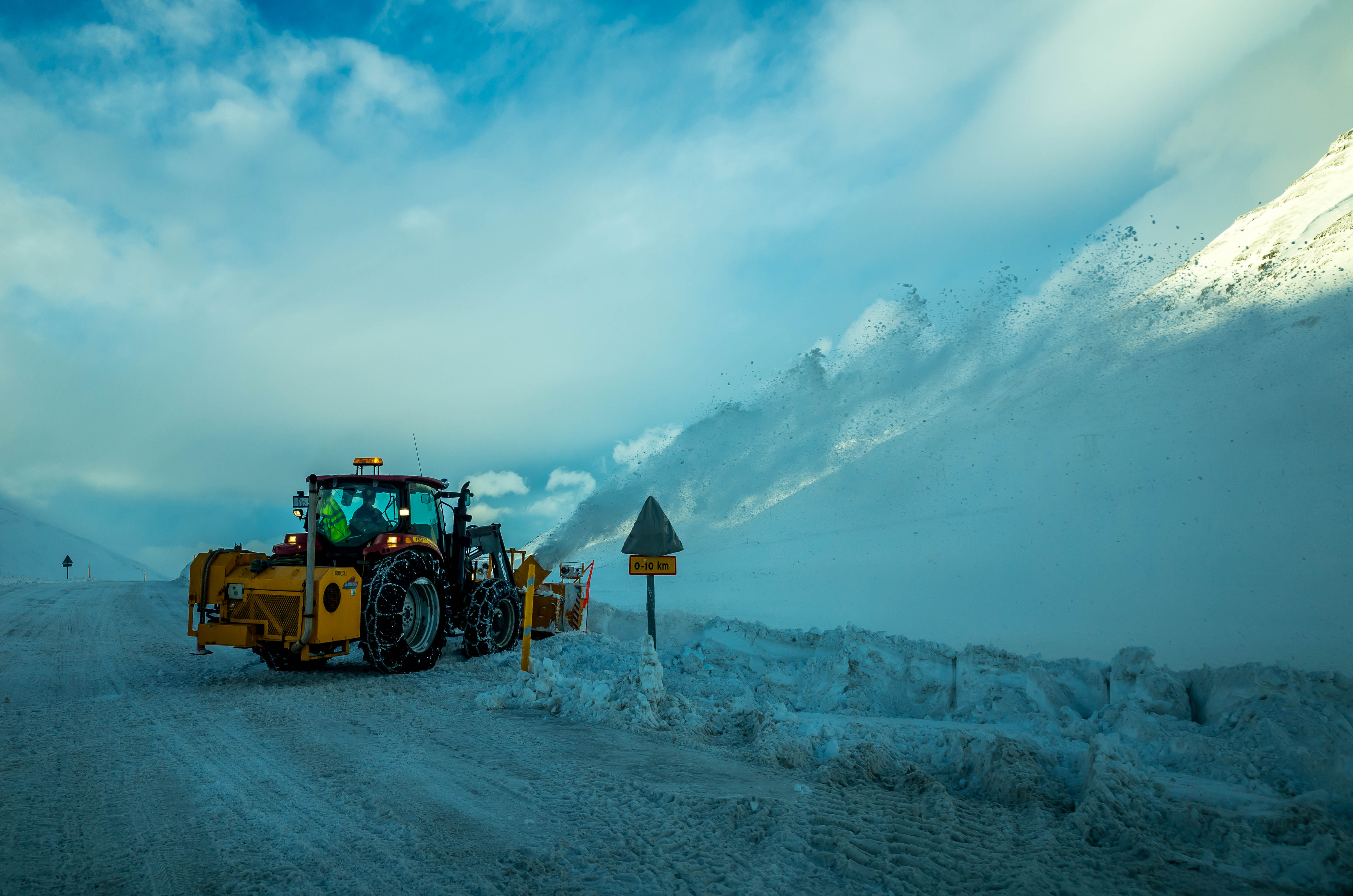
- Hero image: sergejf | Wikimedia Commons, CC BY-SA 2.0. The 27 January 2015 photograph of a snowplough on Route 1 supports only winter road maintenance, snow and sign scale; it does not represent current roads, a 4WD requirement or snow-clearing schedules.
- OpenStreetMap: Base map and attribution for this article's Ring Road segmentation; the pins show geographic scale, not same-day navigation, closures or vehicle eligibility.
.jpg)
This L1 Ring Road 4WD decision page does not carry a rental CTA. Confirm roads, weather, contract, luggage and accommodation fallbacks first, then continue to a checked vehicle, accommodation or driver-led activity page.
Q&A | Questions to answer before departure
Is a 4WD always necessary for a winter Ring Road trip?
There is no automatic answer. Check the dates, Route 1 status, driver experience, accommodation buffer and any contract-permitted side roads; a 4WD cannot replace closure checks or the decision to stop.
Is upgrading to a 4WD better value than staying an extra night?
If the risk comes from long daily drives and no recovery day, an extra night may be more effective than a vehicle upgrade. Compare a 4WD when the bottleneck is the vehicle class, luggage or legal road eligibility.