
ITINERARY DECISION · 8 DAYS
An eight-day Ring Road trip can work when the flights leave usable daylight, the final night returns west and at least one night acts as a base rather than another check-in. A late arrival, one driver or winter roads changes the calculation; in those cases, a deeper South Coast route is easier to protect.
If you have nine days, do not simply add a ninth night to the map. Read the choice between a nine-day Ring Road trip and the Westfjords to decide whether the extra night should buy recovery time on the main route or support a genuinely remote theme.

ICENAVI ITINERARY FIT · 8 DAYS
Day eight buys recovery time, not another distant place name
These scores measure how an eight-day Ring Road plan handles the final night, the long East Iceland leg, a base night and fixed activities. They do not measure sightseeing completion; recheck season, roads, accommodation and cancellation terms for your dates.
Returning to western Iceland, Reykjavík or the airport side on night seven keeps car return, the flight and road delays out of the same final day. The north should not override that boundary, however far it is from the airport.
Official Ring Road information puts Route 1 at about 1,322 kilometres and says to allow at least seven days. An eighth day gives you one night to recover from a setback, not to add a remote branch.
The pressure test separates the glacier lagoon and Höfn from the Eastfjords on days 3 and 4. Add supplies and the next hotel to the same day, and a longer stop quickly becomes evening driving.
The itinerary needs at least one night in the same place or a half-day of spare capacity. When weather turns, that makes a shorter route possible instead of sending you after the next hotel every night.
Ice caves, glacier hikes and whale watching all have a meeting direction. Eight days lets you move the previous night closer to the meeting point, but you should not cross half the island after the activity.
The five route conditions average 7.8. Eight days qualifies as a Ring Road plan, provided the final night returns west, at least one night works as a base, and no day is assumed to go perfectly.
I put day eight where the map is most likely to mislead you
A map makes Reykjavík, Vík, the glacier lagoon, the Eastfjords, Mývatn and Akureyri look like a satisfying completed loop. It does not park the car while you look at a waterfall, refuel in a crosswind, or handle keys, dinner and luggage when you reach a hotel late. Treat every driving time as a promise and eight days soon becomes a daily chase after an arrival time set the day before.
I first identify the section least able to absorb an extra stop. The stretch from the South Coast past the glacier lagoon towards the Eastfjords or Egilsstaðir deserves unhurried time, yet it is often described as a chance to add places "on the way". Put Reynisfjara, the glacier lagoon, Diamond Beach, the fjords, a supermarket and the next hotel into one day and any longer stop pushes evening driving into the plan. If you are still choosing between the South Coast and the north, use the accommodation-node map for a clockwise or counterclockwise Ring Road to settle the direction; only then can day eight buy time in the right place.
| What your eighth day gives you | What to trade it for | What not to trade it for |
|---|---|---|
| Summer, two drivers | One extra night in East or North Iceland, giving the middle transfer recovery room | More remote branches on the same day |
| Winter, first self-drive | A base day on the South Coast or in Reykjavík | Night driving just to complete the circle |
| Late arrival or early departure | Airport-side accommodation and time to pick up or return the car | Pretending either end is a full sightseeing day |
| Ice cave or fixed meeting activity | Accommodation near the meeting direction the night before | Crossing half the island immediately afterwards |
Visit Iceland's official Ring Road information lists Route 1 at 1,322 kilometres and states that it takes at least seven days. Eight days does not remove uncertainty from roads and weather; it gives you a chance to leave one failed transfer in yesterday instead of carrying it into the next fixed hotel or meeting time. Checked 16 August 2026.
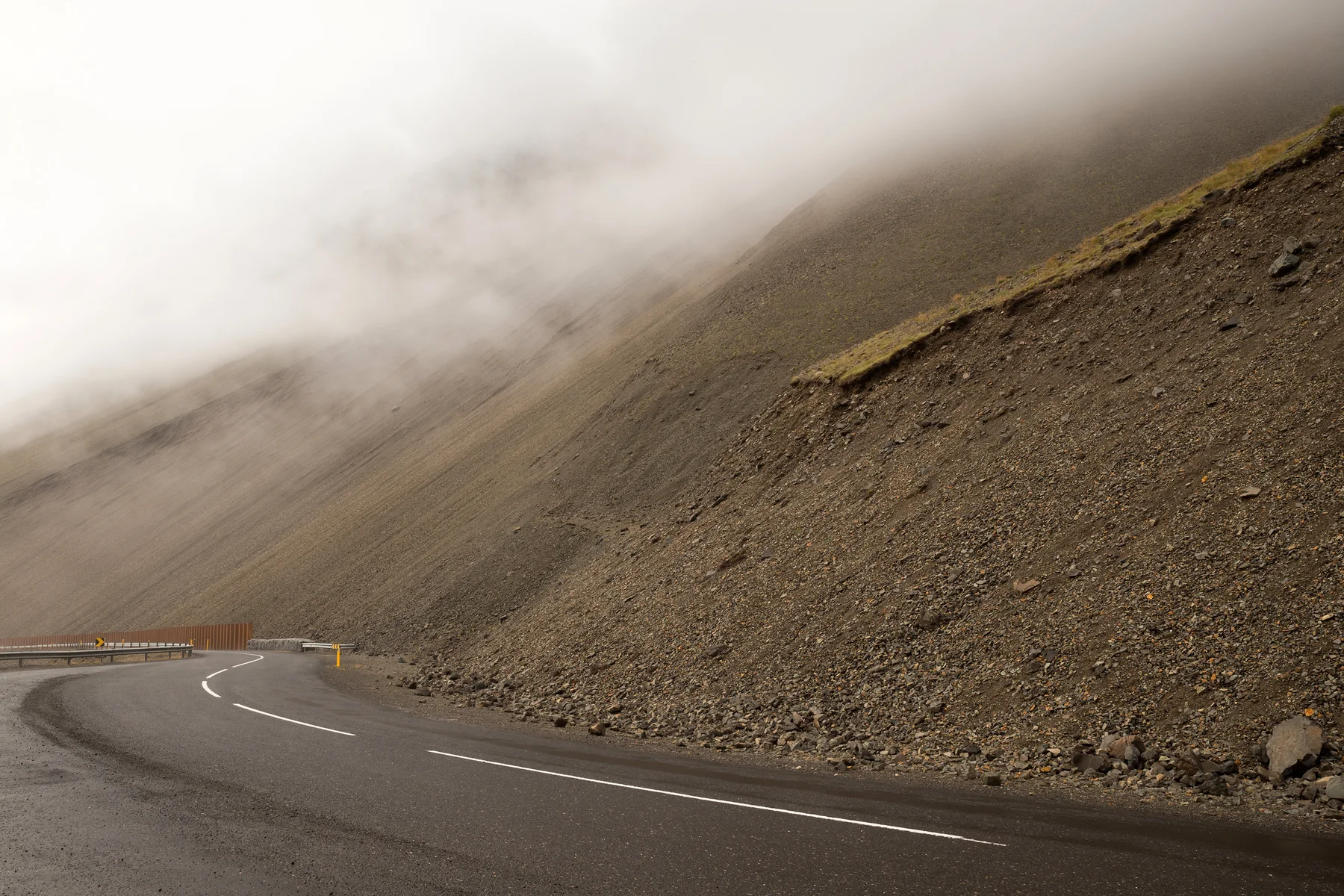
When the eight-day version is on the table, East Iceland usually breaks first, not the number of sights
This is a pressure test, not a schedule to copy blindly. It assumes summer, a half-day still available on arrival, an evening departure flight, normal roads, no ice cave or other fixed meeting activity, and two drivers willing to share the work. If any condition fails, do not force the adjacent legs together; cutting back to the South Coast or adding days is usually more reasonable than shrinking every stop.
| Day | Overnight stop | What this night solves | Shorten the route when you see this |
|---|---|---|---|
| Day 1 | Reykjavík / southwest | Keeps landing, car pickup, supplies and jet lag at the same end | You collect the car in the evening but still plan to drive straight to Vík |
| Day 2 | Vík | Allows the western South Coast to have proper stops | You leave Reykjavík in the afternoon and still have an evening activity booked |
| Day 3 | Höfn / southeast | Separates the glacier lagoon from the next East Iceland driving day | You begin crossing the Eastfjords only after a glacier activity ends |
| Day 4 | Egilsstaðir area | Leaves room for Eastfjord bends, parking and supplies | The navigation arrival time is close to the check-in deadline |
| Day 5 | Mývatn | Means you do not have to rush from East Iceland to a northern activity | You still want to complete Mývatn and go whale watching the same day |
| Day 6 | Akureyri / northwest | Starts moving departure risk west | You still need to travel from the north to the airport side in one go tomorrow |
| Day 7 | West Iceland / Reykjavík / airport side | Car return, the flight and road delays no longer share the final day | Your last night is still north of Akureyri or in the east |
| Day 8 | Departure | Handles only the final move, car return and check-in | You have put a major sight or cross-region drive before the flight |
The useful part of this table is that it turns "where is night seven?" into an early question. Returning from North Iceland to Keflavík is not a finale but another full long-distance day. If night seven cannot move west, the Ring Road is still short one night; an earlier alarm does not create it.
If North Iceland is already in the plan, the Vatnsnes destination page puts Route 711, Hvítserkur and the Hvammstangi exit back into the time budget for night six before you decide whether the detour earns its place.
If East Iceland is meant to be explored rather than seen through the windscreen, compare Seyðisfjörður and Egilsstaðir accommodation, then use the one-night choice between three bases and the Djúpivogur destination page against the following day's direction.
If you want to add Vök Baths, read the Egilsstaðir accommodation and hot-spring pairing and put the booking time and post-bath driving on the same time budget.
If the nights are booked but you still cannot tell whether each day can end safely, continue with the maximum driving time for each Ring Road night. If Höfn is your southeast base and you want a morning for black sand, mountain shapes and reflections, the waiting cost at Stokksnes and Vestrahorn separates entry, wind, tides and the next day's glacier-lagoon activity.
The real change in pace is your willingness to give up a return drive
The common mistake on an eight-day trip is assuming every night must take you farther than the last. The Ring Road gives you forward momentum; it does not require the furthest possible overnight stop every day. If the glacier lagoon deserves time, sleep in the direction you will leave the next morning. If East Iceland's roads, weather or your energy level are poor, drop one fjord rather than turning the next hotel into a dark-arrival obligation. A holiday is not a stamp collection, and a booking is not an instruction to the driver.
I treat accommodation as one of two things. A transit stop has a clear position, simple parking and understandable check-in; its job is to split a long day. A base stop means two nights or half a day in reserve, so a weather change can shorten the route. An eight-day Ring Road plan needs at least one night with the function of a base. Without it, every small delay moves forward.
I work backwards from both ends instead of filling in Day 1 through Day 8
Write down the landing time, when the rental car will actually be available, the return deadline and the airport check-in requirement. If arrival is late, call it a travel-and-rest day. If departure is early, return to the airport side the night before. Compare where to stay after a late arrival and how to plan the last night before departure so a flight day is not counted as a full sightseeing day.
Only then place fixed meeting activities. An ice cave, glacier hike or other experience with a specified meeting point affects the previous night's accommodation, the next day's drive and the possibility of rescheduling. Check ice-cave meeting points and terms. If you are choosing between a Fjallsárlón boat trip and a glacier hike, put the activity time and the following day's exit into the same overnight decision.
Summer lets you go farther, but daylight does not postpone fatigue
If you want one genuinely different branch, compare the Highlands, the Westman Islands and the Westfjords, weighing seasonal roads, ferry timetables and the minimum Westfjords nights. If you are unsure whether eight days is better than seven, use the seven-versus-eight-night comparison; in the last 48 hours, use the 48-hour recheck matrix.
Midnight sun can make it feel as if you can drive for another hour every night. Long flights, photography, refuelling, toilets, waiting for companions and roadworks all consume attention. I set a check-in boundary in summer: after a certain time, remove the last optional sight and drive to the accommodation.
Winter calls for a more conservative answer. Short daylight, wind, closures and low visibility can turn a reasonable leg into a day when you should not move. Staying longer on the South Coast, turning back towards the southwest or saving North Iceland for another trip are valid itineraries. Check the official road conditions, weather information and SafeTravel before each departure.
Day eight should allow different answers for your group
Two travellers going to Iceland may not be missing the same thing. One may want another morning beside the glacier lagoon; another may be tired of moving luggage; someone else may prefer northern hot springs and short drives. The value of day eight is that it can acknowledge those differences. If the group is worn out by long drives, give the night back to accommodation, dinner or a town walk.
An accommodation upgrade should not be the default use of day eight. A view room, glass cabin or remote hotel makes sense only when it does not add a late arrival, a backtrack or more road risk. Compare room prices only after the South Coast nights and surrounding drives are clear.
Once the Vík nights are fixed, compare the same conditions across three platforms
Keep the dates, guest count, comparable room type, breakfast, parking, cancellation deadline and final total constant. All three buttons search the Vík area; none presents one hotel as the only answer.
Before paying, I make the Ring Road answer one last question
Could you still return safely to the departure side if one middle day became a no-drive day? If a fixed activity moved, would the nights before and after still work? Does everyone know which three sights can be removed? Do the vehicle, luggage, fuel and charging arrangements support the longest transfer? Have you read every check-in and cancellation term? If the answer depends on "it should be fine," the itinerary has not created real recovery time.
The best outcome is not completing a circle on a map. If your nights, season or flights do not support a relaxed return, choose a deeper South Coast trip and read the seven-night plan. With two extra days, consult the route budget for ten days in Iceland before adding branches.
Related reading
Do not book East Iceland until you have chosen the direction
Clockwise or counterclockwise · Where to stay after arrival · How to protect the final night
More reading
If eight days feels tight, compare the alternatives first
How to split seven nights · Five-day South Coast deep dive · 2WD or 4WD · Accommodation nights for the full route
Q&A | What to confirm before an eight-day Ring Road trip
Does eight days mean changing hotels every night?
No. Arrival and departure are not full driving days. Keep at least one night in the same place, or reserve a base night, so roads, weather or a fixed activity can force a shorter leg without breaking the route.
Can I spend one night in East Iceland and one in North Iceland?
Yes, but expect shorter stops and the cost of supplies and evening driving. With one driver, remove a branch rather than turning both regions into long transfer days.
Should I include an ice cave or glacier activity?
You can, provided its meeting location shapes the previous night's accommodation and you leave room to reschedule. Do not follow the activity with another cross-region drive.
What should I cut first from an eight-day winter route?
Remove remote branches and sights that require a night arrival first. Do not cut the buffer that returns you west for the final night; it is the safety cost of closures and flight risk.
_2016.jpg)