
SELF-DRIVE DECISION · WINTER
Winter driving risks come from snow, high winds, low visibility, ice, crosswinds, post-sunset fatigue, and the psychological pressure of a booked hotel. A safe plan must leave you room to maneuver before you even leave the parking lot.
ICENAVI DRIVE FIT · WINTER DECISION
Decide Whether to Drive Today Before Choosing a Car
The score reflects the Go/Hold/Stop workflow, road and alert data, accommodation buffers, vehicle and insurance fit, and night-driving risk. Re-check roads, alerts and rental terms for your dates.
Judging roads, alerts, daylight, and driver state in the same morning prevents you from being dragged by sunk costs.
Road conditions, weather alerts, and SafeTravel answer different questions. When data conflicts, choose the conservative option.
Staying 1-2 nights at one location allows you to swap a long drive for a base day. Changing hotels daily pushes weather pressure into the car.
2WD/4WD, tires, insurance exclusions, and road types must be viewed together. A larger vehicle does not equal clearance.
Ice caves, auroras, and south-coast overnights have specific timing constraints. Prioritize daytime movement and the next safe rest point.
This workflow helps break daily movement into verifiable decisions. It won't predict road conditions, nor will it turn a paid booking into a safety condition.
If you're traveling in spring, summer, or autumn and facing rain rather than winter road conditions, don't rush to change your entire hotel chain. How to protect your room, meeting times, and return drive in the rain separates "can move," "stay at base," and "ask the supplier," so one rainstorm doesn't drag all your bookings into a single panic decision. If you've already confirmed a March departure, you can't treat it as a standard spring rain trip: March self-drive: nights, daylight, and ice cave scheduling addresses late-winter road conditions first, then decides which segments are worth driving.
Your First Winter Safety Buffer Is Your Overnight Base
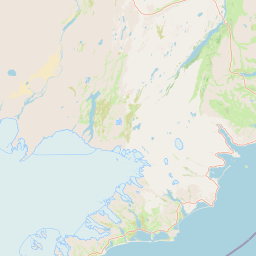
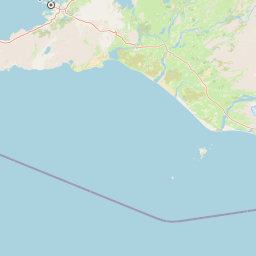
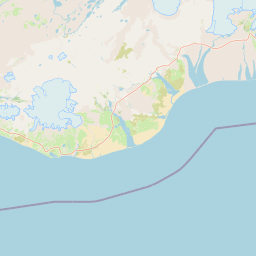
It is easy to choose the rental car first and overlook the way your hotel pattern changes the risk. Reykjavík to the South Coast, Vík to Jökulsárlón and the return west are not summer-distance calculations once daylight, wind and ice enter the picture. A new hotel every night creates pressure to “get there” when conditions deteriorate. Staying one or two nights in the same place gives you the option to turn a long transfer into a short attraction, a hot spring, a city day or a rest day.
For first-time winter drivers, a smaller geographic scope is usually more valuable than "completing the ring." Using Reykjavik, the Golden Circle, and the South Coast as the main line, with Vík or the southwest as overnight nodes, reduces unnecessary backtracking. Jökulsárlón, the Highlands, or remote areas should only be added if daylight, roads, accommodation, and total nights all support it. Dropping one distant attraction buys safer daytime driving and more time to enjoy the stops you do make. If your problem isn't "can I drive today" but rather "which of my four nights can swap with a fixed ice cave tour," Winter 5-day buffer arrangement breaks down this earlier itinerary decision.
Use Overnight Bases to Break the Winter Route Into Safer Sections
| Winter Constraint | Itinerary Action | Do Not Rely On |
|---|---|---|
| Short daylight | Keep main movement in daylight, approach accommodation before sunset | Navigation's pure drive time |
| High winds & crosswinds | Reduce long drives, leave room for stops or backtracking | Assuming a larger vehicle is always safe |
| Road closures or ice | Keep hotel base and cancellable activities | Must arrive because hotel is paid |
| Snow, rain & low visibility | Shorten attractions, stop movement if necessary | Weather experience from the last few days |
| Fatigue & night driving | Two drivers, early check-in, set return time | Coffee or music solving fatigue |
A Road Photo Can Look Usable and Still Say Nothing About Today
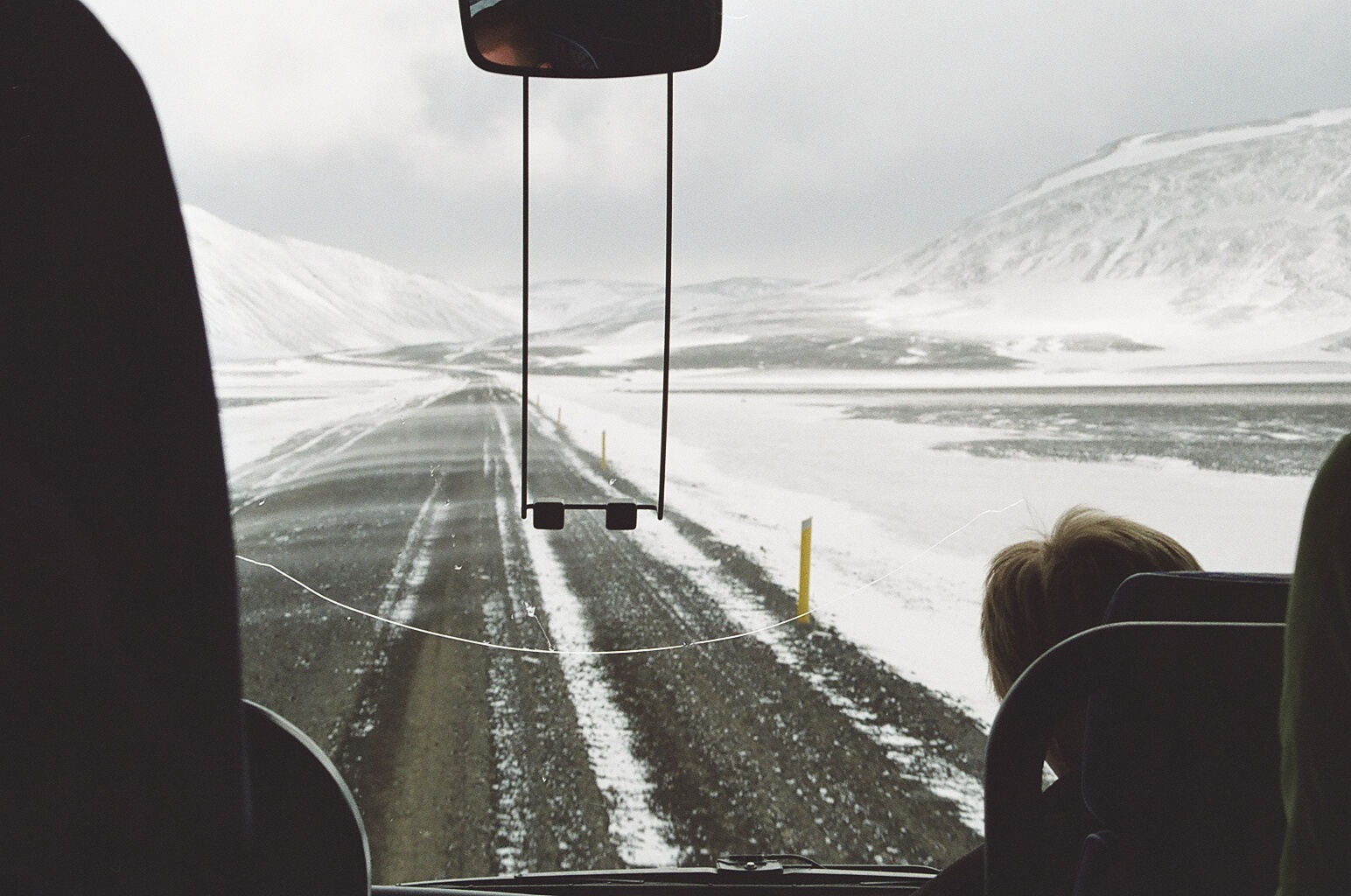
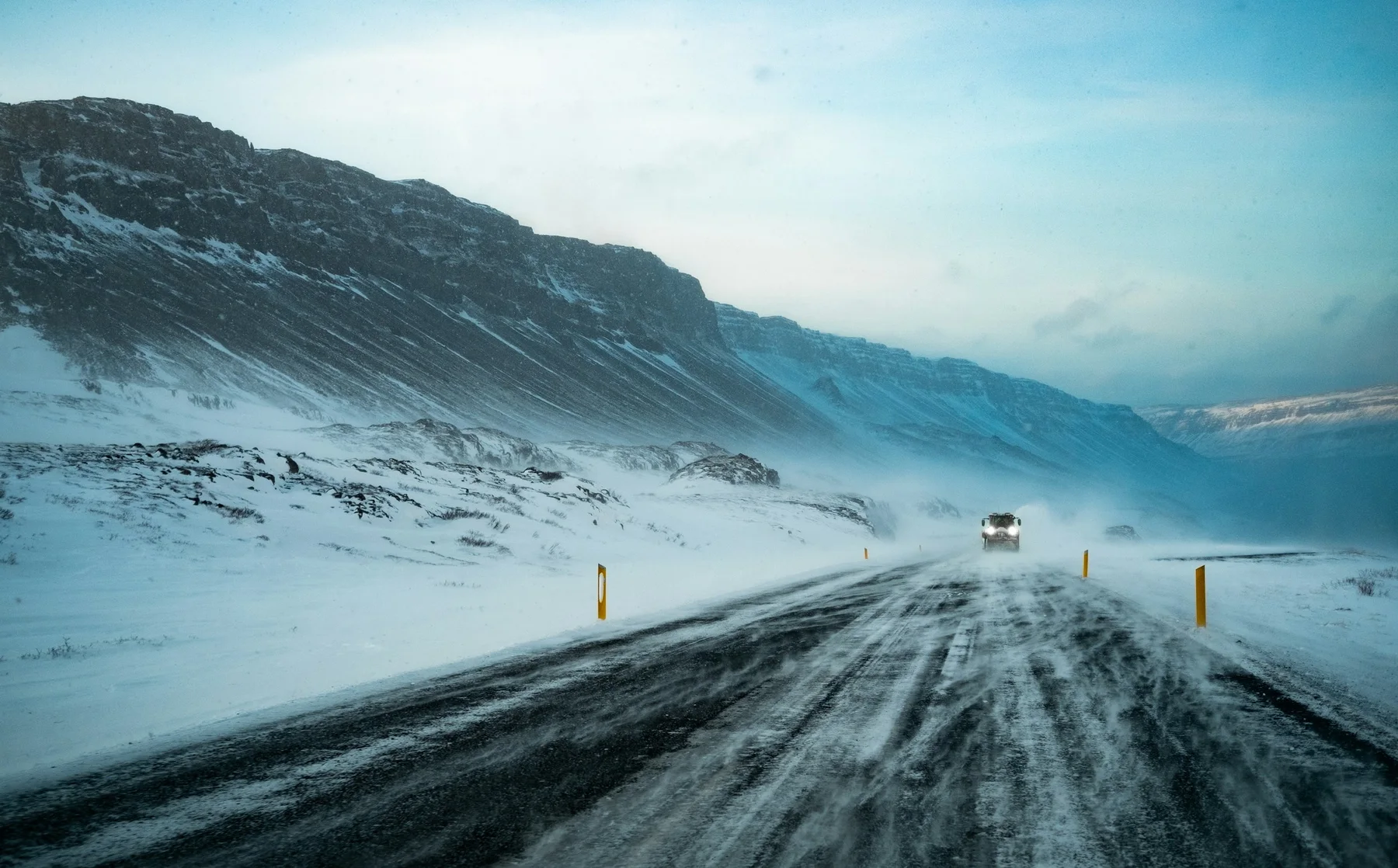
The hero image shows a visible route, blowing snow reducing the contrast ahead and oncoming cars using their headlights. It cannot tell you whether the road is open, how strong the wind is, how much grip you have or whether your vehicle is suitable. Before departure, compare the official road status, alert area and what you can see on the ground. If one of those answers is still uncertain, treat the plan as Hold. A cheerful screenshot is not a safety check.
Before departure, decide on the route, vehicle and cover together
Write down the roads you will actually use: main paved routes only, or remote areas and F-roads in the snow season? Then account for luggage, possible driver changes and fixed meeting times. Those details inform the 2WD or 4WD choice, but no vehicle replaces winter judgement. Every car must follow closures, wind warnings and road restrictions. If the route is uncertain, build the conservative version first and compare vehicle groups and supplier terms against it.
Insurance also needs a look at deductibles, glass, gravel, dust, tires, undercarriage, roadside assistance, and exclusions. It handles some financial consequences, but cannot make dangerous roads safe, nor make an unsuitable itinerary feasible. At pickup, record vehicle condition, confirm winter equipment, wipers, lights, tire status, emergency contacts, and fuel type; save the rental contract and support phone to an offline-readable location. If considering an EV, add low-temp battery drain, alternative charging points, and accommodation outlets to the same decision. EV charging and winter range page breaks this down item by item.
The 10-Minute Morning Check: Roads, Weather and SafeTravel
Don't just open navigation. The first screen is Icelandic real-time road status, checking segment by segment if mandatory roads are open and current conditions; the second is Icelandic Meteorological Office alerts, placing alert regions and effective times onto your own route; the third is SafeTravel travel safety tips. An open-road reading does not protect the route from a later weather alert. Alert colours are not a single “drive/no-drive” button; read the region, timing, vehicle and road status together.
Road authorities explain that conditions are provided by staff, contractors, and automatic instruments; winter half-year generally updates 07:00–22:00, and the system explicitly states automatic data may be wrong. This means a morning screenshot cannot cover the evening: after leaving the last serviced town, finishing an activity and getting back in the car, or when weather clearly changes, check again. If data conflicts with what you see, stop and ask road services or rental support; don't pick a more optimistic screen as the answer.
Then re-arrange the day: accommodation, flights, or confirmed meeting points are fixed constraints; a waterfall, lunch spot, or photo detour can be swapped or deleted. Put the most important movement in the better daylight period, and write down the latest return/direct-to-hotel time before leaving. Companions should know this line together, avoiding using the two hours already driven to vote for the next hour at a fork in the road.
When Roads Close, Make the Base Day the Plan
When a road closes or a high-wind warning appears, first ask whether you can remain at your accommodation, switch to a nearby activity, rest longer or request a change from the supplier. A winter detour is not automatically safer; it may demand more time, fuel and concentration. Money already spent can make “push through” feel reasonable, but it is not a reason to ignore current safety information.
Before travelling, list a few low-risk options near each accommodation base: a café, museum, hot spring, short walk, hotel rest or essential shopping. When the weather changes, replace the long-drive plan with one of those nearby options. After an activity is cancelled, check the cancellation and rescheduling terms before deciding; do not fill the gap with another long drive.
Wind Is Easier to Underestimate Than Snow
Strong wind affects steering, doors, visibility and the road surface. SafeTravel’s winter driver test highlights wind direction, gusts and door control; campers and other tall vehicles cannot be assessed from the average wind speed alone. After parking, note the wind direction, hold the door with both hands and open one door at a time. Avoid narrow shoulders or places where poor visibility could leave you blocking the road. On the move, leave more space, make gentle corrections and choose the next safe stopping place when the wind builds instead of forcing the original attraction.
If companions are motion sick, anxious, unwell, or the driver's focus drops, this is also a signal to shorten the itinerary. Distinguish between "can still continue driving" and "is still suitable to continue driving today." A sensible winter plan treats a safe arrival at the next rest point as the baseline, rather than using every successful arrival as proof that you can keep pushing.
Plan Auroras and Winter Activities Around the Daylight Drive
Ice caves, hot springs and aurora watching may be the reason for the trip, but they should not force a tired night drive. If the sky looks clear, read Iceland mountain-road night driving: daylight, fatigue and animal risks and consider road-update times, reflectors, livestock and the driver’s condition together. Fit an ice-cave meeting point to the previous night’s base first. Treat an aurora as an option only if the roads and weather allow it. After a long day on the road, resting at the hotel is often the better choice than driving again to find darkness. One extra night and one fewer hotel change can protect the trip more than another attraction.
If a South Coast overnight is already part of the route, Vík allows you to handle black sand beaches, waterfalls, ice cave meetings, or next-day eastward plans separately. Choose accommodation that fits the actual number of nights, not based on aurora photo promises. Go out only when weather permits, otherwise stay at the accommodation base, still keeping the next day for safer movement.
Once the South Coast Stop Is Set, Compare Vík Room Types
Compare the same dates, room types, parking, breakfast, cancellation terms and final total price across the three platforms. The point of the Vík stay is to reduce backtracking and preserve a weather buffer; winter activities and aurora plans still depend on same-day conditions.
Before a winter drive, answer these nine questions
One: Do today's road and weather warnings allow movement? Two: Is there enough daylight and buffer before reaching accommodation? Three: Do vehicle type and insurance terms fit the actual route? Four: Is fuel, charge, food, and water sufficient? Five: Do companions know today's deletable attractions and return time? Six: Are offline maps, accommodation phone, and rental support readable? Seven: Are you willing to stay at base if roads close? Eight: Will tonight's aurora or activity cause driver fatigue night driving? Nine: If moving tomorrow, is the itinerary still completable?
After answering all nine, you may still choose not to drive; it ensures the decision is not made by a paid hotel or navigation green line. Vehicle type still undecided, go back to 2WD/4WD three-choice vehicle test; if fixed activities make accommodation immovable, Winter 5-day buffer separates activity days from long-drive days first. If you just want to drive out because tonight's sky is clear, first look at Aurora tour vs self-drive chasing; this comparison judges that night's roads, fatigue, and whether there's margin for tomorrow morning, not encouraging night driving.
Related Reading
- 2WD vs 4WD — Split roads, winter conditions, and luggage into three gates.
- How to keep buffer in a 5-day winter trip — Fixed ice caves, accommodation, and last night cannot be hard-locked simultaneously.
- Vík winter accommodation — Next-day east, west, or ice cave meeting changes location choice.
More Reading
- Iceland car rental insurance — Distinguish financial protection from road risks insurance cannot solve.
- Iceland aurora season — Don't let night chasing create fatigue driving.
- Last night before departure — Put road delays, car return, and flight in the same countdown.
References
The following data was verified on August 20, 2026. Alerts, roads, and on-site conditions change continuously; the article only provides a judgment framework, still check same-day official info before departure.
- Icelandic Road and Coastal Administration: Real-time road info
- Road data sources, general update times, and automatic data limits
- Icelandic Meteorological Office: Weather alerts
- Icelandic Meteorological Office: Alert impact matrix
- SafeTravel Iceland: Travel safety tips
- Icelandic Transport Authority: How to Drive in Iceland — Winter
- Reykholt: Eastern Jökuldalur Route 1 and blowing snow photo, CC BY-SA 3.0; used only to identify markers, snow line, and visibility scale.
- Winter road photo: Krisztián Korhetz/Unsplash, used only to identify snow, visibility, and road sign context.

Q&A | Iceland winter daily departure
Can 4WD turn a Stop into a Go?
No; road closures, alerts, visibility, and driver state come before vehicle type.
Is Hold a waste of a day?
No; staying at base or switching to a short local route protects both safety and the next day's options, with far less downside than forcing the drive.
What to check before departure?
Simultaneously check roads, weather alerts, SafeTravel, daylight, vehicle condition, and accommodation cancellation terms.
References
Roads, alerts, visibility, insurance, and rental terms change; re-check current official data before departure; the main text already has a full source list.