
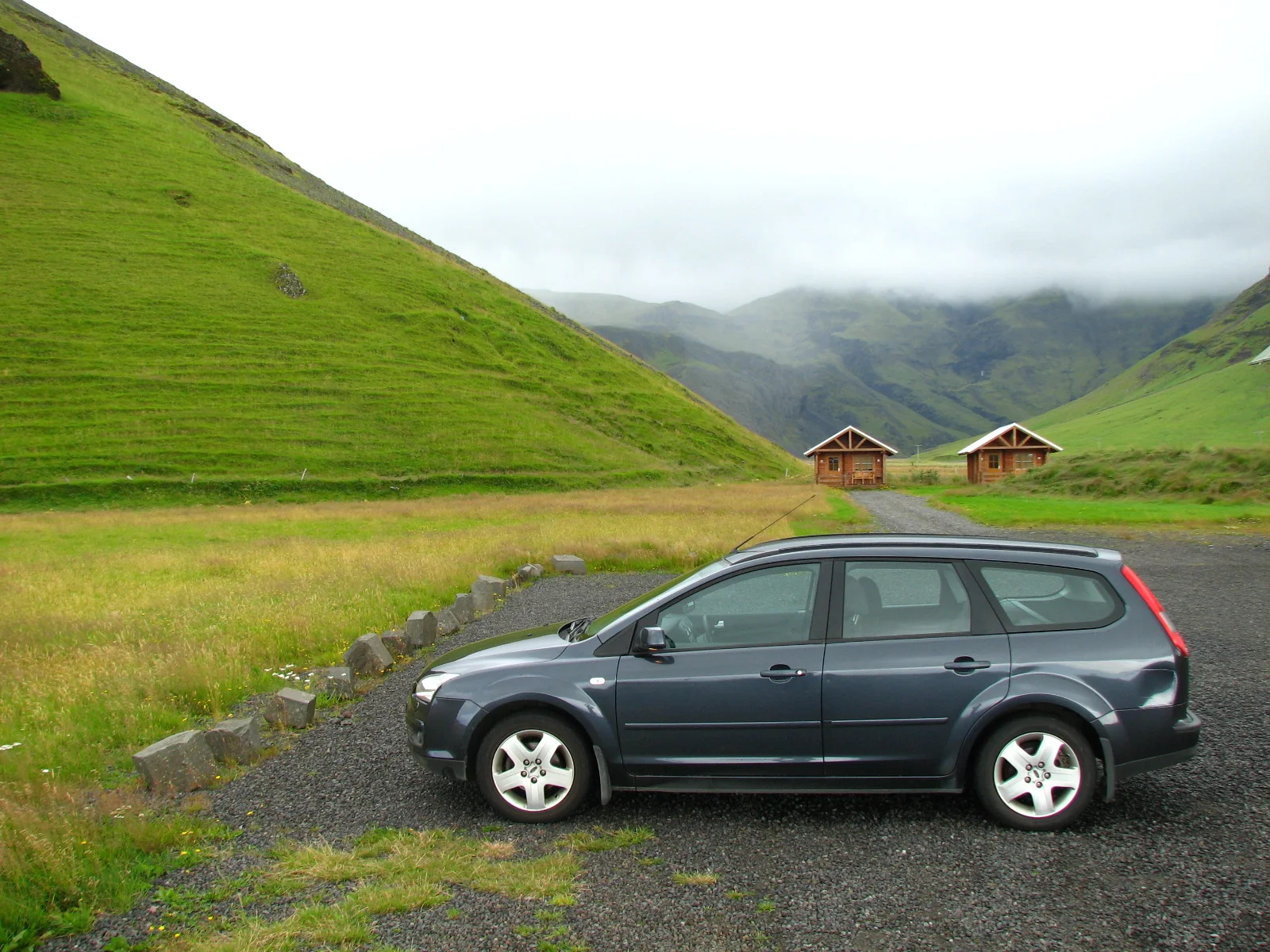
Pack for the road you are actually taking
Two people on Route 1 in summer can usually arrange two compressible soft bags more easily than two large hard cases. Four travellers, winter layers, camera gear or a new hotel every night change the calculation: check how much covered space remains once everyone is seated and belted, then choose what comes with you. A Highland or F-road plan also needs seasonal opening, road notices, vehicle class, river-crossing rules, insurance and a fallback before luggage becomes the focus. Supplier vehicle names and bag counts are not universal; read the luggage diagram, seat layout and “or equivalent” wording for the booking you are making. For body shape and driving feel, start with small car or SUV; this page is about objects, space and the work of moving them each day.
ICENAVI HIGHLAND FIT · PACKING & ROUTE
Put highland access, river crossings and luggage space on one decision card
This score asks whether your existing luggage gives you enough evidence to travel into the highlands or onto an F-road. It is not a vehicle-safety rating and does not guarantee road access. Recheck the season, road notices, vehicle, crossing conditions, rental terms, insurance, meeting point and alternative plan on the day you leave; do not use the total as permission to push ahead when a hard condition is unconfirmed.
Consider an F-road only under the season and same-day conditions announced by the authorities; summer access does not mean shoulder-season, winter or today's access.
Four-wheel drive, clearance, tyres and luggage capacity are vehicle features; written confirmation is still needed for road permission and an equivalent vehicle class.
River depth and flow change. Crossing, underbody, tyre, rescue and road exclusions each have their own terms; a booking or four-wheel drive cannot turn unknown risk into cover.
Keep waterproof layers, dry clothes, drinking water, offline maps and vehicle supplies within reach; a boot packed to the roof slows parking and retrieval on remote stretches.
When highland access fails, the meeting point, cancellation policy, day tour, lowland sight or extra night must still work that day; one booking is not a fallback plan.
Consider a highland drive only when all five evidence areas have an answer; otherwise leave luggage at the accommodation, switch to a lowland activity or let an experienced operator handle the stretch.
This card separates “having the gear” from “being cleared to go”. You may have dry bags and a four-wheel-drive vehicle but still need to stay put because the F-road is closed, the rental terms exclude it or crossing conditions are unknown. You can also leave non-essential luggage at the accommodation and make a lowland alternative workable.
| Option | What it keeps | What you give up or accept | When to choose it |
|---|---|---|---|
| Self-drive F-road | Control over timing and stops; luggage stays with the car | Seasonal access, vehicle rental terms, crossings, insurance and same-day road responsibility | Every hard condition has official or supplier evidence and the driver has the relevant experience |
| Super Jeep / highland day tour | An operator handles the vehicle, route and some crossing decisions | Fixed meeting point, supplier cancellation rules and fewer self-chosen stops | You want the highlands without an eligible rental vehicle or without taking on crossing risk |
| Lowland activity / waterfall route | More road and accommodation fallback; luggage can stay at base | Give up the highland landscape and rearrange sights around the weather | An F-road is closed, warnings have escalated or the itinerary has only one day |
| Stay an extra night / change date | Sleep, visibility, crossing and meeting-time margin | Room cost, activity-change cost and possibly one missed sight | People and vehicle safety plus tomorrow's fixed plan matter more than finishing today |
The most awkward moment is rarely the first night at the airport; it is the third checkout. On day one, everyone still has the patience to roll up outerwear. By a clear morning in Vík, the windows are fogged, rain trousers are half-dry and a camera battery has one bar left, yet breakfast and water need the boot space first. “One large suitcase per person” has become a real roadside task: someone opens the back seat, someone puts wet clothes by their feet, and every stop gains one unnecessary job.
Official road-safety guidance flags gravel roads, single-lane bridges, winter ice and short daylight windows in Iceland. Luggage does not make a road safer, but it changes visibility, cabin movement and how quickly you can reach a warm layer after stopping in wind or snow. If your route includes the Westfjords or the highlands, “fits four pieces” in a boot field is not a completed check.
The boot is not a second hotel room: count how often you will handle it
I would divide luggage into three layers: items that travel every day, items that appear only on activity days, and items that can stay at the accommodation. Daily items include warm layers, rain gear, water, charging and medication. Activity-only items may be crampon bags, swimwear or a tripod. Spare shoes, formal clothes and excess packaging can remain at the accommodation. This is closer to Iceland's real workload than asking how many kilograms each person brings, because boot friction comes from shape and retrieval frequency, not the number on a scale.
Every opening of the boot takes a piece of the route









Turn “two people, four cases” into a version you can actually live with
The luggage number on a rental page is often a supplier's estimate for one vehicle class. It does not reserve room for thick outerwear, backpacks, supermarket bags or a bag of wet shoes. The following is an editorial pressure test, not a promise for any vehicle: place the things you will really bring on the floor, then compare them with the booking photographs and contract.
| Party | Storage that is less likely to fail | Ask at pick-up | Common regret |
|---|---|---|---|
| Two / summer ring-road | Two compressible soft bags plus two daypacks; outerwear and shoes in small bags | Can the rear seats still carry people flat or does the cargo cover travel with the car? | Two non-compressible 28-inch hard cases leave no room for food after shopping |
| Two / winter or daily hotel changes | One main bag stays in the boot; a smaller bag goes indoors; warm layers stay on top | Confirm four-wheel drive, tyres and a boot photograph of the actual vehicle class, not just its name | Upgrading for a camera and spare clothes but leaving valuables exposed outside |
| Four / summer ring road | Four soft bags plus one shared day bag; one main outer layer per person | After four seats are belted, can every bag remain covered? | Reading “seats four” as “four people and four cases fit comfortably” |
| Four / camera, snorkelling or glacier day | Confirm supplier equipment first, then use one waterproof gear bag rather than several small cases | Can non-essential luggage remain at the accommodation, or must it reach the meeting point? | Arriving with bulky gear, then finding that the cabin cannot keep everything covered |
When a page says “fits four pieces”, ask one more question: does that mean four cabin-size cases, four soft bags, or four idealised models including handles and wheels? If the page only says “or equivalent”, treat it as unfinished information and ask for the actual vehicle or an equivalent boot illustration. Do not fill the gap with a photograph of another model. That small check is more useful than turning the back seat into a luggage shelf after arrival.
Winter clothing is not one extra item; it is one dry set kept available
Winter (with November to March as a practical planning starting point) and spring or autumn are not simply a question of temperature. Wind, rain, ice and limited daylight can leave a wet outer layer undry before dinner. SafeTravel recommends warm layers, waterproof footwear and layered clothing; road authorities warn that winter conditions can change without much notice. I would split luggage into a “wear today” bag and a “tomorrow backup” bag, and keep the backup closed at the first waterfall car park.
| Season / route | Keep within reach | You can pack less of | Still needs checking |
|---|---|---|---|
| November–March / south coast or ring road | Windproof waterproof shell, warm mid-layer, hat and gloves, dry socks, charging and water | Formal clothes, duplicate outer layers, camera accessories that cannot be secured in the car | Weather, road status, rental tyres / vehicle and accommodation cancellation terms before departure |
| April–May, September–October / long transfer | Waterproof shoes, thin warm layer, rain trousers, day bag and glasses / lens demisting kit | Heavy down layers; use interchangeable thin layers | Whether a mountain pass, gravel road and activity operate under same-day conditions |
| June–August / paved main route | Light waterproof shell, hat, sunglasses, swimwear and eye mask | Four thick emergency coats; one replaceable layer is usually easier to manage | Operator safety equipment, child seats and accommodation laundry arrangements |
| Highlands / F-road (only when open and contract-permitted) | Offline maps, extra water, fully waterproof clothing and vehicle emergency supplies | Large city suitcase and items you will not retrieve on a remote stretch | F-road opening notice, vehicle eligibility, rental exclusions and river / weather information |
Long summer daylight can tempt you to reduce clothing too far. Daylight is a time condition, not a substitute for a waterproof shell. If the itinerary includes a camper, laundry or wet clothes overnight, first decide how sleep and dry clothes will work; a vehicle with a bed does not dry clothes by itself.
Camera, tripod and batteries: temperature is the real constraint
Camera gear takes space, but the easy-to-miss problem is routine. A cold camera can fog when it returns to a warm room, and a battery may drain faster in low temperatures. This is not an argument for buying more equipment. Keep the camera reachable without allowing outerwear or food to crush it; put batteries, memory cards and charging cables in one small bag. At the accommodation, let the gear warm gradually inside the bag before opening it for inspection.
If tomorrow is a glacier or snorkelling activity, check activity-equipment hire and the timing of ice-cave photography first. Confirm whether the supplier provides safety equipment or only an outer layer. Carrying every possible crampon, helmet and dry suit wastes boot space and may expose valuable gear in a car park.
| Item | Position in the car | After returning to the accommodation | Do not do |
|---|---|---|---|
| Camera / lens | Padded day bag within passenger reach, away from the window | Warm the whole bag before opening; check for condensation and battery level | Leave it unattended in the car or blast it directly with a heater |
| Battery / memory card | Separated in a small pouch, with at least one charged spare | Charge first, then put the capacity needed for tomorrow's first sight in the day bag | Scatter batteries in the bottom of the boot and search one by one the next day |
| Tripod / poles | Secure in a long position where it cannot slide or crush clothing | Wipe the feet dry; check grit and salt | Give up the whole passenger area for a viewpoint that may not have room to set it up |
| Phone / power bank | One fixed charging place, with offline maps already downloaded | Sync tomorrow's address, activity confirmation and road / weather source | Trust live signal alone or bury the charging cable under the large cases |
The hidden luggage cost is three extra minutes every day
Once the boot is full, every detour slows down. To take a coat at a fuel station, you first move food; to retrieve swimwear at the hotel, you put four cases on wet ground. Use this small model: three minutes for each main-bag load or unload, two minutes to reorganise wet clothes, and two more to find something at the bottom. It is not an official timing; it shows how “only one extra item” can become unwanted work over seven days.
| Situation | Extra work each day (example) | Seven-day accumulation | Editorial decision |
|---|---|---|---|
| Two nights in one place, soft bags, day bag separate | Take out the day bag, about 3 minutes; main bags stay in the boot | About 18–21 minutes, mostly before departure | Change the storage layers before paying for a vehicle upgrade |
| New room every day, two people, hard cases | Move the whole set for about 6–8 minutes, then reorganise wet clothes | More than an hour, usually on the worst-weather days | If rooms are cancellable, reduce changes rather than relying only on a larger car |
| Four people, activity equipment uncertain | At every stop, confirm what is covered and the retrieval order | More than minutes: parking-area negotiations too | Ask what the activity supplier lends before choosing the vehicle and bag count |
That is why renting only on the days you need a car can be more rational than renting for the whole trip: city days do not require every bag to move in and out, while a south-coast or ring-road day lets the car do its real work. If you have booked a daily-change route, put sleepwear, toiletries and tomorrow's first layer in one small bag so the luggage does not test everyone's patience every evening.
ICENAVI Luggage Fit: check covered space before seat capacity
This score is not a rental company's safety standard. Before payment, it turns the vague phrase “it should fit” into five questions you can answer. Each dimension scores 0–2 points. Compare larger vehicle classes only at 8 points or above; at 5–7, first change storage and accommodation rhythm; at 4 or below, reduce items, use activity hire or choose a driver-led option.
| Dimension | 2 points: worked out | 1 point: still verify | 0 points: do not force it |
|---|---|---|---|
| Space after people are seated | After every seat is used, luggage remains covered | A seat must be folded or the rear row borrowed; not confirmed | Luggage has to sit by passengers' feet or block the view |
| Bag shape and access | Main, day and wet-clothes bags are separated by layer | There is a day bag, but camera or food still requires emptying the boot | Every stop requires every bag to come out |
| Season backup | Dry outer layer, shoes and socks are ready, and everyone knows who retrieves them | Only one waterproof layer; no replacement when wet | Jeans or ordinary trainers are the only outdoor plan |
| Activity equipment | Hire contents are confirmed and the gear bag has a fixed position | The page only says “equipment included”; size and bag type are unknown | Equipment is assumed to be included without asking about the meeting-point limits |
| Daily boot opening | Consecutive nights, fewer room changes or laundry make the opening plan clear | There is a daily change but no bag is ready for tomorrow | Early flight, long transfer and full luggage move all fall on one evening |
ICENAVI · THE FINAL LUGGAGE CALL
Pack less is not the goal; pack the right shape
For two people on a summer ring-road route, I would begin with soft bags, a day bag and one genuinely waterproof outer layer. For four people, winter, daily room changes or camera work, confirm the vehicle class and activity hire before deciding whether to upgrade. If the plan works only when one person hugs a case on the back seat, the storage plan is not ready. Return to whether Iceland needs four-wheel drive and offline maps and official road conditions, then decide on the vehicle, luggage and road together.
Before paying, ask these ten questions until every answer is clear
- Does the luggage count on the booking page include handles, wheels and a daypack outside the soft bags?
- Which models might “or equivalent” actually mean, and how much covered space remains after four people buckle up?
- Are you bringing hard cases, soft bags, camera cases or a pushchair, and can each item really be stacked?
- Will you change rooms every day, and who separates wet clothes from tomorrow morning's clothes?
- To what extent does the activity supplier provide helmets, dry suits, crampons, shoes or towels, and do sizes need confirmation?
- Can valuable gear and passports leave the vehicle, and if not, should the route reduce handling and parking exposure?
- During a winter or shoulder-season delay, will the cabin still have dry socks, warm layers, food, water and usable power?
- Does the accommodation have laundry, drying space or somewhere to hang wet clothes; if not, what will you wear tomorrow?
- If the route includes the highlands or an F-road, do the vehicle, rental terms and road notice all permit it, rather than the four-wheel-drive badge alone?
- Are you comparing daily case-handling time, or only the price difference between vehicle classes?
Luggage serves the next decision: whether to rent a car on city days, whether to stay in Vík for one or two nights, whether to leave an afternoon buffer around a glacier activity, and whether you can stop when road conditions change. Save the official weather-information workflow and road-closure rerouting before departure; tidy luggage cannot replace same-day road judgement.
RELATED READING
Choose the car and route first
Small car or SUV: luggage, driving feel and insuranceDoes a ring road trip need four-wheel drive?Rent for one day or the whole trip?MORE READING
Then handle the daily variables
Activity-equipment hire: what is supplied and what is yoursNavigation, offline maps and same-day road conditionsHow to read Iceland weather websitesQ&A · For two people driving in Iceland, are soft bags really better than suitcases?
For two people driving in Iceland, are soft bags really better than suitcases?
Not as an absolute rule, but compressible soft bags usually work with a boot's shape more easily. Check the actual vehicle, seat count, bag dimensions and daily room changes; do not rely on the vehicle name alone.
Should a camera and tripod justify a larger vehicle?
Measure the equipment and protective case first, then check covered, secure and reachable storage. On the main route, gear alone does not prove that you need a highland vehicle; highland roads require a separate decision about season, opening, crossings and rental terms.
How should winter clothes be packed so the boot is not emptied every day?
Keep one dry, immediately wearable set of layers, and store wet outerwear separately from camera supplies. With a daily room change, the time spent opening the boot is itself part of the route cost.
If the rental page says four people can sit in the car, does that mean four people's luggage will fit?
No. Seats, child seats or large equipment compete for the same space. Check the luggage diagram, seat configuration and “or equivalent” terms for the actual booking before deciding what to bring.
References
These sources were checked on 5 September 2026. Road, weather, vehicle, luggage, activity-equipment and rental terms can change, so use the current booking, contract and official information for your departure date.
- Vegagerðin · Driving safely in Iceland: gravel roads, single-lane bridges, winter daylight, changing roads and the safety limits of checking official information before departure.
- SafeTravel Iceland · Driving: winter driving, warm layers, fast-changing road and weather conditions, and self-drive preparation.
- Icelandair · Domestic flights in Iceland: a cabin-bag example of maximum 55 × 35 × 20 cm and 6 kg; airline luggage rules are not rental-boot capacity.
- Höldur Car Rental · Iceland Road Trip Packing List: supplementary rental-company information on seasonal layers, vehicle basics, vehicle type and route-specific luggage checks; it is not every supplier's contract standard.
- Höldur Car Rental · vehicle and rental requirements: a reminder to check the actual vehicle and rental terms by route, season, seats and luggage.
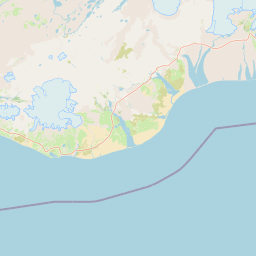
- OpenStreetMap contributors: base map and attribution for the five self-drive / resupply points; locations provide geographic scale only, not navigation, driving time, vehicle, or road guarantees.
- Hero image: CGP Grey / Wikimedia Commons: Iceland – Edinborg Hotel – Rental Car – Road Trip, CC BY 2.0; converted to WebP for this site. The image describes an Icelandic valley, rental car and accommodation setting, not a particular rental model, boot capacity or same-day road.
.jpg)
This is an L1 self-drive luggage decision entry. It does not place an unverified rental CTA: align party size, bag shape, season, gear, covered storage and daily boot-opening cost first, then move to a verified vehicle, accommodation or activity transaction page.