
ICENAVI DRIVE FIT · RENTAL WINDOW
Find the days when the car genuinely earns its place, then extend the rental
The scores consider city parking, KEF pickup and return, flight buffers, accommodation and activity directions, hidden costs, and transfer alternatives. They are not a guarantee of live rental prices or timetables. Use the same dates, vehicle class, party size, and cover before making the final comparison.
Keeping the car for the days that require flexible stops and travel between regions usually matches the real cost better than paying for a car because it feels reassuring.
In the city centre, a vehicle may spend its day finding a space, paying, and being moved. Without dependable parking or a walkable plan, a shorter rental is usually more sensible.
Pickup, return, refuelling, luggage, and the airport transfer must fit together. A full-trip rental removes one handover, but the first and last days can become tighter.
An early arrival does not always justify collecting the car sooner, and a delay can push pickup back. A cancellable transfer and a city hotel keep the first-night risk on the ground.
Remote accommodation, the Golden Circle, and the South Coast benefit from flexible stops. With several city nights or included transfers, the car has much less to do.
Add parking, fuel, the deposit, transport for pickup and return, and the cancellation flexibility lost through the rental. Compare a day tour or transfer using the same party size and timing.
The moment that most often changes a traveller’s mind arrives on the second morning. Breakfast is over, the car is parked outside the hotel, and the day’s plan is Rainbow Street, the harbour, and a coffee shop. The rental clock is still running. If you are heading to the Blue Lagoon or Sky Lagoon in the afternoon, whether driving is genuinely easier than taking a transfer depends on where you are staying, where your luggage is, and whether you still want to drive after soaking. The word “daily” on a rental page does not answer that.
This page works alongside Reykjavík as a city base: that guide decides how many nights to keep in the city; this one decides which part of those nights should include a car. If you are planning the Ring Road, refuelling and card pre-authorisation and official road conditions and offline maps address the later risks. For now, do not confuse having a car with needing to drive every day.
Draw the rental window first: when does the car genuinely have a job?
| Trip segment | What the car does | Alternative without a rental | How I would judge it |
|---|---|---|---|
| KEF arrival → Reykjavík | Collect the car, load luggage, drive into the city, find parking, and perhaps leave it untouched overnight | Take an airport bus or transfer to the hotel, then collect a car in the city the next day | With a delay, late arrival, heavy luggage, or no hotel parking, first compare how straightforward the transfer would be |
| Reykjavík city day | Move from one paid space to another while the driver cannot relax with a drink | Walk, take the bus or a taxi, or use a verified activity transfer | If the day stays within the central area, the car is usually a burden rather than an asset |
| Golden Circle / South Coast day | Choose stops freely, control the return, and connect a fixed activity with your accommodation | Join a day tour or book a chauffeur-driven experience | Set the total cost for two or four people beside the freedom to stop where you want |
| Ring Road begins → final night | Travel between regions, collect supplies, and move between overnight bases | Use segmented transfers or a driver-led route | Move to a full-trip rental only when the car begins serving you continuously |
| Reykjavík → KEF departure | Refuel, return the vehicle, handle luggage, and transfer to the airport | Use a hotel transfer or airport bus | With an early flight, an advanced departure, or winter conditions, do not leave unfamiliar night driving until the last moment |
A shorter rental is not automatically the cleverer choice. Renting for one day, collecting the car in the city, and returning it early the next morning can squeeze a counter visit, walking, and luggage handling into the busiest part of the trip. Paying for one extra day to avoid moving hotels during a remote transfer may be worthwhile. Ask first: “What task does this car complete today that has no practical substitute?” The answer reveals the right window.
The car window on the map: from city days to the first place where driving truly matters
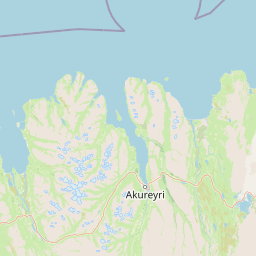
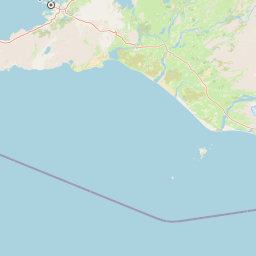
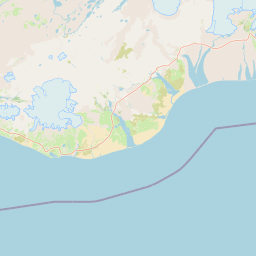
The map below places common short-rental windows in their real geography. KEF is the starting point for pickup, return, and luggage handling. Reykjavík is the city base with the highest concentration of parking and walking. Hveragerði can serve as a short-distance point towards the South Coast or the hot-spring river. Þingvellir marks the Golden Circle branch where driving freedom starts to matter. Selfoss is a reminder that a one-day rental does not automatically leave room to add the South Coast. These positions show the scale of the decision; they are not navigation or same-day road-condition guidance.







Reykjavík parking: seeing a space does not mean seeing free parking

On-street paid parking in Reykjavík is divided into P1 through P4, with different rates and hours. Current public information lists P1 at 660 kr per hour for up to three hours, P2 at 240 kr per hour, P3 at 240 kr per hour for the first two hours and 70 kr per hour thereafter, and P4 at 240 kr per hour. These are public city-parking rules, not hotel parking rates. The parking meter and road signs at the location take priority, while temporary pedestrian streets or construction can change which spaces are available.
| What you see | Easy but wrong conclusion | Cost that actually needs counting | More suitable choice |
|---|---|---|---|
| The hotel has no free parking | A rental is still more convenient than an activity transfer every day | Parking fees, time spent finding a space, and walking between the car and hotel | Skip the car on city days and collect it for remote days |
| P1 is close to the sights but has a three-hour limit | Parking once means you can explore all day | Whether you must move the car, pay again, and interrupt the city plan | Compare P2, garages, and walking routes rather than choosing the nearest space |
| There appear to be many empty spaces at night | Parking must also be easy during the day | Paid hours, Sunday rules, temporary closures, and the hotel entrance | Follow the signs at the location and ask the hotel where luggage can be unloaded |
| The rental company says “city pickup” | The counter is close to the hotel and luggage does not matter | Transport to collect the car, luggage storage, return travel, and the initial fuel level | Schedule pickup on the first morning when you genuinely leave the city |
If you have already booked a central hotel, ask three small but useful questions: Can you unload luggage briefly at the entrance? Which district has the nearest legal parking? On the return day, do you need to drive out of the city before heading back to the airport" Choosing between central Reykjavík and the harbour should depend on more than the walking distance to the church. It should also reflect whether you truly need a vehicle every day.
Turn the cost into an equation: a one-day rental is not “daily rate × one day”
Do not base the decision on a starting price for unselected dates. Begin with a replaceable sample calculation: total rental-window cost = contracted rental price + insurance / additional driver + pickup and return transport + fuel + parking / tunnels + available credit tied up by the deposit + transfer flexibility lost because of the rental. Leave the figures blank until the checkout pages show the same dates, vehicle class, cover, and party size.
| Cost category | Remote-day rental only | Full-trip rental | Question to ask yourself |
|---|---|---|---|
| Rental price and cover | You may pay for fewer days, but the short-rental daily rate or cover may not be the lowest | The daily rate may be lower, while still covering city days when you do not use the car | Does the car complete an essential task on a city day? |
| Pickup and return time | Pickup and return each take part of a morning or afternoon | There is one fewer handover, but the first and last days must fit the airport direction | Which option removes one transfer from a fixed activity? |
| Parking and fuel | These costs are concentrated on the days when you need the car and are easier to estimate | City days can still bring parking, short-distance fuel, and time spent looking for a space | If I am not driving today, why am I still paying this part? |
| Cash flow and flexibility | You may have another pre-authorisation or deposit process | The deposit and any non-refundable rental period tie up money for longer | Which payment would make me hesitate to change plans because of weather? |
One fixed South Coast day for two people does not automatically justify a full-trip rental. Four people with substantial luggage do not automatically need a car on city days. Put the day tour’s transfer, duration, and lack of spontaneous stops in the same row as the rental costs before comparing. If an activity has a fixed meeting point, check the order for booking Iceland activities and activity meeting points; otherwise, “the car saves us a transfer” may save only an imaginary connection.
ICENAVI Rental Window Score: when is it worth keeping the car?
Give each category 0–2 points. Put a full-trip rental among your first choices only at seven points or above; at four to six points, compare split rentals first; at three points or below, city days usually belong to walking, buses, or activities with transfers. This is not a rental-company rating. It is a shared way to ask what the car needs to do today.
| Dimension | 2 points | 1 point | 0 points |
|---|---|---|---|
| Route freedom | Flexible stops, detours, and the accommodation exit are central to the day | Some sections need freedom; the rest can use a transfer | The itinerary already has fixed meeting points and transfers |
| City parking | The accommodation has dependable parking and you also need to leave the city | Parking exists, but the cost or entrance has not been confirmed | There is no city parking and the plan is walkable |
| Luggage handling | You change bases daily and the boot clearly reduces carrying | Only the first and last days need a connection | You stay in the city and can leave luggage at the hotel |
| Time sensitivity | Missing a transfer would invalidate a fixed activity or accommodation booking | One activity requires fairly precise timing | The day is walkable or can be arranged flexibly |
| Value of a fallback | If roads change, you need to adjust accommodation and stops yourself | Only one stretch is exposed to weather disruption | Cancellable activity transfers already have an indoor backup |
A high score does not mean you must rent. It means the car has enough work to offset its fixed cost. A low score does not mean giving up on remote sights; it signals that driver fatigue, transfers, and parking belong in the same comparison. You are choosing a day you can actually complete, rather than paying for a car that only looks useful in photographs.
ICENAVI · THE RENTAL-WINDOW DECISION
If today is only a city day, what is the car doing for you?
If you cannot answer, do not extend the rental yet. Keep the car for days that require flexible stops, travel between regions, or easier luggage handling. Give city days back to walking, transfers, and a hotel that lets you rest earlier. Renting one fewer day is not a victory, and renting one more is not a failure. The important question is which option that payment preserves for each day.
Ten questions to ask before paying
- On the arrival and departure days, will the car genuinely save more time than a transfer?
- Can the hotel legally accommodate luggage unloading, parking, and an overnight pickup, and are the cost and entrance clearly stated?
- On a city day when you do not drive, how much will parking, fuel, and the rental period still cost?
- Will renting for one day create another transport journey for pickup and return, another pre-authorisation, or a luggage-storage problem?
- Does a full-trip rental cover city nights when you do not need a car?
- Are the vehicle class, cover, drivers, deposit, and cancellation terms visible together at checkout?
- If the Golden Circle, South Coast, or an activity meeting point changes time, which gives you a better fallback: the car or the transfer?
- If roads or weather change, can you keep your hotel without having to force a drive back to Reykjavík?
- Have you put transfers, tour fees, fuel, parking, and driver fatigue for two or four people into the same table?
- Are you renting a working window, or simply buying the feeling that having a car is safer?
Start by treating Reykjavík as a destination that does not require a car, then add the genuinely remote days back in. That usually makes the decision clearer than renting from the first hour. If you are planning the Ring Road, continue with legal campervan overnight stays and seasonal restrictions and overnight accommodation bases. If you are entering the city on the first night and collecting a car the next day, use the airport bus versus rental-car calculation for two or four people to separate the first leg. For a city stay plus one remote day, the rental-window table on this page is enough for a first screening.
RELATED READING
Separate the city from the car
Reykjavík as a city baseCentral Reykjavík or the harbourRefuelling and card pre-authorisationMORE READING
Reconnect remote days with the route
Self-drive or a day tourOfficial road conditions and offline mapsCampervan overnight stays and winter restrictionsReferences
References
The following sources were checked on 5 September 2026. Parking rates, transport timetables, rental terms, roads, transfers, and activity availability can change. Before paying, follow the official page for the day, the signs on site, the contract, and the checkout page.
- Reykjavík Parking Service | Obligation to pay: P1–P4 rates, hours, limits, and payment methods.
- Reykjavík Parking Service | Parking meters: licence-plate entry, parking-meter payment, and the areas covered by different tickets.
- Reykjavík City | Paid parking signage: area signs, valid hours, and the priority of temporary traffic signs.
- Strætó: entry point for Reykjavík and Iceland’s public bus network; recheck routes and departures before setting off.
- Isavia | Keflavík Airport: KEF airport information; rental desks, transfers, and flight arrangements depend on the current day’s information.
- OpenStreetMap contributors: base map and attribution for the rental-window location map; positions are for geographic scale only, not navigation, parking, or road assurance.
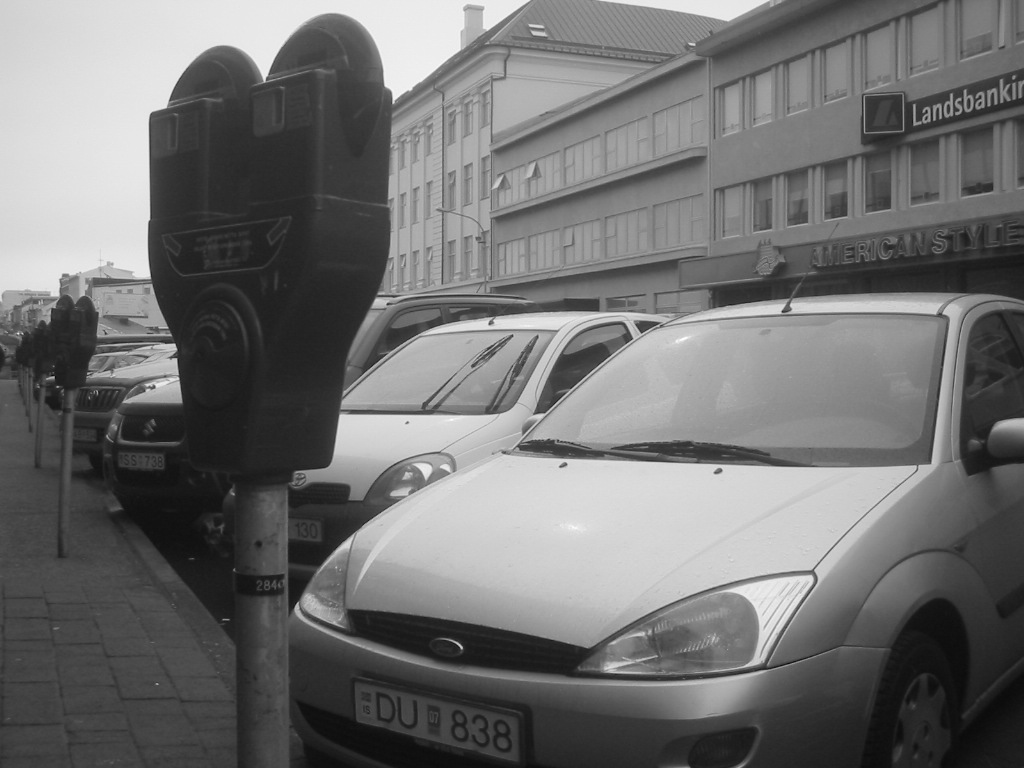
- Hero image: Parking meter (485321925)/Wikimedia Commons; the photograph illustrates Reykjavík street-parking conditions and does not represent current rates, signs, or available spaces.
.jpg)
This page is an L1 rental-window decision entry point. It does not contain a rental CTA: first decide which days the car genuinely needs to work, then move to a verified rental, transfer, accommodation, or activity transaction page.
Q&A | Questions to settle before departure
If I am staying in central Reykjavík, should I rent a car for the whole trip?
Start with hotel parking, transfers for city activities, and the days when you leave the city. A car on city days adds rental cost, parking, and pickup and return time together.
Will renting for only one day waste too much time collecting the car?
If that day genuinely takes you to the Golden Circle or South Coast, concentrating the rental can prevent several days of inactivity. It pays off only when pickup, luggage, and the direction of the following accommodation are arranged as part of the same day.