
ICENAVI DRIVE FIT · FUEL & CARD HOLDS
Separate the card hold from the real fuel charge before choosing your next stop
The scores consider payment authorisation, card and pump procedures, station service, receipt evidence, refuelling cost and how easily the transaction can be checked when returning the rental car. They are not live fuel prices or a promise about bank posting times. Brand and card-issuer rules vary, so check again before departure.
Know where to verify the authorisation, final charge, receipt, next station and rental-car return evidence; the pump price alone does not solve payment or route decisions.
N1’s 22,000 ISK is an authorisation example, not the final fuel cost. Two bank entries may show the temporary hold and the final charge in sequence.
Confirm the fuel type, card PIN and available balance, then follow the brand’s interface: authorise, select the fuel, fill up, return the nozzle and collect the receipt.
A 24/7 pump does not guarantee toilets, food, printed receipts or staff. Before a long transfer, save two checkable options on either side of the journey.
The pump number, time, final amount, receipt and bank screenshot can connect one transaction if a hold remains or the rental-car fuel level is disputed.
Refuel while two options remain and combine fuel, toilets, dinner and accommodation in one stop instead of turning back to save a small amount on fuel.
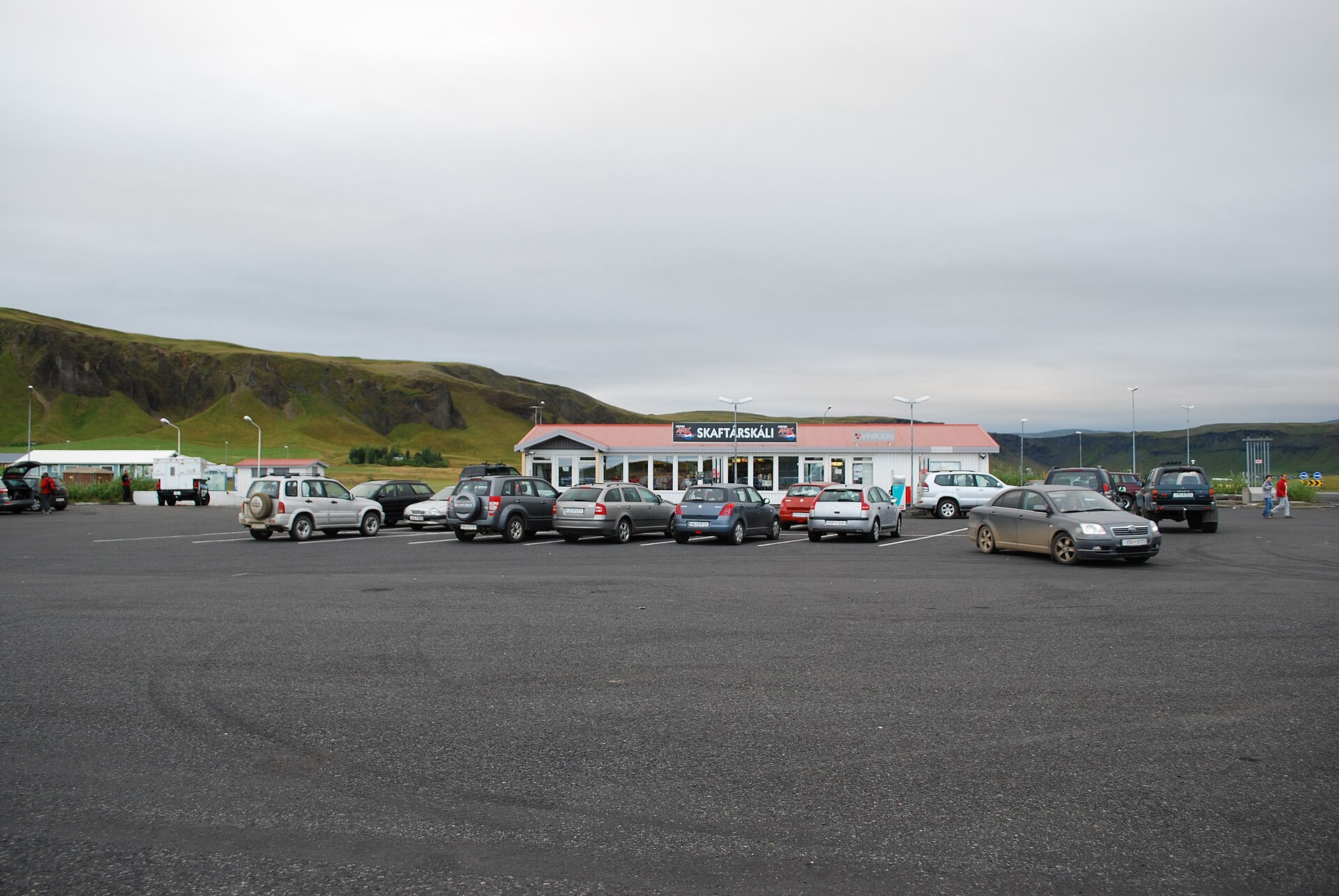
Skaftárskáli looks, in the photograph, like the sort of place where you pull over and refuel without much thought: a large car park, food service and several cars beside the pumps. On a Ring Road day, though, you may already have been driving for a long time from Vík, someone in the car may need a toilet, and the weather may be changing. You are deciding whether to handle refuelling now; waiting for the next option may mean another stretch with no service.
This page is not a nationwide petrol-station directory, because brands, opening hours, fuel types and self-service equipment change. It turns station directories and payment terms into decisions you can make from the car: when to fill up, when not to trust a map icon by itself, what to record when a preauthorisation appears, and how to change accommodation or activities if the route no longer leaves enough room to refuel calmly. To assess whether a petrol, hybrid or PHEV suits your route, continue to the real cost of petrol and hybrid cars; that page covers vehicle choice, while this one covers what to do at the pump.
A tank of fuel preserves choices for the next stretch
Navigation usually tells you how many kilometres remain. It cannot promise that the next station will still be open, that its pump will accept your card or that you will arrive with enough energy to complete a self-service payment. The simple Ring Road rule is to refuel while two options remain, rather than waiting until one option is left and hoping it exists.
| Where you are | Safer move | Cost of skipping it | ICENAVI’s call |
|---|---|---|---|
| Reykjavík / Keflavík | After collecting the car, confirm the fuel type and filler-cap side; if leaving the city the next day, make a small test payment first | Discovering in the countryside that the card, PIN or fuel type is unsuitable | Use the city as a payment rehearsal, not merely a starting point |
| Selfoss / Hella / Hvolsvöllur | Restore the fuel level before heading east along the South Coast, while also dealing with food and toilets | Pushing refuelling beyond Vík because you do not want to miss a sight | The first real decision window on the South Coast |
| Vík / Kirkjubæjarklaustur / Skaftafell area | Check the station directory and that day’s staffed or self-service information before deciding whether to fill up in town | Turning the road before Jökulsárlón into a search for one guaranteed station | Do not let a scenic photograph plan your refuelling |
| Höfn / Egilsstaðir / Akureyri | Place refuelling before or after a long transfer in the same stop as accommodation and dinner | Reaching a remote night-time pump with no second chance if the card fails | Larger towns reset both the fuel level and the mood |
South Coast refuelling options include Selfoss, Hella, Hvolsvöllur and Höfn; Freysnes, Fagurhólsmýri, Nesjum and Höfn also have stations that can be checked, with some self-service pumps available 24 hours. This is useful information, but “self-service” does not mean your card will necessarily pass, nor does it guarantee that toilets, food or staff are available inside. Treat it as two separate questions: can the pump process payment, and do you need a staffed stop with food, facilities and connectivity?
Identify the station type first: similar signs, different procedures
N1, Olís/ÓB and Orkan are common Icelandic brands. The supplier’s own directory is more dependable than a tourism map from several years ago. N1’s directory can be filtered by region, fuel type, Self Service, 24/7 access, toilets and food; Olís/ÓB also lists self-service, 24-hour access, toilets, charging and fuel types on its station pages. Even when two pumps both display 95, their payment interfaces and preauthorisation rules may differ.
| Station type | Reasonable expectation | Do not assume | Save before arrival |
|---|---|---|---|
| Staffed Service Station | Someone may help with fuel type, receipts or payment problems; some have food, toilets and car supplies | Staff will still be present at night or every counter will process a foreign card | Station page, opening hours, address and alternative station |
| Self Service / 24/7 pump | The pump may operate around the clock, which suits early departures and late arrivals | The shop, toilets, receipt printer or card authorisation will work normally | Brand payment instructions, card PIN and available balance |
| Low-cost self-service station, such as some ÓB or Orkan locations | The station is mainly self-service and the supplier provides its own operating steps | The sign colour indicates the fuel type, service hours or another brand’s payment rules | Station address, nozzle labels and official instructions |
| Single remote option on a long stretch | It may be the only chance to refuel in that section | The next station is only “a little farther away” or payment will work without a signal | The two surrounding towns, accommodation phone number and road information |
Before touching the pump, check the filler cap or rental handover papers rather than relying on colour. Orkan’s instructions use a black handle for diesel and green for 95 petrol, but that is one supplier’s guide. Different stations, viewing angles and night lighting make colour unreliable. If you are driving a hybrid or PHEV, confirm the petrol grade from the vehicle and rental agreement; the fact that a hybrid can recharge itself does not mean you can postpone refuelling.
Process and cost table: self-service fuelling in 60 seconds—authorise first, fill second, check the real charge last
The first time you use a self-service machine, the large number on screen can be alarming. N1’s payment information gives 22,000 ISK as an example of the initial authorisation, temporarily reserving part of your available balance. The transaction is settled against the actual amount after fuelling, and N1 then cancels the authorisation and charges the final amount. If the card balance is below 22,000 ISK, the authorisation may be handled according to the available amount returned by the card issuer. This is not a useful way to test whether a card has funds, so confirm that both your primary and backup cards are usable before departure.
| Moment | What the screen or bank may show | Evidence to keep | What not to do in a hurry |
|---|---|---|---|
| After inserting or tapping the card | Authorisation approved and a temporary hold; N1’s example is 22,000 ISK | Photograph the station, pump number and time; note which card you used | Remove the card or switch cards simply because the amount looks large |
| Selecting the fuel and lifting the nozzle | Select the fuel through the supplier’s interface and begin metered fuelling | Confirm the rental agreement and filler-cap fuel name match the pump label | Use handle colour instead of reading the label |
| Returning the nozzle | The final quantity and amount appear; the authorisation should be cancelled according to the supplier’s process | Receipt, pump number and final amount; if there is no receipt, record the time and station | Assume the authorisation amount is the final fuel cost |
| Several minutes to several days later | Two entries may appear before the card issuer releases the temporary hold | Bank screenshot, station email and rental handover documents | Pay again or report fraud before checking the transaction |
N1 specifically notes that if two entries appear for the same fuelling, the earlier one is usually the authorisation and may take several days to be cancelled by the card issuer. The timing differs between stations and foreign cards; Olís also lists contacting customer service if the hold has not been released after 24 hours. The practical approach is to use one primary card, take a screenshot immediately, keep the receipt, and use a second card only when the screen clearly says the transaction failed. Do not let the pressure of making a scheduled meeting turn into three consecutive holds.
Once the station is confirmed, the next question is whether that road on your phone still makes sense today. Iceland driving navigation and live road conditions separates Google Maps, offline maps and same-day road notices, so a pleasant ETA is not mistaken for a guarantee that the road is passable.
On the map, petrol stations are breathing spaces on the Ring Road
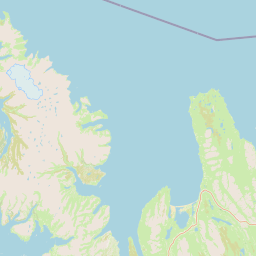
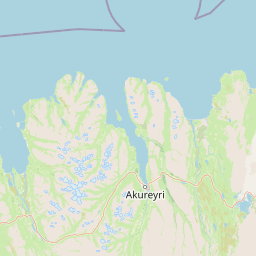
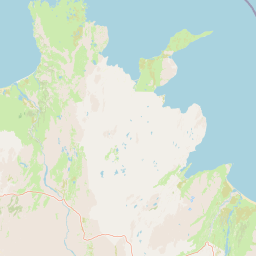
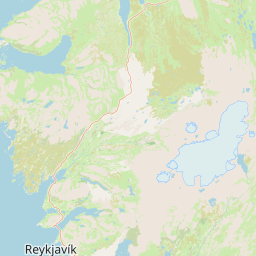
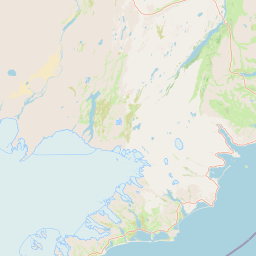
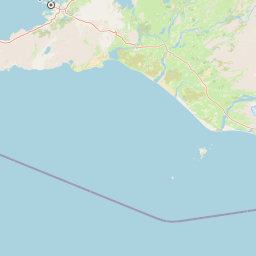
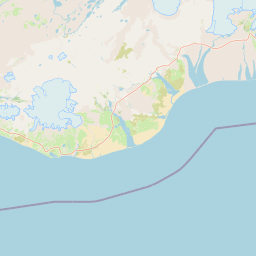
The map below places Reykjavík, Selfoss, Vík, Kirkjubæjarklaustur, Höfn, Egilsstaðir and Akureyri on one OpenStreetMap base. Its purpose is not to list every pump, but to show where longer transfers regain a choice of towns. The markers use public geographic locations; station numbers, fuel types, opening hours and self-service status still need to be checked in the supplier directories before departure.

Driving from Vík to Höfn, do not treat the fact that the route looks halfway complete on a map as proof that your fuel will last. You also need to account for shoulders where stopping is not permitted, wind or snow that slows the drive, viewpoint stops and dinner time. The page on illegal parking and speeding explains why an unlawful roadside stop is not a sensible way to save a few minutes. If a road warning has sent you onto a slower route, check the live road-conditions websites, then return to the station directory and choose again.
Leave a fuel buffer without pretending percentages are precise
The remaining-range figure on a rental-car dashboard is an estimate. Wind, low temperatures, gravel roads, climbs, heating, luggage weight and repeated stops all affect consumption. I will not claim that one percentage always means it is time to refuel, because vehicles and seasons vary too widely. A steadier decision puts the next usable station, an alternative and today’s safe arrival time on the same page.
| Road situation | Fuel decision | Immediate adjustment | Downstream decision |
|---|---|---|---|
| The next stop is a serviced town and the weather is stable | Use the supplier directory and expected arrival time; do not panic over a single dashboard figure | Save an alternative station and accommodation phone number | Keep the sightseeing stop and avoid rushing away |
| The next option is one remote self-service pump and the card has not been tested | Your choices have narrowed; do not delay refuelling again | Test the card and take a screenshot while you still have staff or connectivity | Shorten the farthest detour or change the accommodation direction |
| Winter, crosswinds, gravel or road conditions are slowing the journey | The kilometres shown by navigation do not represent actual consumption | Refuel earlier and review the road and arrival time | Do not speed to recover a missed activity time |
| A station icon exists but its current status cannot be confirmed | Treat it as unconfirmed, not guaranteed | Contact the accommodation or supplier and identify two surrounding options | Link refuelling, dinner and check-in to a town you can realistically reach |
For an electric vehicle, this petrol-station map does not automatically become a charging map; the EV driving guide separates chargers, cold-weather range and accommodation outlets. Do not interpret “there is an N1” as “there is definitely a suitable rapid charger”, and do not treat a plug-in hybrid as a vehicle that never needs a petrol station.
When payment fails, decide whether it is a hold, a rejection or a real supply problem
When a pump displays a red error message, pressing the button repeatedly is a natural reaction. At a remote station, that is how a small problem can become three temporary holds. First record the pump number, time, error message and the last four digits of the card. Let a passenger contact customer service or locate the next station; the driver should not reverse while studying the banking app.
| What you see | What it may mean | Next action | When to change cards |
|---|---|---|---|
| Authorised, but the nozzle does not start | The pump process is incomplete, the nozzle has not been returned or the interface is waiting for confirmation | Use the on-screen cancel or complete option, photograph the pump number and time, and do not insert the card repeatedly | Only after the screen clearly says the transaction failed and the previous attempt has been cancelled |
| The bank shows a large temporary amount, but the receipt is small | The preauthorisation has not yet been released | Keep the receipt and screenshot, wait for the issuer to update, and contact the supplier after its stated time limit | This is not a card-switching problem; do not refuel again just because the larger amount appears |
| The card is rejected and there is no authorisation | Foreign-card settings, PIN, available balance or a pump fault | Ask at a staffed counter or follow the alternative station you saved earlier | Confirm from a safe location that the first attempt did not settle before testing the backup card |
| The fuel or nozzle label does not match the rental agreement | You are looking at the wrong pump or the vehicle terms remain unconfirmed | Stop, photograph the label and contact the rental company | This is not a card problem; do not change cards and force the fuelling |
If you are already trying to reach a fixed-time ice-cave tour, whale-watching trip or airport return, a failed refuelling attempt is no longer only a station problem. Reconnect the order of your activity bookings with the KEF return process and decide whether to notify the supplier, remove a detour or stay earlier in a serviced town. Payment confirmation does not create fuel for the car or turn a remote pump into a staffed counter.
ICENAVI’s refuelling score: measuring your escape routes, not ranking stations
This score is an itinerary-editing tool, not a supplier ranking. Each category is worth 0 to 2 points. A total of 8 or more means two options remain; below 6, rearrange the plan before leaving a connected area. Price is deliberately excluded: cheaper fuel can cost more overall if it sends you on a long detour.
| Dimension | 2 points | 1 point | 0 points |
|---|---|---|---|
| Station confirmation | The supplier directory lists the station, fuel type and service information | A map pin exists, but the station page confirms only some details | You are relying only on an old review or screenshot |
| Payment fallback | The primary card has been tested, and backup-card and customer-service information is ready | There is one card only or no record of what to do after an error | You are testing the card for the first time at the pump |
| Distance to the next option | There is one checkable option before and after this stop | The next station exists, but staffed or self-service status is unconfirmed | There is no alternative stop |
| Today’s conditions | Road, weather and arrival time still have a buffer | Wind, snow or an activity is beginning to narrow the available time | You are already trying to make up time through speed |
| Rest-stop support | Fuelling can also cover toilets, food or charging | There is only a pump, so another rest stop is needed | You can only wait on the roadside |
A high score does not tell you to add another attraction. It means that if the card fails, the weather worsens or someone needs a break, you still have a clear next move. This is why petrol-station pages connect with hotel and activity pages: if a refuelling stop points toward unsuitable accommodation, a low tank can push you back onto an already uncomfortable road.
Ten questions before departure: deal with pump-side uncertainty early
Screenshot this list and give it to the passenger who is not driving. The driver should focus on parking safely and handling the nozzle; a passenger can manage the station page, receipt and bank screenshot so that everyone is not doing the same task beside the pump.
- Which fuel type is clearly stated in the rental papers and on the filler cap?
- Is the next station staffed, Self Service or visible only on a map?
- Does the supplier page list the fuel type, 24/7 access, self-service, toilets and opening hours?
- Can the primary card authorise at a foreign self-service pump, and have the PIN and available balance been confirmed?
- Is the backup card with another traveller rather than in the same wallet?
- Before fuelling, have you recorded the station, pump number, time and dashboard fuel level?
- Could the large temporary amount on the card simply be a preauthorisation rather than the final fuel charge?
- After returning the nozzle, do you have a receipt, or at least the final amount recorded?
- If this pump fails, where are the two acceptable options before and after it?
- Would a failed refuelling attempt affect tonight’s check-in, tomorrow morning’s meeting point or your KEF return time?
If you cannot answer one of the ten questions, do not treat the station as something to work out when you arrive. Handle it while you still have connectivity, staff or another option. If you are preparing to continue east from the South Coast, the South Coast destination hub can help reorder Vík, the black-sand beach, Jökulsárlón and your accommodation direction. If the day is already too long, the self-drive or day-tour comparison redistributes the transport responsibility instead of asking one tank of fuel to carry the whole day.
Related reading
Connect the car and the route first
Choosing between petrol and hybrid carsHow to read Iceland’s road-condition websitesHow to avoid illegal parking and speedingMore reading
Then fit tonight and the fixed times
South Coast destination hubKEF return, refuelling and early flightsThe order of Iceland activity bookingsReferences
References
Station services, payment interfaces, prices, opening hours and road conditions change. The following sources were checked on 5 September 2026; before departure, rely on the supplier’s station page, rental agreement, pump interface and card-issuer records.
- N1 | Payment information: 22,000 ISK self-service authorisation, cancellation after fuelling, low-balance handling and duplicate transactions that may take several days to release.
- N1 | Stations: Find stations by region, fuel type, self-service, 24/7 access, toilets, food and other services.
- Olís/ÓB | Gas Stations in Iceland: Filters for stations, self-service, 24-hour access, toilets, fuel types and charging.
- Olís | Travel Iceland: ÓB’s self-service network and customer-service guidance when an authorised amount has not been released.
- Orkan | How to fill up your car: This brand’s payment-machine procedure, fuel selection after authorisation and nozzle-colour examples; it should not be treated as a nationwide rule.
- Visit South Iceland | Gas Stations: South Iceland refuelling stops and addresses, including Selfoss, Hella, Hvolsvöllur and Höfn.
- Visit Vatnajökull | Bensínstöðvar: Petrol stations and selected 24-hour self-service information for Freysnes, Fagurhólsmýri, Nesjum and Höfn.
- Hero image: Chmee2/Wikimedia Commons, GFDL/CC BY-SA 3.0; photographed in 2009, showing the Kirkjubæjarklaustur service station and car park but not current prices, opening hours, fuel types or equipment.
- OpenStreetMap: Base map and attribution for the Ring Road refuelling map; markers show town-scale geography, not a same-day station list, opening status or navigation.

This page is an L1 refuelling decision entry point. It does not include rental-car or petrol-station CTAs: confirm the fuel type, payment authorisation and fallback options first, then handle transactions through the downstream vehicle, accommodation, activity or return pages.
Q&A | Questions to answer before departure
Does a petrol-station preauthorisation mean I have been charged 22,000 ISK?
Not necessarily. A preauthorisation reserves funds for payment; the final amount depends on the completed fuelling transaction and bank processing. Keep the receipt and pump number so you have evidence if duplicate charges appear.
Which parts of the Ring Road should not be left until the fuel level is very low?
Refuel while two options remain on long South Coast transfers, through the Eastfjords and on remote stretches. Do not assume the next station shown by navigation will definitely be open.