
The bed is flexible; the nightly work is not
Campervans, motorhomes and trailers generally need an organised campsite for the night in Iceland. A bed in the vehicle is not wild-camping permission unless the landowner or another lawful rights holder has clearly allowed it. Summer gives you longer daylight and more campsite choices. In winter, opening dates, electricity, wind, snow, short daylight and a nearby indoor fallback all affect the route. Each day also includes finding a legal site, topping up water, emptying wastewater, staying warm and packing the living space away before moving on.
ICENAVI DRIVE FIT · CAMPERVAN REALITY
Can you handle the work a campervan demands each night?
These scores are editorial judgements based on legal overnight stops, season, vehicle equipment, supplies and contingency options. They are not supplier ratings. Campsite opening, road conditions, vehicle specifications and rental terms must be checked for your travel dates.
A formal campsite gives you a legal address. A scenic pull-off, protected area or private land cannot be assumed to allow overnight stays simply because no prohibition sign is visible.
Long summer daylight and wider campsite choice help. In winter, wind, snow, ice, short days and travel restrictions can all narrow the range of a campervan trip at once.
Heating, battery capacity, fuel, ventilation, condensation, sleeping arrangements and somewhere to keep wet clothing all affect the night. “Heated” is not a promise of comfort.
Fresh water, wastewater, rubbish, showers, laundry and electricity all have service hours. The campsite fee may not include every facility your vehicle requires.
You have a real fallback when a hotel, shorter route or open campsite is available. A campervan cannot solve a road closure, fatigue or a road excluded by the rental agreement.
A campervan can make sense in summer once each campsite and vehicle facility has been checked night by night. In winter, on a long Ring Road circuit or whenever hotel-quality sleep is the priority, a mixed stay is often more dependable.
Picture the scene: you have finished at the black-sand beach near Vík. Darkness has arrived earlier than expected. There are two people in the vehicle, one wet jacket, a bag of freshly bought bread and a chemical toilet that still needs attention tonight. “We have a vehicle, so we can go anywhere” is now only half true. The vehicle is a room on wheels, but the campsite is the address where it can legally stay, take on water, dispose of wastewater, provide showers and connect to power.
This page deals specifically with the campervan decision; it does not force an ordinary rental-car trip into a campervan answer. If you simply want to follow the Ring Road and see the South Coast, start with the 2WD South Coast route boundaries. If you are comparing vehicle types, luggage space and insurance, small car or SUV is the more relevant guide. To recalculate “campervan or hotel” around seven nights, continue to the seven-day campervan and hotel route comparison. The central question is where you can legally sleep, resupply and pack away your living space each day. Being able to drive there is only one part of it.
| Your priority | What a campervan gives you | What it costs you | A more sensible alternative |
|---|---|---|---|
| You want accommodation to move with the route | No daily hotel check-in and check-out; greater flexibility on the road | You still need a legal campsite every night; a scenic stop cannot become your bedroom | Camp for selected summer nights and keep cancellable hotels as a fallback |
| You need to stay warm, dry and well rested in winter | Activities can be organised around one vehicle, with one fewer car handover | Heating, power, condensation, wet clothing and campsite availability all respond to the weather | Use a hotel as your base and keep the campervan to a short section with confirmed campsites |
| Your group travels with a lot of luggage | Under-bed or in-vehicle storage can reduce how often bags have to be moved | The rear storage area, sleeping setup, wet clothing and cooking all compete for the same space; a listed feature does not guarantee suitable dimensions | Choose a regular car with hotel rooms, or confirm the exact vehicle and luggage arrangement before booking |
| You want to keep the budget down | Some meals and transfers can be combined, which may help over a longer stay | Campsites, electricity, showers, laundry, cleaning, supplies and time come in addition to the rental | Put the complete cost for two or four people beside the hotel-room total |
Four common misconceptions about campervans
| The imagined version | What you encounter in Iceland | Check before departure | ICENAVI’s judgement |
|---|---|---|---|
| A bed means you can stop and sleep | Campervans generally need an organised campsite for overnight stays, and protected areas may impose tighter limits | Whether the campsite is open that night, accepts your vehicle type and requires a reservation | Write a legal address into each day’s plan, not only the attraction |
| A campervan is automatically a 4WD | Sleeping arrangements and road eligibility are separate matters; F-roads, river crossings and rental terms have their own rules | The vehicle’s drivetrain, seasonal road access and prohibited uses in the rental agreement | Do not treat the mattress inside the vehicle as evidence that a road is permitted |
| A summer campsite operates all year | In shoulder season and winter, reception, showers, electricity or rubbish collection may not be available | Opening dates, reception hours, payment method and a snow-day alternative | Until it is confirmed, treat it as closed and keep indoor accommodation available |
| Cooking in the vehicle always saves money | Ingredients, fuel, cleaning, laundry, campsite fees and time spent resupplying all appear in the budget | The fridge, cooker, battery, fresh water, wastewater facilities and nightly charge | Count the saving only if you will genuinely use the kitchen and stay several nights |
Vík and five overnight points: attractions belong to the day, campsites to the night
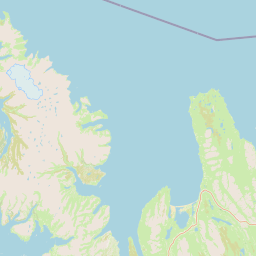
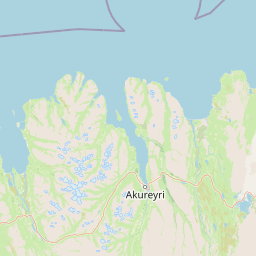
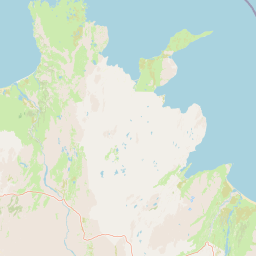
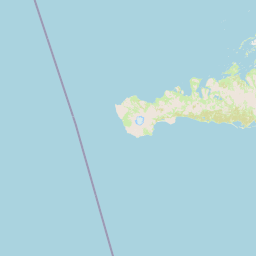
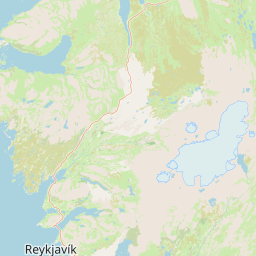
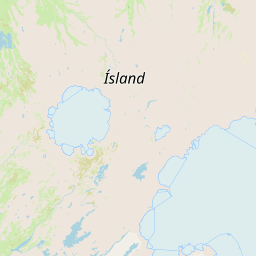
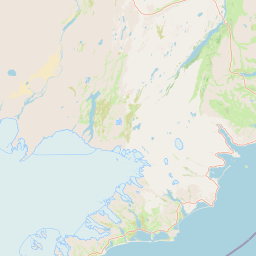
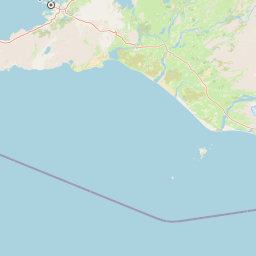
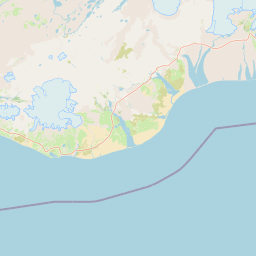
The map below changes the question from “where do we want to go?” to “where can we legally stop tonight?” KEF and Reykjavík are useful places to collect the vehicle, buy supplies and clarify its equipment. Vík is a common South Coast base, but the black-sand beach is not a campsite. Skaftafell is a reminder that national-park areas require you to use formal camping arrangements. Mývatn shows why dense sightseeing areas in the north still require current checks on rules and winter operations. The points on the map are public geographic locations, not same-day availability or turn-by-turn directions.



The tent exception has a boundary: it does not extend to vehicles
The Icelandic Environment Agency’s visitor guidance treats campervans, motorhomes, trailers and ordinary camping tents separately. Spending the night in a campervan outside an organised campsite generally requires permission from the landowner or another rights holder. Traditional tent camping may fall under different rules in very limited circumstances where no campsite is available, but that exception cannot be transferred to sleeping inside a vehicle. Around Mývatn, Þingvellir, Dyrhólaey and Vatnajökull National Park, protected-area management rules may impose additional restrictions.
That is why a car park being silent about overnight stays does not amount to permission. Parking is daytime use of a space; camping is a different use of the land. Moving tables, awnings or cooking equipment outside the vehicle makes it even harder to argue that you are merely parked. If signs, gates and operator instructions appear to conflict, stay at a confirmed formal campsite and ask the managing authority. Another traveller’s location from the previous night is not a legal basis.
| Location or situation | What you may assume | Evidence you need | What to do without evidence |
|---|---|---|---|
| Organised campsite | It is intended to receive campers, but that does not mean it is open today or has an electricity pitch | Official or campsite-page confirmation of opening dates, fees, vehicle types and facilities | Call ahead or use another campsite that has confirmed availability |
| Attraction car park | Assume daytime parking for visiting the attraction only | On-site signs and clear overnight permission from the managing authority | Leave before sunset and return to a formal campsite |
| Protected area or national park | Restrictions may be stricter than along an ordinary road | Current rules from the managing body and its list of designated campsites | Use designated campsites only; do not treat nearby open ground as an alternative |
| Private land | Not seeing the owner does not mean you have permission | Clear consent from the landowner or rights holder | Do not enter or stay overnight; return to a public campsite |
If your route includes Mývatn and Húsavík, check campsite rules separately from whale-watching times, geothermal areas and bathing hours. If it includes Vík and the South Coast, include the designated-campsite rules near protected attractions such as Skógafoss in the same evening’s decision. When the rules do not give you a clear answer, driving a little farther back to a formal campsite is usually less trouble than gambling on an unmarked patch of grass.
One campsite’s details can rewrite the day’s driving plan
Take a publicly listed campsite in Húsavík as an example. Its summer 2026 information lists an adult fee of 2,200 kr per person, electricity at 1,500 kr per day, a washing machine or dryer at 800 kr per use, and an accommodation tax of 400 kr per sleeping unit. Reception is split between 9:00–11:30 in the morning and 19:00–22:00 in the evening. These figures describe that campsite’s own charging structure. Campsite fees, electricity, laundry and reception hours are not automatically included in a vehicle’s daily rental price.
| Publicly listed item | Example information | What decision it changes | Check again before payment or departure |
|---|---|---|---|
| Adult campsite fee | 2,200 kr per person, listed for summer 2026 | The true difference between two and four travellers, and between a campervan and hotel stay | Current-season price, children’s age bands and whether tax is included |
| Electricity | 1,500 kr per day | Whether to connect power for heating and battery use | Socket type, whether your pitch has power and whether an extension lead is needed |
| Laundry and drying | 800 kr per use | How to handle wet clothing and towels, and whether staying an extra night is worthwhile | Opening hours, payment method and peak-season queues |
| Reception hours | 9:00–11:30 and 19:00–22:00 | Whether you can check in and ask about facilities after an activity | Late-arrival procedure, night entrance and emergency number |
If you are taking a boat trip from Húsavík, put the sailing time, your return to the harbour and the reception window on the same plan. Being nearby does not mean you can take your time. At night, the most valuable thing a campervan gives you is a confirmed legal address, so you are not solving the accommodation question after dark. For a clearer separation between activity meeting times and where you sleep, read checking Iceland activity meeting points, then use the Mývatn and Húsavík destination page to arrange the northern stops.
Summer, shoulder season and winter: one vehicle becomes three different products
| Trip version | The campervan work involved | Checks you cannot skip | A more honest alternative |
|---|---|---|---|
| Ring Road in June–August | Every night follows a rhythm of campsite arrival, supplies, showers and packing away | Campsite capacity, vehicle dimensions, reception hours, electricity and rubbish facilities | Fix accommodation and rent a regular car during the day, or take a partial self-drive trip |
| May or September shoulder season | More open pitches may be available, but services and weather are less dependable than in summer | Whether each campsite is open, how the heater performs in cold weather and where the indoor fallback is | Camp only for a short section with confirmed sites and stay in hotels for the rest |
| October to April | Low daylight, wind, snow, ice, electricity demands and seasonal campsite closures arrive together | Winter vehicle testing, campsite opening, roads and same-day SafeTravel information | Use hotels as a base and choose winter activities with a driver |
| Travelling with children or four people | Eating, changing clothes and sleeping in the vehicle during rain can quickly turn it into a very small room | Bed dimensions, seat belts, child seats, heating and somewhere for wet clothing | Book two rooms or a family room so sleep does not depend on the weather |
In winter, do not equate “has heating” with “will be comfortable”. Fuel, battery capacity, ventilation, condensation and body insulation all become practical tasks. Strong wind makes opening doors and parking more difficult, while snow means arriving earlier, not later. SafeTravel even provides a separate winter campervan driving test, which says something important: a campervan is not an ordinary car with a mattress added.
If you still want the feeling of moving between places in winter, I would make the campervan one section of the trip rather than the whole circuit. Choose a base with dependable indoor facilities, keep daytime outings short and retain a hotel as a fallback. For winter roads, stopping decisions and vehicle equipment, continue to when to stop driving in a snowstorm and winter tyres and vehicle collection equipment. Summer camping videos should not make this decision for you.
ICENAVI Camper Fit: the question is whether you can complete the nightly work
I score five dimensions from 0 to 2: legal overnight stays, weather margin, sleep and heating, supply services and route contingencies. A total of 8 or above puts the campervan into the final two options. A score of 5–7 means shortening the camping section or mixing it with hotels. At 4 or below, switch directly to a hotel-based or driver-led version. This is an ICENAVI decision tool, not a supplier rating, and it cannot guarantee that roads will be open.
| Dimension | 2 points | 1 point | 0 points |
|---|---|---|---|
| Legal overnight stays | An official or campsite-confirmed address is arranged for every night | There is a candidate campsite, but opening or late-arrival arrangements are unresolved | The plan depends on attraction car parks or unidentified open ground |
| Weather margin | A storm day has a short route, indoor base or hotel fallback | You can delay departure but have no accommodation alternative | A change in weather means enduring it in the vehicle or making a long transfer |
| Sleep and heating | Beds, heating, ventilation, power and luggage space are tested or confirmed in writing | The feature is listed, but its actual energy use or dimensions are unknown | Travellers have to imagine how they will share beds, stay warm and store belongings |
| Supply services | Fresh water, wastewater, rubbish, showers, laundry and electricity are built into the plan | A serviced town is available, but operating hours are unconfirmed | Every day depends on the next service still being open |
| Route contingencies | Roads, vehicle specification, activities and the next night’s address all work together | One road section or activity time is still unresolved | The campervan is being used to solve a closure, fatigue or a prohibited road |
The value of this score is that it turns “I really want to try a campervan” into a table you can discuss with the people travelling with you. If legal overnight stays score 0, the total cannot rescue the plan. If supplies score 1, consecutive nights or advance shopping may solve the weakness. The aim is not to chase a perfect number; it is to identify which missing piece will leave someone dealing with the consequences at the end of the evening.
ICENAVI · The final campervan vote
Are you buying access to the landscape, or evenings when everyone still has energy after packing up?
If you enjoy cooking slowly, are happy to follow campsite hours and have concrete expectations about showers and sleeping space, a summer campervan can be a distinctive way to travel. If you want to use the vehicle as though it were a hotel and do not want to check campsites or weather in winter, the rental price may buy less freedom than expected. It may buy a room on wheels that comes with a long list of tasks.
Ten questions to ask before booking a campervan
- Does every night have a formal campsite or clear land permission, rather than a plan to “find somewhere later”?
- Is the campsite genuinely open on your dates, and does it offer self-check-in and an emergency number for late arrivals?
- How many people can the vehicle sleep, and after the beds are made up, is there still room for luggage, wet clothing and cooking?
- How do the heating, battery, electrical hookup, fuel, ventilation and condensation systems work?
- Where will fresh water, wastewater, rubbish, toilets and showers be handled, and when does each service close?
- Does the rental agreement permit your roads, vehicle height, vehicle length, trailer or any intended side road?
- Is there a winter vehicle test, snow equipment, a recovery procedure and a clear stopping policy?
- If an activity runs late or a road closes, can you remain at the current campsite or move indoors without driving a long distance at night?
- Have campsite fees, electricity, accommodation tax, laundry, showers and cleaning been placed in the same budget?
- Do your companions genuinely want to handle the daily work of a campervan, or do they mainly like the vehicle in photographs?
A campervan is not the wrong choice. It is simply a choice that needs to be described honestly. You are renting more than four wheels and a bed: each day includes finding a legal address, checking the weather, replenishing water, emptying wastewater, managing wet clothing, watching reception hours and accepting that a hotel may be the better place to sleep. If you want a dense sightseeing schedule and dependable rest, self-drive or day tour can place the most demanding sections with a professional driver. If you need a few days of freedom only on the South Coast or Golden Circle, how to choose your rental-car window separates city parking from the work of collecting and returning the vehicle. Once you have decided on a campervan, connect fuel and card pre-authorisation with official road conditions and offline maps, so the plan rests on more than an attractive accommodation image.
Related reading
Connect legal overnight stays to the route
When to stop driving in a snowstormWinter tyres and vehicle collection equipmentVík destination decision pageMore reading
Then handle activities and accommodation
Checking activity meeting pointsMývatn and Húsavík destination pageSelf-drive or day tourQ&A | Can a campervan stay overnight in an attraction car park?
Can a campervan stay overnight in an attraction car park?
You cannot assume that overnight stays are allowed simply because the car park is open. Follow the Icelandic Environment Agency’s camping rules and land-permission requirements, and choose a formal campsite or a location with clear permission.
What is easiest to overlook when renting a campervan in winter?
Check campsite opening, heating and electricity, shower and water services, short daylight and an indoor fallback for wind and snow night by night. A bed inside the vehicle does not establish any of those conditions.
Is a campervan always cheaper than a hotel?
No. Campsites, electricity, showers, laundry, cleaning, supplies and the time spent packing up all sit outside the rental price. Compare only after placing the complete cost for the same dates side by side.
How can I reduce the cost of getting a campervan decision wrong?
Start with a short section in a season with more campsites and longer daylight. Confirm the beds, heating, luggage space and campsite services, then keep a cancellable hotel as a fallback if the weather changes or a campsite closes.
References
The following sources were checked on 5 September 2026. Campsite opening dates, prices, roads, protected-area rules, vehicle equipment and supplier terms can change, so use the latest official pages and on-site notices before departure.
- Icelandic Environment Agency | Where Can You Camp?: distinction between campervans, motorhomes, trailers and tents staying outside organised campsites.
- Icelandic Environment Agency | Access Rights: guidance on vehicle camping and permission from landowners.
- Icelandic Environment Agency | Skógafoss access and management: an example of designated campsites and vehicle or tent restrictions near the waterfall.
- SafeTravel Iceland | Winter driver’s test: winter campervan driving test, planning guidance and same-day safety reminders.
- Visit Iceland | Húsavík Camping Ground: location, listed summer 2026 fees, facilities and reception hours for Húsavík; not representative of every campsite.
- Visit Iceland | Camping in Iceland: background on camping styles, campsites and travel in Iceland.
- OpenStreetMap contributors: basemap and attribution for the overnight-point map; locations indicate geographic scale only and do not guarantee navigation, availability or road access.
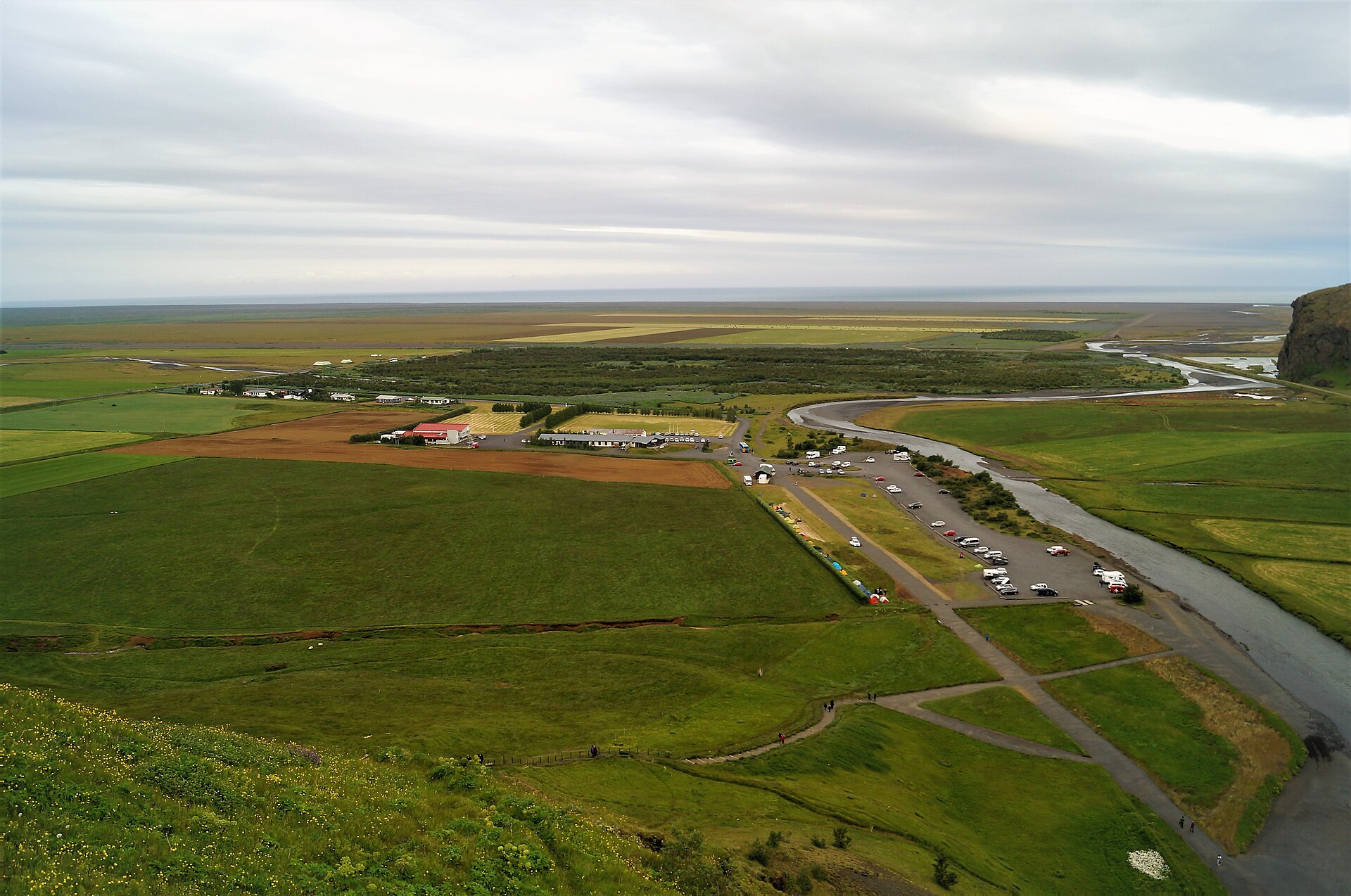
- Hero image: View of Skógafoss campsite and parking lot | Wikimedia Commons; the photograph shows the spatial relationship between the formal campsite and attraction, not current opening, pricing, availability or permission to stay overnight.

This page is an L1 campervan-driving decision entry point. It does not include a rental CTA: confirm legal overnight stays, season and vehicle responsibilities first, then continue to an approved rental, accommodation or activity page.