
Cash is a buffer; the real preparation is two physical cards with PINs
Iceland’s legal tender is the Icelandic króna (ISK), and an ordinary trip does not require exchanging a thick stack of notes “just in case”. The more dependable combination is one physical card enabled for overseas transactions, with a PIN you know, plus a backup card stored separately and a small amount of króna for situations that genuinely require cash.
Self-drive travellers need to understand unmanned-fuel-station pre-authorisations, rental deposits, parking payments and DCC options first; each can temporarily reduce your available funds. Keep receipts, offline information and the locations you may need when the network fails alongside your cards.
ICENAVI PAYMENT · SELF-DRIVE MONEY FLOW
Can your wallet get you through the first unmanned fuel station?
This is a practical decision card for cash, physical cards, PINs, fuel pre-authorisations, parking, backup cards, DCC, receipts and offline payment. Card issuer, fuel-station and rental terms vary, so check your own confirmation before paying.
Cards handle most everyday payments, but a traveller still needs a working physical card and enough available funds for holds.
An unmanned pump may require a PIN and a pre-authorisation, so enable overseas use and check your available balance before the first drive.
Choosing ISK usually leaves the exchange decision with your card issuer; the terminal display still needs to be read carefully.
Hvolsvöllur and Vík are useful supply stops, but receipts and saved payment details matter when a hold or network failure needs checking.
Separating KEF, Hvolsvöllur, Vík, city parking and the next overnight base makes a payment failure easier to handle.
The strongest setup combines a physical card, a backup, enough room for a hold, receipts and a clear ISK payment choice.
This card turns “how much cash should I carry?” into a few payment points you can check. The backup card and small cash reserve help when the main card fails; when the network fails, saved receipts, addresses and rules are more reliable than an improvised search.
| Option | What you keep | What you give up or accept | When to choose it |
|---|---|---|---|
| Two physical cards + a little króna | Everyday card payments, PIN, room for holds and a cash backup | Store cards separately, record PINs safely and still track temporary holds | Most self-drive trips, rentals and remote routes |
| One card + more cash | Fewer card settings, with notes as a buffer for some small payments | A weak fallback after loss or a lock, plus exchange and cash-security concerns | Only where cash needs are confirmed and a separate payment plan exists |
| Select ISK at the terminal | Your card issuer handles the conversion and the payment currency is clearer | Read the screen carefully; an ISK display is not a discount | When the terminal offers ISK and your card currency |
| Receipts / offline payment records | A way to check payments during a network failure or dispute | Photograph or keep paper receipts and note the time and order number | Fuel holds, rental deposits, parking and consecutive hotel payments |
This is not an instruction to put every cost on a card. Cards are not magic and cash is not insurance. A more useful question is: “What is the first payment tomorrow that cannot fail?” If the answer is fuel after collecting the car at KEF, focus on the PIN, overseas permission, available funds and backup card. If it is only dinner near the hotel, the problem is much smaller. If you are still organising a Hong Kong passport, Schengen days and entry documents, the Iceland visa and entry checklist separates “can I enter?” from “how will I pay after arrival?” Both happen at the airport, but they are different decisions.
Separate three kinds of money: spent, temporarily held and not yet due
The most stressful part of an unmanned fuel station is not always the fuel price. Your account notification may first show an amount larger than the fuel you bought. That may be a pre-authorisation: the merchant checks available funds, then settles the actual purchase or releases the hold. Display and release times vary by issuer, card type, fuel station and payment method, so do not treat one person’s screenshot as an Iceland-wide rule. To separate “settled”, “temporarily held”, “deposit” and “DCC” screens, read the Iceland payment-status decision page, which sets out what to do after an amount appears.
What matters is your card’s available balance at that moment, not the credit limit that still looks open on a statement. If the rental company has also held a deposit and the fuel station then makes a pre-authorisation, the account can look as though two amounts vanished. They may not both be final charges, but either can still make the next payment fail. Keeping fuel budget, deposit/excess and ordinary trip spending on one card is an easy way to turn day one into a customer-service exercise.
ICENAVI · PAYMENT DECISION
When a payment is held, check the available balance before blaming the cash plan
Read the amount against the terminal receipt, rental confirmation and card balance. A hold can be temporary, but it still changes what the card can do next; a separate backup card, a saved confirmation number and a small cash reserve give you room to resolve the issue without changing the whole route.
| What you are paying | Confirm before departure | If the amount looks wrong |
|---|---|---|
| Unmanned fuel station | A physical card works overseas, you know the PIN and the available balance is sufficient | Keep the receipt and time; separate actual fuel from a temporary pre-authorisation |
| Rental / deposit | Which cards are accepted, whether debit cards are accepted, and the insurance and deposit rules | Review the contract and collection confirmation; do not mix a fuel-station issue into the rental dispute |
| Prepaid hotel / activity | Currency, cancellation deadline, who will charge the payment and when the balance is due | Match the confirmation number; do not rely only on a shortened merchant name in a bank alert |
| City parking / small payment | Signs, the app or payment machine, and the time parking ends | Return to the local rule or official system; not every payment problem is solved with cash |
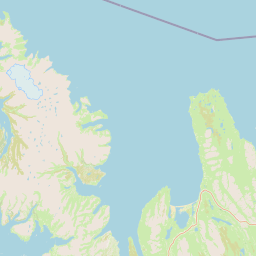
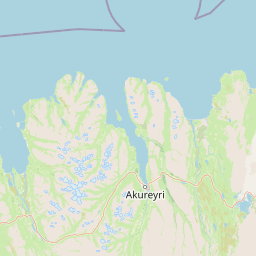
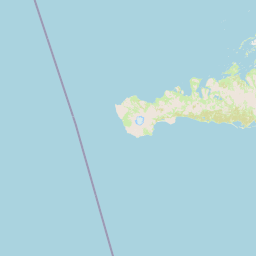
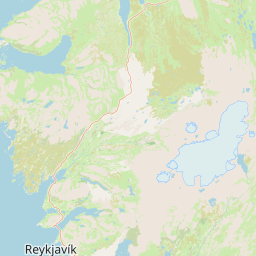
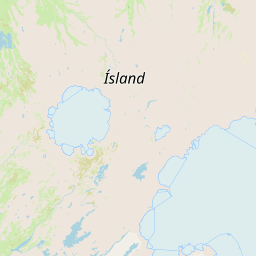
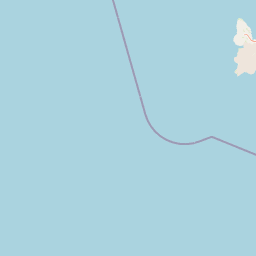
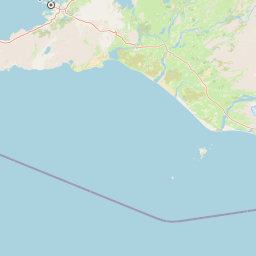
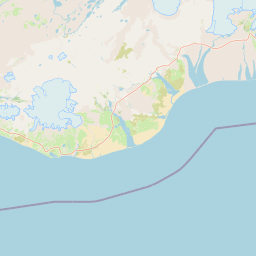
Payment trouble usually appears at a supply stop, not in the middle of a map. The map below puts KEF, Hvolsvöllur, Vík and Akureyri back in their real locations, and shows what to save for fuel, parking and a network failure; it does not represent today's price, opening status or payment method.


The Icelandic króna is the pricing unit; the central-bank rate is not your card quote
The Central Bank of Iceland states that the local currency is the króna, with legal banknotes of 500, 1,000, 2,000, 5,000 and 10,000 ISK. This helps you understand change and cash machines; it does not tell you which travel card is best value. The reference rate published by the central bank each day is also clearly an information and official-reference tool, not a live quote from a merchant or financial institution.
So checking the rate before departure is useful for building a sense of scale, such as estimating a meal or a tank of fuel in króna. Do not use it to put every line of a card statement on trial. Your issuer’s rate, overseas fee, card-network processing time and the merchant’s payment option affect the final cost. I would not spend airport time trying to guess where the exchange rate looks prettiest: make sure the payment tool works first, then compare fractions of a point.
ICENAVI · What each card is for
Let the main card handle daily spending; let the backup card keep you out of a fuel-station crisis
The two cards should not merely sit in the same wallet. Use the main card for hotels, supermarkets and known payments; keep the backup for a locked main card, an unreleased hold or a failed chip read. If both cards are in the same lost phone case, you have two cards psychologically but one risk point in practice. A small cash reserve is also a backup, not a reason to turn the whole payment process back into notes.
When a terminal asks “ISK or your currency”, first understand what it is asking
Some terminals let you settle in ISK or your card’s currency. Blue Car Rental’s traveller guidance warns that choosing your card currency usually involves dynamic currency conversion; the rate or added fee may be less favourable than your issuer’s normal conversion, and its advice is to pay in ISK. That is not a promise that every card will always be cheaper this way. It is a reminder not to mistake a display in Hong Kong dollars or US dollars for a waiver of exchange costs.
The practical version is short: if a terminal shows ISK and another currency, read the screen before pressing the familiar-looking line; if your issuer has special terms, follow your card’s terms. Save an electronic or paper receipt afterwards, at least until the fuel hold, rental payment or hotel charge has settled correctly.
Put the self-drive payment check before you start the engine
Blue Car Rental’s 2026 traveller payment guidance says that many problems are not about “having no cash” but about PINs, fuel pre-authorisations, rental deposits or the terminal currency; unmanned fuel stations may also require a PIN. This is a rental company’s practical guidance, not a promise about every station or foreign card, but it is enough to change the order of your first-day preparation.
Before collecting the car, test overseas-transaction settings on both the main and backup cards. Store the PINs in a way you can retrieve safely, rather than opening a banking app at the pump and guessing four digits. Then open the KEF return process and final-night plan, separating the last refuelling, return address and flight into three independent points. Discovering at return time that your main card is still tied up in a temporary hold rarely improves the view.
Do not let internet polls decide the rental card rules. They depend on the supplier, vehicle class, insurance, deposit policy and your booking version; use Iceland rental-car insurance terms to see which risks remain yours, then check the confirmation email line by line. “Cancellable” or “paid” does not mean the desk will have no further card-verification requirement.
Keep cash as a buffer, not as another travel task
If both your main and backup cards work, cash does not need to carry the whole trip. A sensible amount is what you can accept losing a little on when changing it back, while still covering a genuinely cash-only surprise; it is not a fixed large figure copied from an online list. Whether you are driving, using remote roads, travelling with only one card, or arriving when bank and exchange services are unavailable will change the answer.
Equally, do not read “cards are convenient in Iceland” as permission to bring only a phone. In 2026, when the central bank introduced an offline essential-goods payment arrangement for locally issued physical cards, it still specifically pointed to inserting the card and entering a PIN; foreign-card eligibility is for each issuer to confirm. Travellers do not need to study the system, but they can draw one practical conclusion: bring a physical card and its PIN, and do not make a phone wallet your only plan.
Six questions before paying are more useful than “how much should I exchange?”
- Are overseas and online transactions enabled on both cards? Do I know both PINs?
- After the rental, fuel pre-authorisation and normal spending, will the main card still have available-funds room?
- Does the rental confirmation state the accepted card types, deposit and insurance conditions?
- When the terminal asks for a currency, have I checked whether it is a conversion choice rather than a discount?
- Have I kept confirmation numbers and receipts for fuel, rental, hotel and activities?
- Is the small cash reserve for backup, or am I simply afraid to use the card? If it is the latter, fix the card settings first.
Once you can answer these questions, payment stops becoming a separate part of the trip. You will still see prices, holds and bank alerts, but they will be less likely to take over at the wrong moment. If your itinerary and accommodation are not locked yet, read the Iceland itinerary booking order; each payment should serve an evening or activity you have already thought through, rather than forcing the next decision after money has left your account.
Q&A | Pre-departure payment checks
Do I need to bring a lot of cash to Iceland?
Usually not. Prepare a physical card enabled for overseas use, with a PIN you know, and a separately stored backup card; keep a small amount of króna according to your route. Unmanned fuel stations and rental deposits usually make available-funds room more important.
Has a fuel-station pre-authorisation already been charged?
Not necessarily. It may only be holding available funds; final settlement depends on the station, payment method and issuer. Keep the receipt, time and pump number so you can distinguish the hold from the actual purchase.
What should I do if a terminal asks for HKD or ISK?
Check whether the choice involves dynamic currency conversion. Do not assume the more familiar currency is automatically cheaper. Unless your issuer has a special arrangement, let the issuer process the payment in ISK and keep the receipt for checking.
References
References
- Central Bank of Iceland: Banknotes and coin (Icelandic króna and legal banknotes/coins; checked 2026-08-25).
- Central Bank of Iceland: Official exchange rate (purpose and limits of the reference rate; checked 2026-08-25).
- Blue Car Rental: Currency in Iceland (practical guidance on foreign cards, PINs, unmanned fuel stations, pre-authorisations, rentals and terminal currency; checked 2026-08-25).
- Central Bank of Iceland: Offline card payments (2026 offline-payment arrangement for locally issued physical cards; foreign-card eligibility must be checked with the issuer).
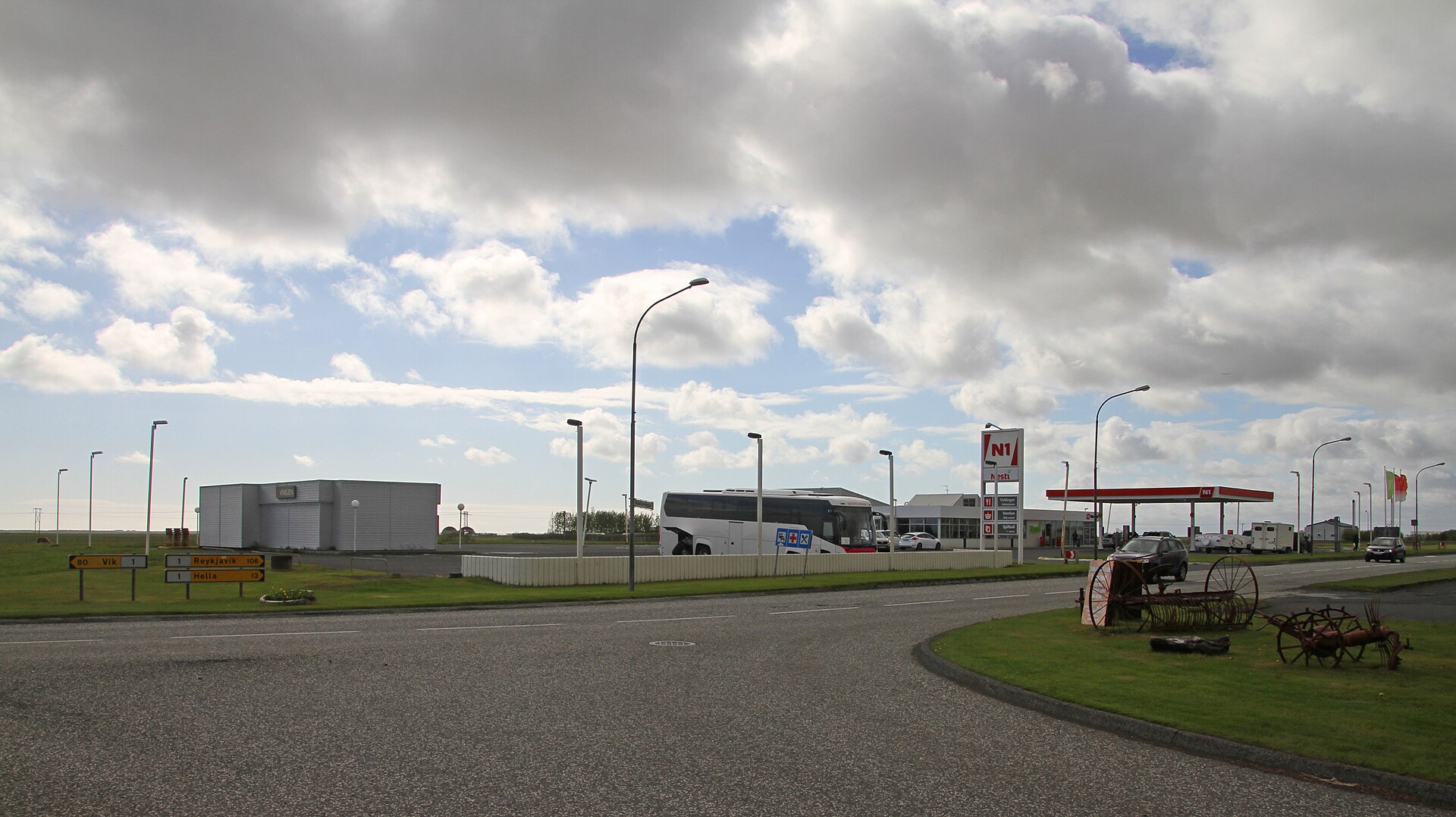
- Gerd Eichmann / Wikimedia Commons: Hvolsvöllur-16-Tankstelle-2018-gje, CC BY 4.0; photographed in 2018. It shows the setting where fuelling and road signs meet on an Iceland self-drive trip, and does not guarantee current payment, fuel-price, road or opening conditions.

This article covers travel-payment preparation, not personal financial advice. Your issuer, card type, exchange rate, available funds and rental supplier’s terms take priority; before paying, use your confirmation and the live terminal display.