
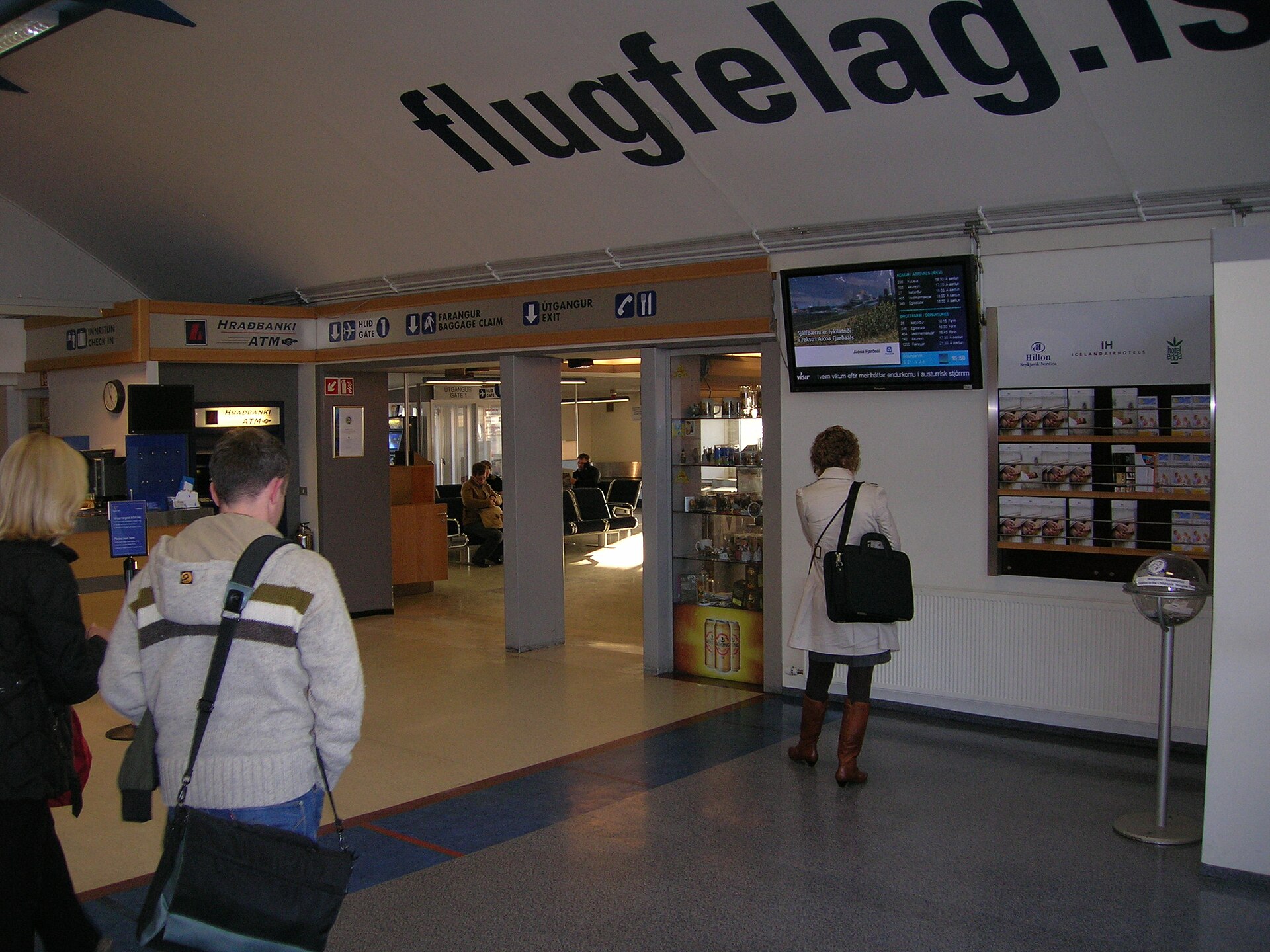
Choose the leg that keeps the reason for your trip
For a winter visit, short break, northern or eastern base, or any day when you would rather not drive through snow after dark, price a domestic flight early. In summer, the landscape between regions may be the point of taking the road, especially if the Ring Road is already your plan. An international arrival at KEF usually means a transfer to Reykjavík Domestic Airport, RKV; the airports are about 50 kilometres apart and checked luggage follows the airline’s separate process. Add that transfer, possible delay, ground transport, destination car collection and the link to your accommodation before calling the flight a short hop.
ICENAVI DRIVE DECISION · AIR OR ROAD
Are you saving driving time, or removing part of the trip?
These scores measure how manageable the complete transfer is and what you give up along the way. They are not ratings of an airline or car-hire provider. Schedules, luggage rules, roads, airport transfers, accommodation and activities must be checked for your departure date.
A flight can shorten the empty road between bases, but KEF to RKV, luggage, security, ground transport and car collection must be added back in.
RKV is a different airport from KEF. The journey between them, rechecking in and waiting can erode the meaning of a “45-minute flight”.
Domestic flying is easier with light luggage and little specialist equipment. Large cases, camera gear and glacier clothing require the size, weight, checked-bag and repeated-handling costs to be counted.
A cancelled flight can force changes to accommodation, car hire and activities. A long drive is exposed to road conditions and fatigue. Both versions need cancellable accommodation or a shorter alternative.
When the South Coast, Eastfjords or Route 1 are part of the experience, the extra driving is not empty time. If you only need to reach a base, the flight becomes more compelling.
For fixed activities, winter travel or a short break, put the flight first. When scenery, flexibility and luggage for several people matter more, a split drive or mixed plan has the stronger case.
Waiting to board at RKV can make the trip feel suddenly efficient. The other version is driving north on Route 1, stopping by the roadside for coffee in the afternoon and realising that the “slow” part is exactly what you wanted to keep. Both can be good answers, but the flight time and the time spent behind the wheel do not begin or function in the same way.
This page does not replace the base-planning guidance on the Akureyri destination page or the Westfjords destination page. It addresses the earlier decision: do you want to turn the journey from the capital area to another region into an air transfer? If you are simply travelling from KEF into the city, start with airport bus or rental car. If you want to keep the road, the snowstorm stop-driving decision becomes the next layer.
| What you are really trying to protect | What a domestic flight gives you | What a long drive gives you | The cost most easily missed |
|---|---|---|---|
| Activity time in the north or east | A quicker arrival at the base, leaving more time for fixed activities | The sights between regions become part of the trip | A flight does not take you straight from the runway to the hotel; a drive is not just the navigation estimate |
| Winter safety and energy | One less long drive in snowy conditions | A road-based alternative if the flight is cancelled, provided conditions allow it | Delays, road closures and cancellable accommodation all need to be planned together |
| Large quantities of luggage or equipment | Less road driving before entering the target region | Equipment stays in the car, avoiding another KEF/RKV transfer | Flight size, weight and excess-baggage charges; covered and secure storage in the car |
| Landscapes along the way | Road time is exchanged for time at the base | Waterfalls, fjords, mountain passes and towns become the activity | Trying to restore every en-route sight after choosing the flight can remove the advantages of both options |
Reykjavík transfer and the next base: count the journey from the arrivals hall
| Stage | Domestic-flight version | Long-drive version | Work that is easy to miss |
|---|---|---|---|
| Landing at KEF | Immigration, collecting checked luggage and travelling from KEF to RKV | Immigration, collecting the car, inspecting it, buying supplies and adjusting navigation | Neither option means leaving immediately after landing |
| The middle transfer | Airport transfer, checking luggage again or passing security, then waiting to board | Road conditions, weather, stops, lunch and changing drivers | The flight needs a transfer and luggage buffer; the car needs a safe stopping point |
| Reaching the region | Collecting a car or meeting a transfer after arriving at AEY, EGS, IFJ or HFN | The route has already been travelled in the same car, so you can continue to the accommodation | The destination airport’s car desk, luggage dimensions and opening hours |
| Sightseeing content | Road time is saved, but sights along the route need a separate plan | The landscape becomes the day’s content, although stops make arrival less predictable | Do not turn “we may stop on the way” into a fixed number of attractions |
| Changing the plan | Reworking accommodation and car-hire connections after a delay or cancellation | Staying overnight, turning back or changing route after a closure, weather problem or fatigue | Both versions need a cancellable fallback |
Icelandair’s domestic-flight information is centred on RKV and warns travellers arriving from KEF to change airports first. Its Akureyri route page lists an RKV–AEY flight of about 45 minutes, but that figure excludes the overland transfer from KEF to RKV, luggage collection and recheck-in. Add those elements back in and flying may still be faster, but the comparison is now a complete transfer rather than the clock inside the aircraft.
If you are already stuck on the question of how many bags to bring, read the luggage and boot stress test for an Iceland road trip. An airline’s size limits and a rental car’s covered storage involve different tasks; one “number of bags” estimate cannot stand in for both.
Five airports on the map: the distance disappears, the transfer remains
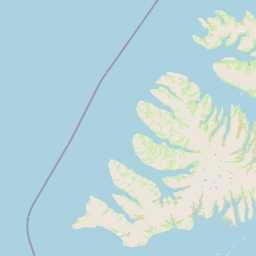
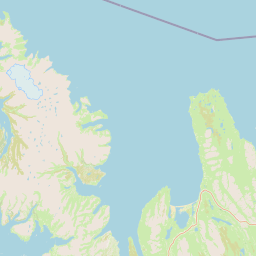
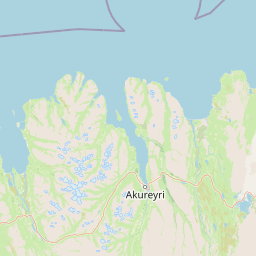
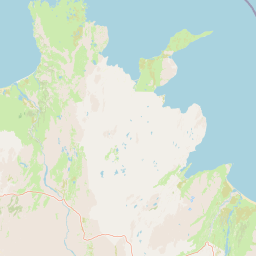
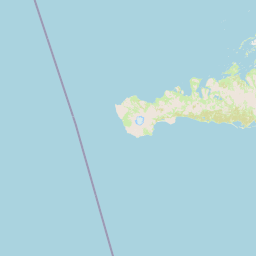
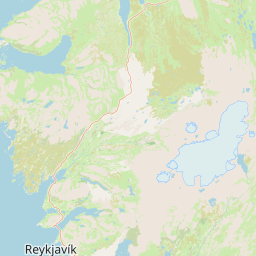
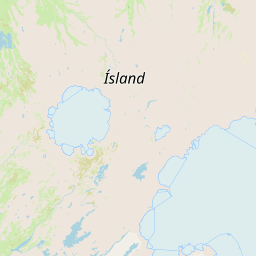
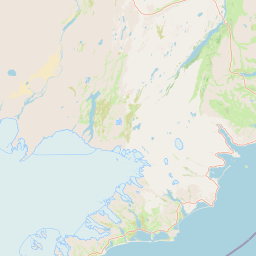
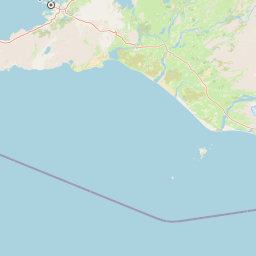
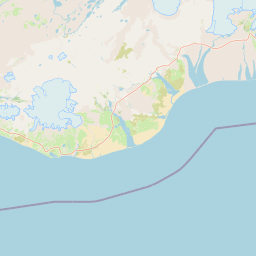
The map below places common domestic-flight destinations back in their real Icelandic locations. KEF is the international arrival airport; RKV is the domestic-flight transfer point; Akureyri is a northern urban base; Egilsstaðir serves the east; and Höfn is the gateway towards the glaciers of the southeast coast. A flight can shorten the empty distance between two bases, but the final journey from the airport to accommodation, sights and the rental-car desk still exists.
Luggage is the second ticket for a domestic flight
Domestic aircraft cabins and overhead lockers are smaller. Icelandair’s domestic information lists a carry-on size limit of 55 × 35 × 20 cm and a maximum weight of 6 kg; checked-baggage allowances depend on the fare type and any added services. Travellers carrying cameras, winter layers, hiking boots or activity equipment cannot treat luggage as solved simply because the flight lasts 45 minutes. After landing, you may still need to collect a car or meet a transfer, then fit everything into the boot. The luggage task has only moved to another airport.
| Luggage version | Check first for a domestic flight | The practical advantage of driving | Do not assume |
|---|---|---|---|
| Two cabin cases | Dimensions, the 6 kg carry-on limit and whether checked luggage is included | No need to move both cases between KEF and RKV | Every domestic aircraft accepts an international-standard cabin case |
| Large case plus camera equipment | Weight, excess charges, fragile items and the process for checking luggage again | Equipment can be organised around overnight stops, with one fewer transfer | The rental-car boot will certainly hold everything out of sight |
| Glacier or ski equipment | Special baggage rules, dimensions, charges and collection time | Equipment stays with the car and makes changing bases easier | An activity provider will transport all your equipment for you |
Which routes are worth keeping on the road?
| Destination direction | When the flight has the advantage | When driving has the advantage | Assumption to avoid |
|---|---|---|---|
| Akureyri / Lake Mývatn | A short winter break, only two or three nights in the north, or high road risk | You want to connect Goðafoss, Lake Mývatn and roadside stops into one journey | Flying to AEY means you have already reached your hotel at Lake Mývatn |
| Egilsstaðir / East Iceland | The destination is in the east and the coastal road is not part of the plan | You want the Eastfjords, have scattered accommodation and want to keep stops available when weather is good | Every fjord is a short transfer from the eastern airport |
| Höfn / Jökulsárlón | An activity has a fixed meeting time and you want to focus on glaciers and the harbour | You already have South Coast overnight stops, with waterfalls and black-sand beaches at the centre of the trip | The flight will necessarily cost less than a safely manageable drive along the South Coast |
| Westfjords / Ísafjörður | A short break requires the remote region to function as a self-contained base | You can stay enough nights and the fjords along the way are the subject of the trip | Flying in and hiring a car automatically removes every weather and availability risk |
If you have already booked a fixed-time ice-cave tour, whale-watching trip or ferry, the flight becomes more valuable because it may protect the night before the meeting time. If the landscapes along the Ring Road are the main content of the trip, the extra driving is not wasted time; it is what you are travelling to experience. The riskiest version is choosing the flight to save time while still trying to keep every en-route attraction on the same day.
ICENAVI Air-or-Road Fit: break “fast” into five questions
Give each dimension 0–2 points. Put the flight first at 7 points or above; use a mixed route at 4–6 points; at 3 points or below, keep the road or divide the stay into shorter sections. The score measures whether your itinerary can absorb the transfers. It does not rate an airline or car-hire provider.
| Dimension | 2 points | 1 point | 0 points |
|---|---|---|---|
| Value of time | The road day saved becomes meaningful activity time in the north or east | Only half a day is saved, and the rest of the plan still needs rearranging | The time saved comes from removing the landscapes you wanted to see |
| Airport transfer | KEF to RKV, luggage, security and the schedule all have adequate buffers | One transfer or counter requirement is still unconfirmed | The next flight is being treated as a direct connection after the international landing |
| Fixed activities | The meeting, ferry or activity operates only from the target base | There is a rescheduling option or a nearby alternative | The itinerary can already be rearranged around the weather |
| Luggage burden | Luggage is light, specialist equipment is limited and the destination car is confirmed | One excess item or checked-bag rule still needs checking | There is substantial equipment, a group transfer and repeated handling |
| Road content | The road is simply the gap between two bases | There are one or two worthwhile stops on the way | The road itself is the main attraction of the trip |
ICENAVI · THE FINAL AIR-OR-ROAD DECISION
Do you want to arrive sooner, or count the journey before arrival as part of the trip?
A flight turns a long distance into time at your base. Driving turns the road from empty space into part of the experience. If you fly, include KEF to RKV, luggage, ground transport and fixed activities in the cost. If you drive, allow for weather, fatigue, accommodation buffers and the places you genuinely want to stop. The answer may not be cheaper, but it should leave less to regret once you are in Iceland.
Ten questions before booking a flight or rental car
- How much complete buffer is there between your international arrival at KEF and the domestic flight from RKV?
- Do you need to collect your checked luggage at KEF, take it to RKV and check it in again?
- Will the domestic aircraft’s carry-on dimensions and weight limit actually accommodate your case?
- Do the destination car desk, transfer, vehicle collection and accommodation entrance line up?
- Will the time saved by flying be consumed by the KEF–RKV transfer and waiting?
- If the flight is delayed or cancelled, which hotel night, activity or car-hire booking will be hardest to change?
- On the driving route, are the sights along the way the theme or disposable road time?
- Do winter roads, daylight and the driver’s condition support a long drive?
- Are the flight, luggage, airport transfer, car hire and fuel costs being compared in one total for two or four travellers?
- Are you saving driving time, or quietly deleting a full day of Iceland that you wanted to see?
When a domestic flight protects a fixed activity, reduces winter exposure or makes a short trip to the north or east realistic, it has a strong case. When the South Coast, the Eastfjords or the changing landscape beside Route 1 is what you came to see, driving is not a slower version of flying; it is a different kind of trip. Decide whether the road contains something you want, then choose transport accordingly. If the destination is actually the South Coast, there is one more question: do you want to take responsibility for parking, cutting stops and weather-related alternatives yourself? The South Coast organised tour or self-drive transport responsibility table lays out that difference. To connect the destination, number of nights and activities, see the eight-day Ring Road route, night-by-night accommodation plan and activity booking order.
RELATED READING
Start with the airport and base
Airport bus or rental carAkureyri destination pageWestfjords destination pageMORE READING
Then handle roads and bookings
When to stop driving in a snowstormActivity booking orderEight-day Ring Road routeQ&A | Does transferring from KEF to a domestic flight count as a direct connection?
Does transferring from KEF to a domestic flight count as a direct connection?
No. KEF is the international airport and RKV is Reykjavík Domestic Airport, about 50 kilometres away. Allow time for the ground transfer and for handling luggage according to the airline’s process.
When is a long drive the better choice?
Driving earns its place when you want to keep the scenery along the route, plan to stop on the way, and have enough days, drivers and weather margin. It is less convincing when the only goal is reaching one base.
Does flying north in winter mean I can ignore the weather?
No. Flights can be affected by weather, while roads, rental cars and activities at the destination have their own limits. Keep accommodation and activity options that can be changed if you are delayed or need to move a day.
Should I fly or drive with large luggage?
Do not look only at whether checked baggage is available. Compare the airline’s luggage rules, the KEF–RKV transfer, collection after landing and car storage with the total driving time and the value of stopping along the route.
References
The following sources were checked on 5 September 2026. Flight schedules, transfers, luggage rules, airport services, roads, activities, car-hire conditions and accommodation terms can change. Before booking or paying, rely on the airline, airport, official road information and checkout pages.
- Icelandair | Domestic flights in Iceland: domestic destinations from RKV, the approximately 50-kilometre KEF–RKV transfer, luggage rebooking and domestic carry-on dimensions and weight.
- Icelandair | Flights to Akureyri: the approximately 45-minute RKV–AEY flight and the context for choosing flights on winter or short trips; recheck schedules and prices before departure.
- Keflavík Airport | Getting to and from KEF: the airport’s ground-transport and transfer information.
- Vegagerðin: roads, winter access and same-day road information.
- SafeTravel Iceland | Driving: guidance on weather, road conditions, fatigue and driving safety.
- OpenStreetMap contributors: the base layer and attribution for the map of the five airports and regional bases; locations are for geographic scale only and do not guarantee navigation, flights or road conditions.
- Hero image: CS / Wikimedia Commons: Terminal building rey dom iceland, Public domain; used to illustrate the indoor transfer setting at Reykjavík Domestic Airport and not current counters, gates or schedules.

This is an L1 decision entry for domestic flights versus long-distance driving. It does not place flight or car-hire CTAs here. Align the complete transfer time, luggage, road content and recoverable fallback options before moving to verified transport, accommodation or activity booking pages.