
Approach the bridge as if you may have to stop
When the Einbreið brú sign appears, lift off early; the bridge maximum is 50 km/h. The usual rule gives priority to the vehicle closer to the bridge, but SafeTravel also advises reading the other driver’s intention. If the view is uncertain, wait and let the other vehicle cross. Do not let the bonnet enter the bridge until you can see the full crossing is clear. This applies on main and rural roads alike; a larger car does not create right of way.

ICENAVI DRIVE FIT · SINGLE-LANE BRIDGES
Ten extra seconds before the bridge gives the rule room to work
These are editorial scores for the bridge-crossing decision, not ratings of a road or vehicle. Signs, sightlines, speed limits, oncoming traffic, verges, weather and roadworks must still be checked for the day you drive.
Once Einbreið brú appears, start observing and reduce speed enough that you could stop before the bridge. Do not wait until the entrance to begin the decision.
Not seeing the far end does not mean no vehicle is there. Glare, snow, bends and larger vehicles can all hide what is approaching, so move your stopping point farther back.
The vehicle closer to the bridge generally goes first. If the other vehicle is already on the bridge, both are similarly close, or visibility is poor, a clear stop is safer than trying to claim half a car length.
A roof box, bulky luggage or a campervan does not give you priority. It gives you more reason to check the railings, verge and passing space before committing.
50 km/h is a maximum on the bridge, not a target in snow, fog, rain, ice or glare. If you cannot see clearly, wait outside the bridge and use current official information before continuing.
The rule itself is simple. The difficult part is leaving enough room to stop. Make the observation, yielding decision and stopping line outside the bridge and the pressure drops sharply for a first-time driver.
The first single-lane bridge can look quieter than expected: no traffic lights, low bridge rails, and only a small dark shape approaching from the other side. The sat-nav still says to continue straight while someone in the car asks, “Are we going first?” If you wait until only a few dozen metres remain before braking, knowing the rule will not give you enough road to stop before the bridge.
Iceland's road authority lists single-lane bridges among the road features drivers can still encounter, and SafeTravel's advice is practical: the bridge speed limit is 50 km/h, the vehicle nearer the bridge generally goes first, and you should slow down early enough to read what the oncoming driver is doing. It is not a race. Both vehicles should be able to complete the decision before either one commits to the bridge.
Recognise the sign first: Einbreið brú is not a toll booth or a one-way road
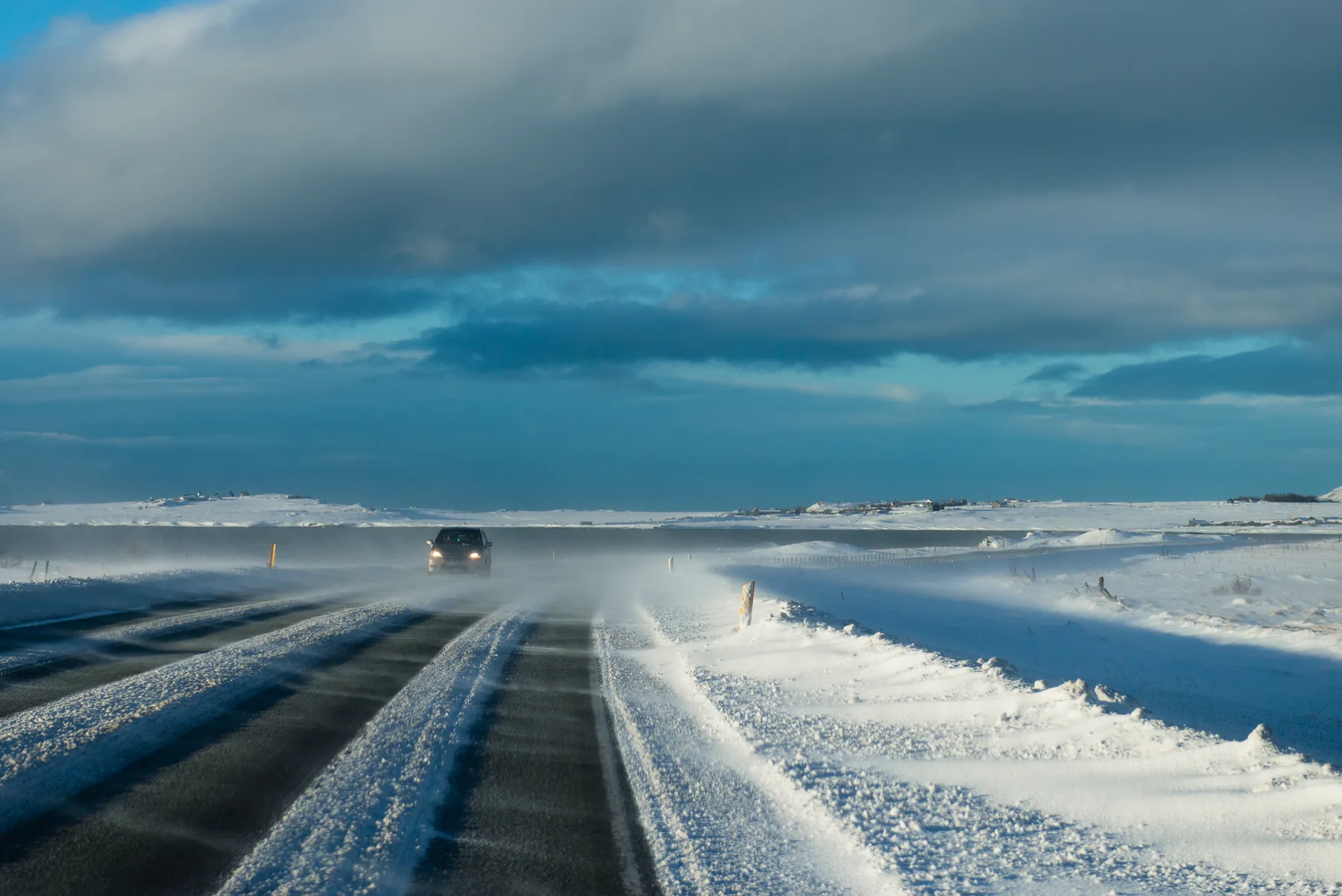
The sign may appear before the bridge itself is visible. Treat it as the moment to start observing, not a reminder to act only at the bridge entrance. A bend, glare, snow or a campervan can delay your first clear view of the bridge.
| What you see | What it means | What to do immediately | What not to assume |
|---|---|---|---|
| Einbreið brú / single-lane bridge | The bridge deck has one lane shared by traffic in both directions | Ease off, check the entrance and oncoming traffic, and be ready to stop before the bridge | It is not one-way traffic, and a larger vehicle does not automatically go first |
| A small waiting area before the bridge | There may be space to wait, but not every bridge has the same layout | Confirm that it is a safe and lawful place to wait while keeping a clear view | It is not permission to reverse against traffic or stop on the bridge |
| Snow or poor winter visibility | You need to slow earlier because judging distance takes longer | Reduce speed until you could stop before the bridge on the surface you actually have | Yesterday's road screenshot is not a substitute for today's conditions |
| An oncoming vehicle already on the bridge | There is currently no space for you to enter | Wait outside the bridge until the other vehicle has cleared it completely | Do not creep toward the entrance or use flashing lights to hurry the other driver |
Put the order back where it belongs: who reaches the bridge first, not who sees it first
“The vehicle closer to the bridge goes first” is a decision made while both vehicles are still outside the bridge, not after two cars have arrived nose-to-nose at the entrance. Compare distance, speed and whether you can stop safely. If the other vehicle will clearly arrive first and you can stop smoothly, let it cross. If both vehicles are similarly close, do not compete for half a car length; one driver should stop clearly enough that the intention is obvious.
| Situation before the bridge | Your action | Why | If you are still unsure |
|---|---|---|---|
| You are clearly closer and the oncoming vehicle has not reached the entrance | Slow to a controllable speed and cross only after confirming the bridge is clear | The priority rule lets you go first, but it does not remove the need to observe | Stop before the bridge and let the other driver make a clear move |
| The oncoming vehicle is at the entrance or already on the bridge | Stop before your side of the bridge and leave space | There is only one lane; you cannot squeeze past by hugging an edge | Wait until the other vehicle has left the bridge completely |
| Both vehicles are similarly close and both sides have waiting space | Stop, remain visible, then use a gesture or light signal to make one driver's turn clear | A visible stop turns an ambiguous approach into an order both drivers can read | Let the vehicle that can stop more safely remain waiting |
| You cannot see the far end, or glare or snow obscures the road | Stop earlier and wait until you can see enough to confirm the bridge is clear | “I cannot see a vehicle” is not the same as “there is no vehicle” | Do not enter a blind section; reassess from the next safe stopping point |
A flash of headlights or a wave can help two drivers communicate, but it cannot make the bridge clear. You still need to see enough of the bridge to know that you will not meet another vehicle in the middle. If the other driver stops to let you go, do not accelerate out of politeness; stay within the 50 km/h maximum and adjust further for the road surface.
Single-lane bridges are not only a South Coast issue
You can encounter narrow bridges on the Ring Road, along Eastfjords and Westfjords coastal routes, and on northern side roads. The ICENAVI map below marks broad route directions so you know where to leave extra observation time. It is not a bridge-by-bridge inventory and does not claim that a marked area will have the same bridge layout on your travel date. Bridges are rebuilt and roads are worked on; current road information and the signs in front of you take precedence.
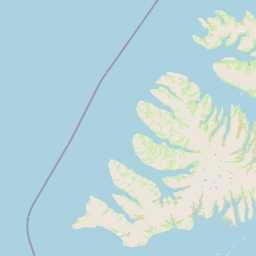
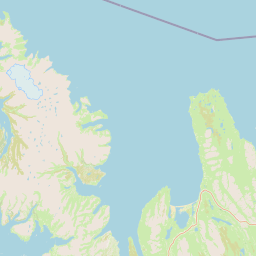
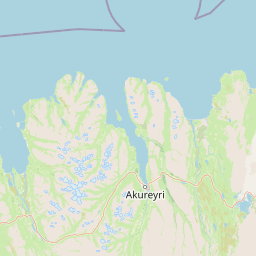
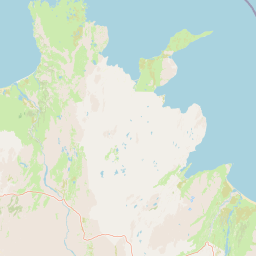
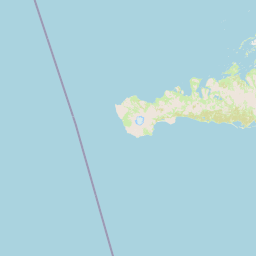
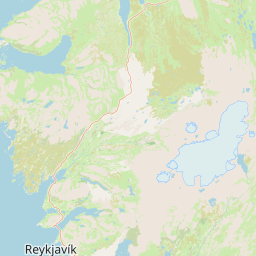
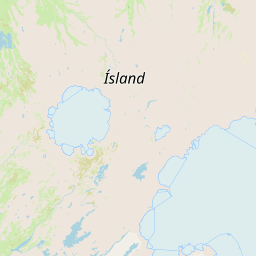
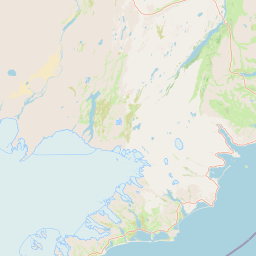
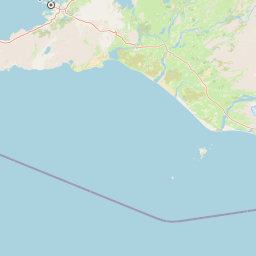
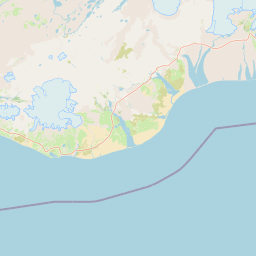
Official road information changes as roads, bridges and works are updated. A route map without a warning colour does not mean you should keep your original speed. Eastfjords roads, in particular, can reveal a bridge only after a bend. If you cannot see oncoming traffic before the bend, that lack of sightline is a reason to slow down, not proof that the bridge is empty. To understand how current road information works, read how to use Iceland's road-conditions website; it also explains why a morning screenshot cannot guarantee the same conditions at dusk.
The 20 seconds before the bridge: driver, passenger and luggage each have a job
Single-lane-bridge risk is often blamed on speed, but the way people divide tasks inside the car matters too. The driver only needs to watch the road and traffic. A passenger can check the sign, oncoming vehicles and the next stopping or accommodation point without distracting the driver. If the sat-nav announces a turn before the bridge, let it finish; do not pass a phone across the driver's field of view to zoom the map.
| Time | Driver | Passenger | Everyone confirms |
|---|---|---|---|
| 0–5 seconds after seeing the sign | Ease off, hold the lane and stop handling the phone | Say “single-lane bridge”, not only “there's a bridge ahead” | Whether there is a formal, safe place to wait |
| 5–12 seconds | Check the entrance, the oncoming vehicle and the road surface; prepare to stop before the bridge | Help scan blind areas without shouting “go” at the driver | Which vehicle is closer and whether the bridge is completely clear |
| 12–20 seconds | Cross or wait at no more than 50 km/h, slower when the surface requires it | Stay quiet; reorganise photographs, food or navigation after the bridge | No stopping on the bridge and no attempt to pass another vehicle there |
Allow more distance if you are carrying bulky luggage, using a roof box or driving a campervan. A wider vehicle does not gain priority; it simply gives you more reason to check the railings, waiting space and the path of oncoming traffic earlier. If narrow sections make you anxious, have your travel companions read the SafeTravel road-sign guide before departure so the roadside is not the first time everyone is trying to decode the sign.
Winter, rain, fog and darkness: the rule stays the same, but the stopping distance changes
“50 km/h” is the maximum speed on the bridge, not the speed you should aim for in every condition. Snow, ice, rain, fog or glare mean easing off earlier. If you cannot clearly see the road edge before the bridge, continuing forward only removes stopping space. SafeTravel's winter-driving guidance is to adjust speed to the surface and conditions you can actually handle.
ICENAVI · FINAL SINGLE-LANE BRIDGE CALL
You do not need to know whether the other driver wants to yield before you can stop.
Poor visibility, two vehicles arriving together, a slippery surface or no clear escape space are each enough reason to wait outside the bridge. Stopping does not mean you misunderstood Icelandic road rules; it keeps the decision in a place where you still have room to act. If road conditions or visibility no longer suit self-drive, switch a long South Coast or East Iceland leg to a driven activity or return to your accommodation earlier instead of using one successful bridge crossing as proof that the rest of the day is safe.
This decision links directly to the crosswind parking and door-opening sequence: a single-lane bridge asks whether you should enter a shared lane, while the crosswind guide asks whether it is safe to get out after stopping. Neither decision is made by the car model, insurance package or money already spent on the trip. If you are heading from Vík towards Jökulsárlón, South Coast sand and wind warnings and one or two nights in Vík can help you rework road conditions and tonight's base together.
Bridge-side screenshot checklist: ten questions are enough
- Does the sign say Einbreið brú, or is it another road restriction?
- Have I eased off far enough before the bridge?
- The bridge maximum is 50 km/h; do today's conditions require less?
- Which vehicle is closer, and has the other one already entered the bridge?
- Can I stop completely before the bridge instead of stopping on it?
- Can I see the whole bridge and its exit rather than only the entrance?
- If both vehicles are similarly close, which one can wait without reversing into traffic or crossing the centre line?
- Does a roof box, campervan or bulky luggage make my vehicle harder to take through the narrow section?
- Does the passenger know not to hand over a phone, hurry the driver or create another distraction before the bridge?
- If roads, wind, snow or visibility deteriorate today, where is the next acceptable accommodation or activity fallback?
If you cannot answer one of those questions, wait outside the bridge. You do not need to memorise every bridge name. One rhythm is enough: see the sign, ease off, look, make your intention readable, and enter only when the bridge is clear. Those seconds rarely damage an itinerary, but they can prevent a small bridge entrance from becoming the hardest place to recover from all day.
Frequently asked questions: who has priority on a single-lane bridge?
Who has priority on a single-lane bridge?
SafeTravel's driving information uses the vehicle closer to the bridge as the basic priority rule, but you still need to slow down, observe the entrance and read the oncoming vehicle. Signs or road conditions at the scene can change what is safe to do.
Can I stop on a single-lane bridge to take photographs?
Do not treat the bridge as a parking place. Find a safe and lawful stopping point before or after it, then deal with photographs or navigation. The bridge itself should remain clear for traffic.
Does travelling with bulky luggage require any special planning?
Yes. Check the available width, railings and waiting space earlier. A wider vehicle does not gain priority, and passengers should not hand a phone to the driver while approaching the bridge.
Related reading
Connect the road rules first
How to read Iceland's road-conditions websiteHow to slow down before a gravel sectionCrosswind parking and door-opening orderMore reading
Put the bridge back into today's route
Daily driving: navigation time is not travel timeSouth Coast sand warnings and stop conditionsSelf-drive or a day tour: keeping an exit on long driving daysReferences
References
Roads, bridges, roadworks and weather change. The sources below were checked on 5 September 2026; before departure, use current official pages, roadside signs and road-authority notices.
- SafeTravel Iceland | How to Drive in Iceland: single-lane bridge speed limit of 50 km/h, the closer vehicle going first, and slowing early enough to observe oncoming traffic.
- SafeTravel Iceland | Road signs: the Einbreið brú sign, a one-lane bridge shared by both directions, and the principle of waiting when meeting oncoming traffic.
- Vegagerðin | Driving safely in Iceland: Iceland still has single-lane bridges and tunnels shared by traffic in both directions; drivers should know the route, weather, road conditions and traffic rules before setting out.
- Vegagerðin | Bridges: Iceland's bridge network and the road authority's role in bridge maintenance and load restrictions.
- Icelandic Road and Coastal Administration | Umferdin: official current road conditions, roadworks and restrictions.
- Hero image: Winniepix / Wikimedia Commons, CC BY 2.0; the photograph illustrates snow, road markers, traffic and sightline scale, not a specific single-lane bridge or current visibility.
- OpenStreetMap: base map and attribution for the route-direction figure; regional markers are for scale, not a bridge inventory, navigation or roadworks guarantee.
.jpg)
This is an L1 self-drive decision page and carries no rental-car CTA. Safe bridge crossing depends on speed, sightlines and yielding, not on purchasing a particular car category or cover.