

ICENAVI PRACTICAL FIT · POWER & ROUTE
Check voltage first, then decide where each night’s charging will happen
The scores consider voltage safety, hotel sockets, car interfaces, EV charging, cables and backup power. They are not a current guarantee for any hotel, rental-car class or charging station. Before departure, follow the appliance label, rental agreement, accommodation information and operator rules.
Once voltage safety, room sockets and car or vehicle charging are treated as separate questions, one universal adapter no longer has to solve everything.
Use the 100–240V/50–60Hz input label as your guide and keep an adapter separate from a converter. A plug that fits is not proof that the voltage is safe.
Hotels rarely promise a particular number of bedside sockets. Assign places for your phone, camera batteries and power bank before you arrive.
USB-A, USB-C, 12V sockets and wireless charging vary by rental-car class. Test your own cable at pickup; “USB included” does not promise fast charging.
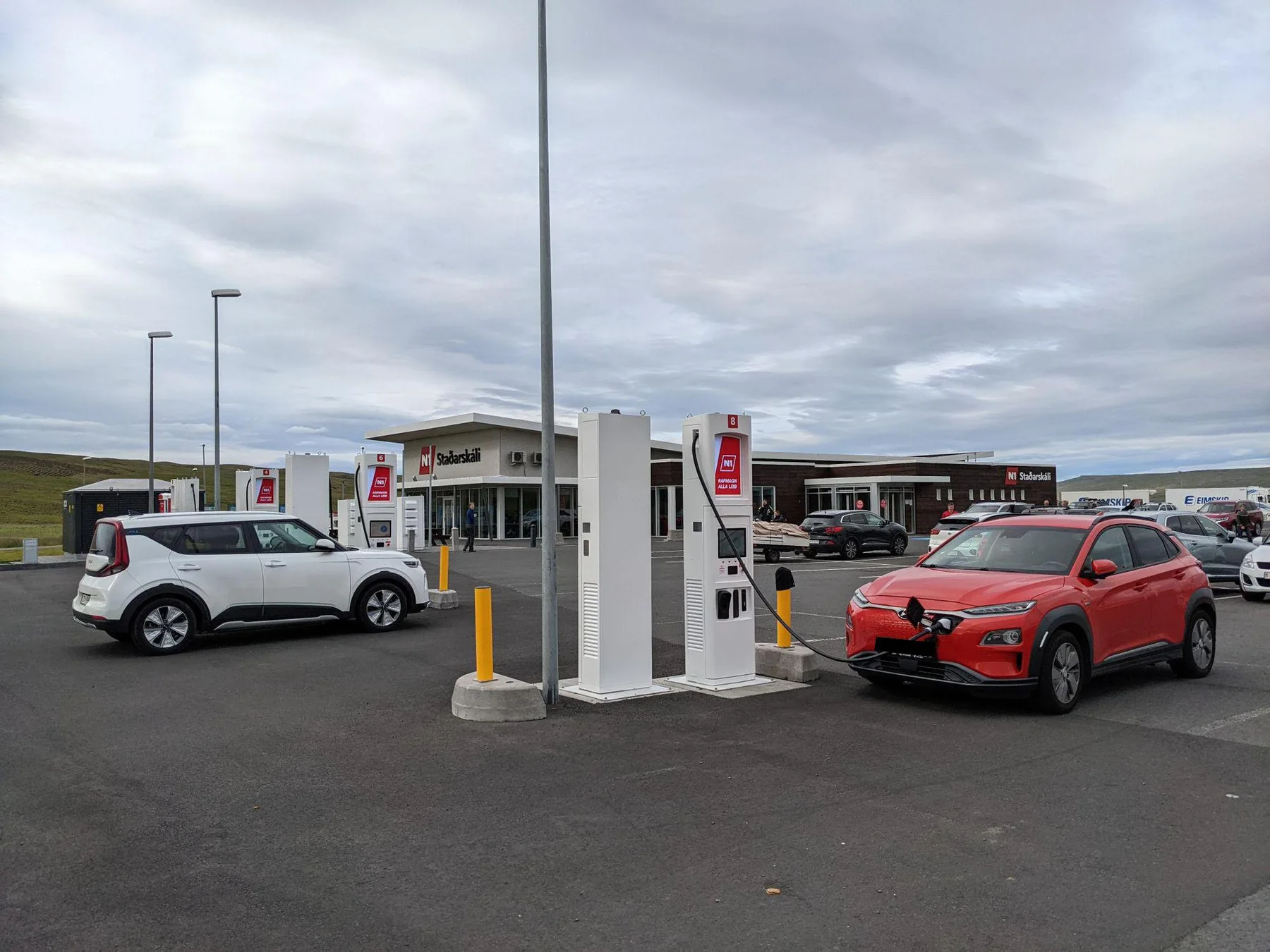
ON and N1 are useful networks to check, but availability, payment, vehicle connectors and overnight parking must be checked for each leg. A map icon alone is not enough.
A multi-port charger, short car cable, fully charged power bank and offline information each solve a different problem. Keep them in separate pouches so one failed socket does not leave you without a backup.
Plugs rarely seem important enough to deserve an article, until you are in a Keflavík hotel with your camera, phone, power bank and a coat that still has not dried spread across the table. There is one socket beside the bed, the “universal adapter” in your suitcase is loose, and you are collecting the rental car early the next morning with 19% battery left. That is not a technology failure. It is what happens when power is treated as a minor detail until it collides with sleep, weather and navigation on the same evening.
I separate the issue into two layers. First, can the wall supply your appliance safely? Second, do you have enough charging positions, suitable cables and time? The first answer comes from the appliance label. The second depends on where you are staying, whether you are driving, how much photography you plan to do and whether you have a fixed early activity the next day. If you have not settled your nights yet, this guide to arranging Iceland accommodation around arrival, transfers and departure puts “where will I charge tonight?” back into the plan for each night instead of leaving everything to one packing list.
Recognise the two key figures: 230V and 50Hz
Iceland uses 230V electricity at 50Hz, with Type C and Type F sockets commonly found. Type C is the two-round-pin Europlug; Type F is the grounded Schuko plug with side earth clips. Slim Type C chargers will usually fit Type F sockets, so two-pin phone chargers brought from mainland Europe often need no additional adapter. Hong Kong’s familiar Type G three-pin plug has a different shape and cannot be inserted directly. At minimum, bring a reliable G-to-C/F adapter.
The most common mistake is not misunderstanding whether an adapter is needed, but treating an adapter as a voltage converter. An adapter changes the plug shape; it does not turn 230V into 110V. Pick up the charger and find the “INPUT” line. If it says 100–240V 50/60Hz, it is designed to work across both voltage ranges. If it says only 110V or 120V, do not try it simply because the plug can be forced into place. The result is not merely slower charging: the appliance may overheat or fail, and the adapter itself could become the least welcome souvenir of the trip.
| Appliance label | What Iceland requires | My reading | Packing decision |
|---|---|---|---|
| Input 100–240V 50/60Hz | An adapter for the Hong Kong plug | Phone, laptop, camera and e-reader chargers are usually in this group | Bring a grounded G-to-C/F adapter with firm pins |
| Input 110/120V only | A properly rated converter and adapter, or leave it behind | Check the wattage first; a small USB adapter is not a voltage converter | Check curling irons, older hairdryers and hand warmers before packing |
| Label says 220–240V | An adapter only if the plug shape differs | The voltage range is similar, but check the plug and grounding | Do not assume that two appliances marked 220V use the same plug |
| USB-C/USB-A output only | One multi-port charger plus an adapter | Check total output so charging does not slow when several people plug in | Keep cables grouped by device and leave one short cable in the car |
ICENAVI · ONE ADAPTER IS NOT A COMPLETE PLAN
You need three charging positions, not three plugs that merely look professional.
I divide charging between the bedside, the bathroom or sofa area, and the car. Keep the phone and alarm by the bed. Put camera batteries, the power bank and hand warmer elsewhere so you are not unplugging the wrong device in the dark. In the car, keep a short USB cable and a charger that stays securely in place. This is not a request to pack a miniature electronics shop. It simply means one failed socket will not force you to empty the suitcase for a backup.
Put power back into the route: your room, car and charging stop are different places
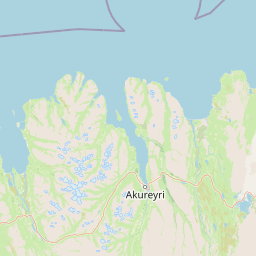
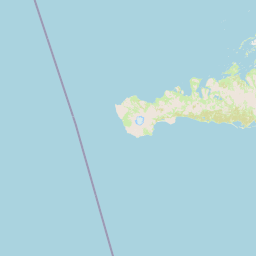
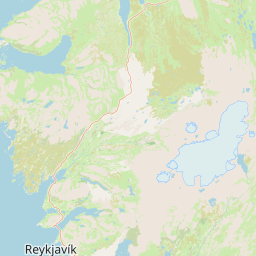
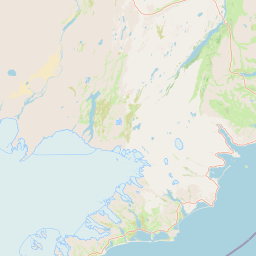
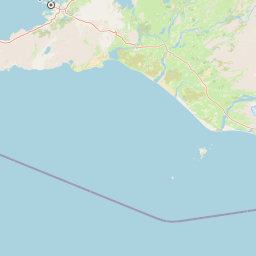
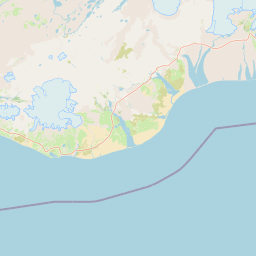
This genuine OpenStreetMap base map places Keflavík, Reykjavík, Vík and Akureyri back on an Iceland route. It is not a live charging-station map. On arrival day, protect your phone and rental-car information first. In city accommodation, plan for several devices. On a South Coast or northern self-drive route, check the vehicle interface, the next road leg and the accommodation’s parking or charging conditions before leaving.






The real hotel-socket problem: number, position and the time you return
Hotel pages commonly list room type, breakfast and parking, but rarely promise how many sockets sit beside the bed. That is not necessarily an omission: room layouts change with the building, renovations and room category. I would not read “free Wi‑Fi” as “there will definitely be a USB port beside the bed.” If you are staying only a few hours on the first night, the useful move is to place the two most urgent devices together at one charging point.
If you arrive at KEF late and collect the car early the next morning, charge your phone and your rental-car or accommodation confirmations first. Two nights in Reykjavík give you more room to deal with a camera, power bank and damp clothing separately. If you are planning a city day or harbour activity through the Reykjavík destination guide, the time you return to the room may matter more than the number of sockets. Reaching the hotel at 10 p.m. does not give you another full sleep cycle, even if the room has four outlets.
A power bank can carry your phone through one stretch of road, but it cannot charge a camera battery, laptop and two phones at the same time. It also needs to be charged in the room first. Treating it as “always available” only postpones the problem. If your drive includes areas with weaker signal, check Iceland eSIM and offline maps for self-drive travel, then include offline navigation, addresses and power in the same pre-departure routine. Otherwise you may have a full phone with no map you can open.
In-car charging: a USB port does not guarantee enough power on day one
Rental-car classes, model years and interface layouts vary. You may find USB-A, USB-C, a 12V socket or a wireless charging pad, or none of them in the place you expect. When a rental company says “USB,” it does not necessarily mean that your cable will deliver fast charging. Test briefly with your own cable at pickup, then secure the phone where it does not obstruct your view. With navigation, the phone, a camera and a passenger’s hotspot running together, consumption can easily outpace charging.
A safer approach is to treat the car as a place to top up, not as a mobile wall socket. Before leaving your accommodation each day, bring the power bank, camera batteries and both phones to a level you can accept. Deal with cables only when parked legally for a break. Do not stretch a cable across the steering wheel while driving to find a port, and do not feed several high-wattage devices through an unverified adapter. The Iceland self-drive budget guide separates fuel, parking and EV-charging costs around service stations and road stops. This article focuses on what to pack and how to keep power available for the moments when it matters.
If you rent an electric vehicle, ask first: “Where will we charge tonight?”
An EV adds another layer. Alongside phone and camera power, the vehicle must have enough charge for the next road leg. The official ON app can show charging stations and start a session by QR code; temporary access and credit-card pre-authorisation may apply without registration. N1 also provides filters for charging-station locations. These are network tools, not a promise that every car park across Iceland has rapid charging. Before departure, check the charging network, the rental company’s required app, your payment card and the accommodation’s parking terms separately. That tells you whether you will charge at the hotel or top up in town before leaving.
If your route crosses the South Coast, Southeast Coast or northern Iceland, “parking available” and “EV charging available” are not interchangeable. Ask the accommodation three direct questions when booking: Is charging included in the room rate? Does it require a reservation? Will the charging bay be held for you during your stay? Until you have written confirmation, I would not treat a lightning-bolt icon beside the property name as a solved part of the itinerary. If you are still choosing between a petrol car, hybrid and EV, read whether an Iceland EV self-drive suits your route; it compares winter range, the charging network and the point at which you need to return the car.
| Time/place | Power to protect | First action | Backup if it fails |
|---|---|---|---|
| After arriving at KEF | Phone, boarding/rental confirmations and accommodation contact | Open offline information on Wi‑Fi; do not delete the original SIM or eSIM first | Airport or hotel Wi‑Fi, printed confirmation number and a physical card |
| First hotel room | Alarm, navigation, camera batteries and power bank | Plug in the two most urgent devices; keep the cables out of the bottom of the suitcase | Charge in rotation; do not use an unknown high-wattage converter |
| Around car pickup | Navigation, road information and contact with the rental company | Test USB/12V, secure the phone and open offline maps | Stop in a legal parking space to recharge; do not search for a port while driving |
| Long EV road leg | Vehicle charge and the next usable charging station | Use official networks such as ON/N1 to confirm location, payment and operating or availability information | Reduce non-essential consumption, charge earlier or move to a nearer base; do not wait until the warning light to seek help |
Do not copy a generic packing list: choose four items for your travel style
For a city trip with one or two short excursions, I would bring a grounded Hong Kong-to-European adapter, one multi-port USB-C charger, one cable for each main device and a power bank tested at home and fully charged. That is usually enough for a couple travelling together. Do not pack three universal adapters “just in case.” The more interfaces you carry, the more chances there are for looseness, forgotten items and the wrong standard.
People planning to photograph the northern lights, ice caves or long time-lapses may reasonably add spare camera batteries and cold-weather protection. Winter outdoor conditions affect more than charging: low temperatures drain batteries faster, while rapidly warming a camera beside a car heater can cause condensation. Check Iceland’s northern-lights season and cloud conditions before deciding whether the complete equipment kit is necessary. A beautiful photograph is not, by itself, a reason to push your suitcase over its weight limit.
For a family or a group of three or more, a multi-port charger is often more useful than a second adapter, but check its total output rather than the number of holes printed on the packaging. Two laptops, three phones and a camera connected at once can make any small charger distribute power slowly. Write down how many devices must be full that evening, then compare that load with the charger’s specification. It is a more reliable estimate than using the number of travel days.
ICENAVI · 60-SECOND PRE-DEPARTURE CHECK
Ask six final questions instead of letting the adapter make the decision from inside your suitcase.
- Does every appliance that will connect to a wall say 100–240V 50/60Hz on its input label?
- Will the Hong Kong Type G adapter sit firmly in a Type C/F socket, rather than relying on a loose universal head?
- Can the two most urgent devices charge at the same time tonight?
- Does the rental-car class actually have a suitable USB/12V interface, and did you test the cable at home?
- For an EV rental, have you separately checked the official charging app, payment card and next charging station?
- If the hotel has too few sockets or the charging bay is unavailable, which device can wait and which backup can be activated immediately?
Plugs and voltage are straightforward. The part that needs planning is deciding which night, road leg and device cannot fail. Once power is placed in the sequence of arrival, accommodation, activities and driving, you do not need a power strip that looks like a control room, and you will not be searching for an adapter by phone torch at midnight. If your next task is organising connectivity and offline navigation, return to Iceland self-drive eSIMs. If you need to fit an early flight, charging and car return into one evening, read where to stay on Iceland’s final night before departure.
Q&A: How should you prepare Iceland plugs, adapters and in-car charging?
Do Hong Kong appliances only need an adapter in Iceland? If the charger label says 100–240V, 50/60Hz, it will usually need only an adapter for Iceland’s Type C/F sockets. An adapter changes the plug shape; it does not convert the voltage.
Which devices cannot rely on an ordinary adapter? Hairdryers, curling irons and hand warmers that support only 110/120V must not be connected directly to 230V. Whether a converter is suitable depends on the manufacturer’s specification and the wattage. Do not generalise from the requirements of a phone charger.
Will a rental car’s USB port be enough for navigation and charging? Do not assume it will. The vehicle, port location and output can vary. Bring suitable cables and a car charger, and keep offline maps and a power bank as backup.
What should be planned for an EV route? Check the actual vehicle’s range, charging-station locations, the operator’s payment method and the accommodation’s parking conditions. Station availability and equipment can change, so check the operator’s map again before departure instead of planning from road distance alone.
RELATED READING
Power is organised; now plan the car’s supply
Does an Iceland EV suit your route?Iceland self-drive budget: fuel, parking and EV costsMORE READING
Keep arrival and connectivity together
Iceland eSIM: activation and offline-map backupHow to arrange each night in IcelandWhere to stay on your final night before departureReferences
The following sources were checked on 5 September 2026. Socket standards, appliance specifications, rental-car classes, charging-station availability and hotel facilities can change; check the supplier or official page again before payment or departure.
- © OpenStreetMap contributors (base map and public geographic-location data used for the journey power map).
- Map of Iceland: Iceland Outlets and Plugs (Type C/F, 230V, 50Hz and the difference between adapters and converters; updated 2026-08-07).
- Atlas Iceland: Electricity, Plugs and Technology Guide (practical information on Type F, 230V 50Hz and appliance input specifications; updated 2026-03-11).
- ON Power: ON App (charging-station map, QR-code access, temporary access and credit-card pre-authorisation).
- N1: Stations in Iceland (service-station filters and Electric Re-Charging Station markers).
- N1: Payment information (pre-authorisation at self-service fuel stations; used only to explain a payment checkpoint, not to extend fuel-station rules to hotels or charging stations).
- Wikimedia Commons: N1 Staðarskáli EV charging station, by Drumstick21, under CC BY-SA 4.0; this site has only resized, cropped and converted the image to WebP. The photograph illustrates the space around supply and charging; it does not represent current equipment, vehicle classes, prices or availability.

This article provides travel-preparation information and is not a substitute for electrical-safety advice or a rental agreement. The current instructions from the appliance manufacturer, card issuer, rental company, accommodation and charging operator take priority.