
ITINERARY DECISION · REYKJAVÍK WITHOUT A CAR
This is the planning step after the Reykjavík city guide. Once the capital is your base, the useful question is how much of three days should be fixed in advance. A first car-free visit can quietly become three tour mornings; two early departures and late returns leave the final day for laundry, coffee and a hotel move. Keep one full city day and a flexible half-day around the tour instead.
ICENAVI ITINERARY FIT · REYKJAVÍK 3 DAYS
Three days work when one city day stays flexible
The scores measure how well a car-free three-day plan absorbs walking, the accommodation base, a day tour and weather alternatives; they do not count activities. Recheck pickup points, buses and City Card terms for your dates.
The harbour, Harpa, Laugavegur, the church and the lake fit into a flexible city day, with indoor options for a late start or rain.
The central core or Old Harbour makes arrival-day supplies, the final-day return and tour pickups easier to separate; check the exact stop and luggage policy.
One day out still leaves a full city rhythm elsewhere; two early pickups in a row trade away the benefit of going without a car.
Pickup stops, departure times and return delays can fragment a city day. Treat the confirmation as a fixed commitment and do not add a timed attraction that day.
A half-city day can absorb an early flight, late arrival, wind, rain or a rescheduled activity; three tour days leave almost no fallback.
The score comes from one city day, one day out and one adjustable day, rather than selling every day to a pickup time.
Give each day one job before you save thirty attractions
Treat the three days differently. The first handles arrival, food, the waterfront and one museum or pool, with room for a late start. The middle day carries the farther activity whose transport you would rather outsource. The last day is the buffer for flights, weather or legs that have done more walking than expected.
The key calculation is not the number of sights; it is how many decisions disappear once a pickup is booked. A tour fixes departure, return and often lunch. Add timed admissions to the city day and one delayed bus can collapse the lot. Harpa, the harbour, Laugavegur, Hallgrímskirkja and the lake make a useful walking loop, so they can move around a late start or a shower. That is why the compact centre works as a buffer—not because every corner is next door.
| Day's job | One fixed time | Transport evidence to save | Where to go if plans fail |
|---|---|---|---|
| Day 1/after arrival | Flight, airport transfer and hotel check-in | Hotel address, drop-off point and late-arrival check-in method | Dinner, supplies and one central-city walk |
| Full middle day | One day tour or scheduled activity | Pickup stop, check-in time and supplier phone number on the voucher | Museum, pool, Harpa and a short walk |
| Day 3/before leaving | Luggage storage and transport out of the city | Storage deadline, collection buffer and boarding location | Hotel area or city content that can be left at any time |
Put the city day back on a real street map before deciding what the tour has taken from you. The map below places the four locations most often reused in a car-free three-day plan on one base map: the church side is a gentle place to begin, Laugavegur handles food and supplies, and Harpa/Old Harbour covers indoor time and boat-trip directions. They may look close, but wind, slopes and luggage before a pickup make the final stretch feel very real.
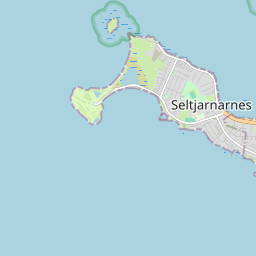
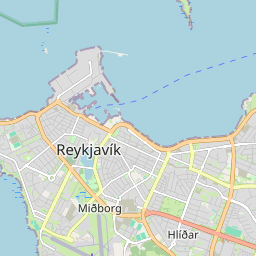
This table deliberately avoids writing “church on day one, Golden Circle on day two, harbour on day three”. Places can move; fixed times cannot. Write down the latest time each day can safely miss and what happens if it fails, then see how much room remains. Otherwise a full three days may simply be three mornings when you cannot be late.
Choose the accommodation area before you book a pickup
Without a car, the hotel address is part of every day’s transport plan. The central core puts dinner, Laugavegur, Hallgrímskirkja and many pickup points within an easier walk. Old Harbour is better for Harpa, boat trips and waterfront mornings, but the walk back to Laugavegur feels longer when the wind is up or you are carrying groceries.
This does not mean everyone should book the most central and most expensive room. For two people staying two nights, I would usually put the price difference into location. With three or more people, a longer stay or a need for a kitchen, widen the search and use buses to fill the gaps. The trap is saving one night while creating a daily taxi bill or giving the third day to a hotel move. Compare the centre and harbour with this accommodation-location decision guide, which puts late arrival, luggage, activities and the next morning's direction on the same map.
For a city hotel, do not decide between one and two nights from “Reykjavík is small” alone. A very late arrival, an early flight on day three or a day tour in the middle can make one fewer night less convenient; this one-night versus two-night comparison weighs flights, luggage and city time before deciding whether the extra night earns its keep.
“Pickup available” is not a meeting point: read the voucher
Reykjavík's city-centre traffic restrictions apply to tour coaches. The city currently lists 14 coach pick-up and drop-off points in the centre, with a reference stopping time of five minutes. “Hotel pickup” therefore does not always mean a vehicle will stop at the hotel entrance. Some suppliers assign a nearby numbered stop, while other products require you to go to Reykjavík Terminal or another meeting address.
Before paying, enter the hotel address in the Reykjavík City tour-bus stop map and save the nearest stop name and walking route offline. The specific product voucher remains the final authority, since one hotel can have different pickup arrangements with different suppliers. In 2025 the city also announced a plan to replace the existing Hallgrímskirkja stop with a new Old Hringbraut stop, stating that the old stop would remain until the new one opened. That is why this page does not permanently tell you to use stop 8.
Strætó is part of the plan, but know payment and transfers before boarding
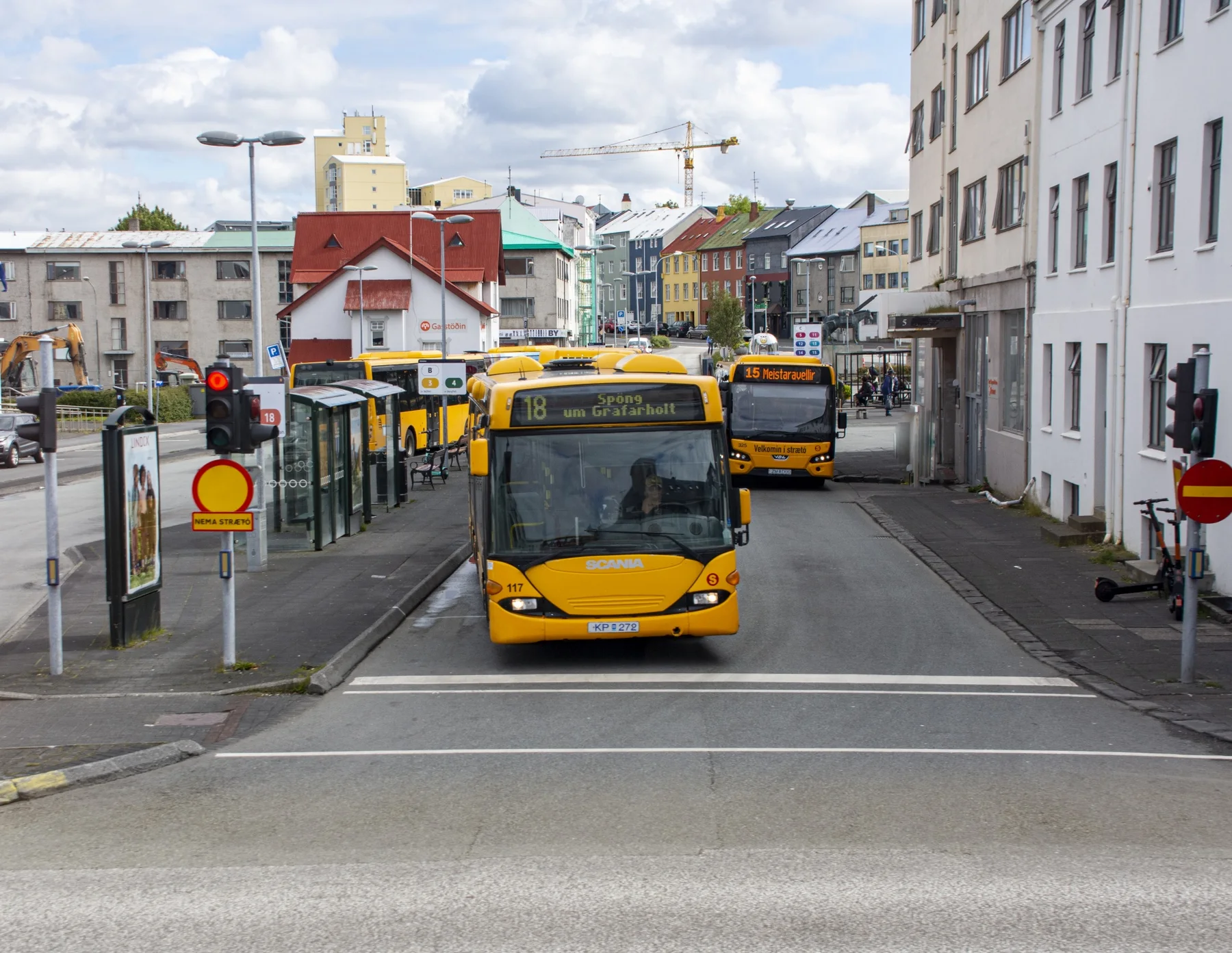
Use Strætó for farther-flung pools, museums and residential areas. Since June 2025, buses in the capital area have no longer accepted cash on board. Current options include the Klappið app, Klapp card/Klapp ten, and contactless payment with Visa, Mastercard/Europay or a phone wallet. One contactless card buys one adult single fare; tapping the same card twice is not two passengers' tickets.
Strætó currently lists the adult contactless single fare as 690 ISK, with transfers within 75 minutes on the same payment medium without another fare. The Kapp adult cap is three rides per day and nine per week. These are the figures checked in August 2026, not permanent prices. Their practical use is to price the transport itself: a return trip to one pool does not automatically make a City Card pay for itself just because it includes buses. Multiple cross-city trips are when transport, museums and pools should be compared together. On the day, open Strætó's official routes and live information; it is more reliable than keeping a fixed timetable screenshot. From 2026, the capital-area and regional Klapp payment systems are also separate, so do not assume one city ticket works into the countryside.
A City Card pays back only if your days use it in the same rhythm
Reykjavík City Card currently covers 17 museums and attractions, 8 geothermal pools, unlimited Strætó travel in the capital area and the Viðey ferry. On the August 2026 page, the 24-, 48- and 72-hour versions are listed at 6,100, 8,500 and 10,500 ISK. The voucher still needs to be exchanged for a physical card; some museum, bus and pool benefits start when you collect it, and you can request a specific activation time. If you arrive at 9pm on the first night, do not waste a validity period on the airport bus simply because you have already paid.
Another easy boundary to miss: the City Card does not include bus 55 to Keflavík Airport. If your budget says “airport transport is free too”, the calculation is wrong from the beginning. Draw the three days first: within the same 24- or 48-hour window, will you really visit two or three covered places, take buses and use a pool? Add the same-day prices of what you would genuinely buy and compare those, rather than treating all 17 venues as savings. If the difference is small, buying separately keeps you freer; if the card is clearly cheaper, choose a collection point on your route. Use the official City Card page for the complete list, prices and activation method.
A workable three-day shape: city, one day out, then a fallback day
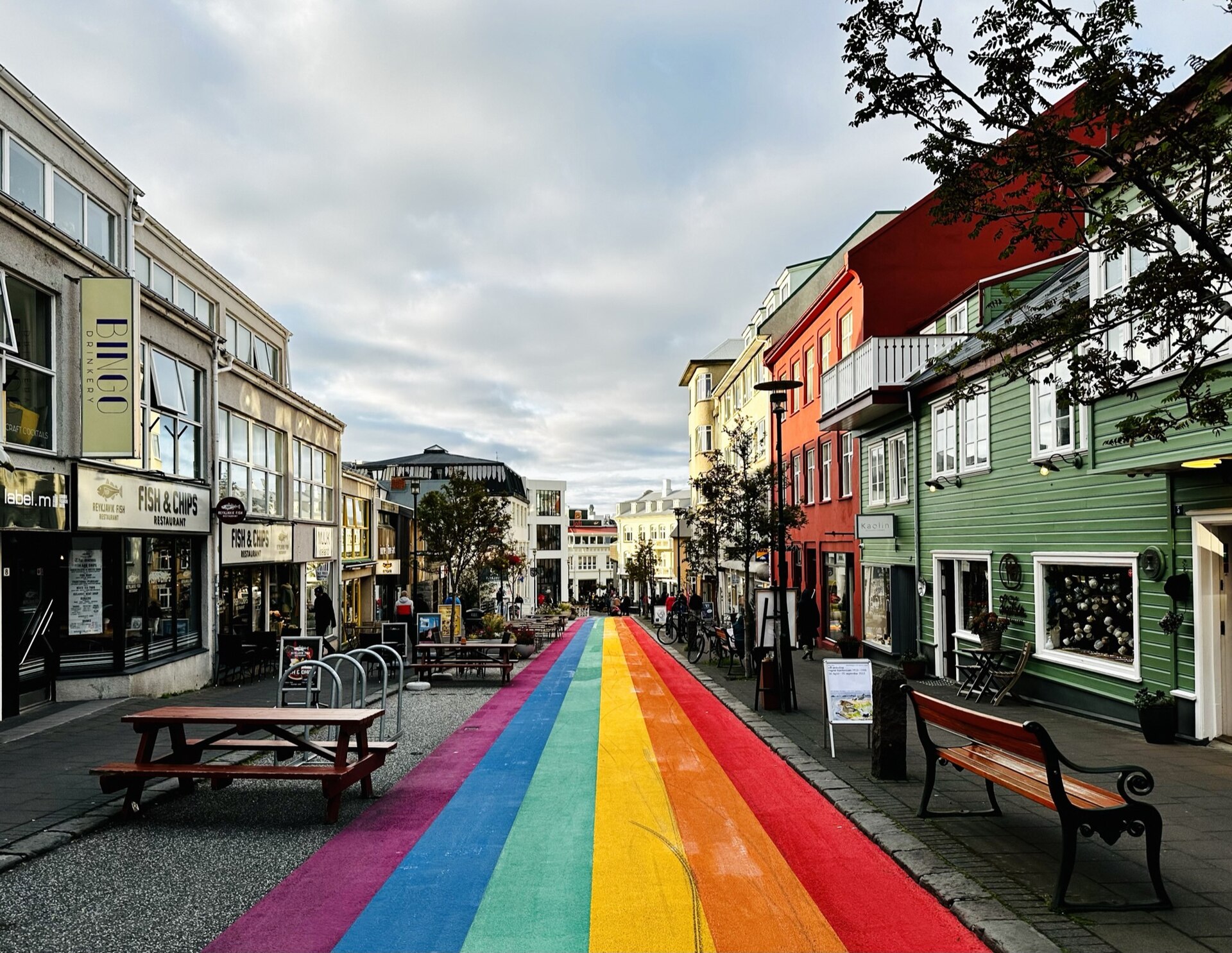
Day 1: Start near your accommodation instead of crossing the city immediately. If you arrive early, link the church, colourful streets, the lake, Harpa or Old Harbour on foot. If your dates fall in June and you want a small city performance that evening, the Reykjavík Fringe venue-uncertainty guide sets out what is confirmed and how to get back. If you are visiting on the first Sunday in June, the Fishermen's Day harbour-event guide means reworking Grandi, Harpa and the next day's departure. Arriving late? Keep only dinner and a supermarket. Avoid a fixed admission time on this day: it absorbs flight and check-in uncertainty. If your dates meet Culture Night road closures and dispersal, leave fireworks, crowds and the route home as a city-day exception; over-engineering arrival day transfers its risk to day two.
Day 2: Schedule one day tour, boat trip or farther destination with a clear pickup time. After returning to town, do not add another timed admission; dinner, a pool or a waterfront walk is enough. If weather affects the activity, the day can fall back to city museums and indoor places without changing the hotel as well. The rule “one fixed commitment paired with an evening you can delete” protects your options better than copying any three-day list.
If you want a more complete underground experience east of Reykjavík, this lava-tunnel guide for people who dislike cold or confined spaces belongs at this decision point: decide whether the standard route suits you before giving it day two, rather than adding it after returning from the Golden Circle.
If you want to give half a day to Icelandic horses, do not treat “suitable for beginners” as proof that the itinerary works. This first-time riding guide checks transfers, age, weight and clothing. It prevents pickup times, wet cold-weather layers or the pace of the ride from pushing dinner late. If Red Lava Hills is already chosen, separate a city transfer from a self-drive meeting point; this transport and product comparison separates Surtlugata 19, arriving 15 minutes early and the return journey.
If this is your Golden Circle day, do not compare ratings alone. A fast tour of about 6.5 hours and an 8-hour version with the tomato greenhouse can put dinner at very different times; this exact Golden Circle product comparison breaks down pickup, transfers and the extra 90 minutes. Read it while setting day two, rather than discovering at the end that the evening is already fixed.
If you would rather see waterfalls and black-sand beaches, confirm that the South Coast tour explicitly lists the Sólheimajökull glacier front before comparing bus size. This exact comparison of two South Coast day tours separates the classic Vík route, glacier front, pickup stops and the long glacier-lagoon day, so you do not spend ten hours travelling and find that your priority stop was only viewed from the road.
Day 3: Keep the content you did not want to rush. City Card users can group museums, a pool and an urban-transport option such as Viðey here. Without the card, a harbour walk, cafés and independent city shops work just as well. Use this day for luggage storage, flights and weather buffer.
When does one extra hotel night earn its cost?
With three days based in the city, the hotel is part of the itinerary. It determines whether you can return for a warmer layer in the rain, avoid researching a transfer after a day tour and still walk back to collect luggage on the final day. For a food walk on a full city day, read the Reykjavík food-tour guide covering pickup points, tastings and dietary limits. For Food & Fun in March or April, the festival restaurant and accommodation window checks bookings, set menus and the next-day exit. If you visit 17–23 March and want to watch chess, the Reykjavík Open guide connects Harpa, breakfast and the route after the match. A pickup near Harpa or the church directly changes the walking line before and after dinner. These details often decide whether a plan feels calm or becomes a string of small errands.
Only compare the bookable properties through the following links once you have decided to stay car-free and keep most of the trip within walking range of the centre and harbour. Check the actual address, late check-in, luggage storage, cancellation terms and total price before booking.
Compare room prices only after you fix the city base
Use the same dates, party size and similar room type. Compare the real walk to the tour-bus stop, late check-in, luggage storage, breakfast, cancellation deadline and final total.
Before departure, confirm these six practical details
One: How far is your hotel from the main pickup point and dinner area on foot? Two: Which day genuinely needs a day tour, and which only needs the city? Three: After activation, can you use the City Card's consecutive hours for museums, pools and buses rather than spending them on the aircraft? Four: Is airport transport arranged separately? Five: Does the voucher say hotel pickup, a numbered tour-bus stop or Reykjavík Terminal? Six: If wind and rain cancel an outdoor activity, what can this day become naturally?
If you can answer all six, the car-free three-day plan is complete. Then decide how to get into the city from the airport; if bus, rental car or the last mile is still open, this comparison of KEF-to-Reykjavík arrival transport covers luggage, hotel entrances and flight times. Let the city day exist quietly, so the distant scenery does not all have to happen within three days.
If you extend the trip to four days, the four-day Reykjavík city-base version gives the extra day to the Golden Circle, a hot spring or a buffer instead of forcing in another early pickup. For five to seven days, do not repeat this city framework twice. First decide whether the extra days are for weather buffer, another day tour or a multi-day South Coast route with accommodation; this five-to-seven-day car-free Iceland comparison is for that branch, not for stretching a city list to seven days.
Related reading
With the three-day framework set, answer the nearest next question
Centre or harbour accommodation · Golden Circle day tours · South Coast day tours
More reading
Connect the arrival and departure days to a longer route
Reykjavík city guide · KEF to the city · Five-day South Coast Iceland
References
- Reykjavík City: Public transportation (14 tour-bus stops and five-minute reference stop)
- Reykjavík City: Passenger transport vehicle restrictions (city-centre tour-bus restrictions and map)
- Reykjavík City: New Old Hringbraut tour-bus stop proposal (2025-06-27; old stop remains until the new one opens)
- Strætó: Pricing (current contactless fares and Kapp cap; checked 2026-08-20)
- Strætó: Terms and Conditions (75-minute transfer and one adult per card)
- Strætó: Capital-area buses stop accepting cash (2025-05-16)
- Strætó: Capital-area and regional payment systems separated in 2026
- Visit Reykjavík: Reykjavík City Card (coverage, prices and bus 55 exception)
- Visit Reykjavík: How the City Card works
Q&A · Planning three car-free days in Reykjavík
Do I need two day tours for three days?
Usually not. One city day plus one adjustable day leaves room for pickup delays, weather and a change of plan.
Is the City Card always good value?
Work it out from the museums, pools and bus rides you will genuinely use. The headline number of attractions is not the calculation.
How does a day-tour pickup affect where I stay?
The stop named on the confirmation matters more than the words “city centre”. Check its walking route with your luggage and the departure time.
References
Bus, City Card, pickup-stop and activity terms change. Recheck the current official information before departure; the full source list is above.