
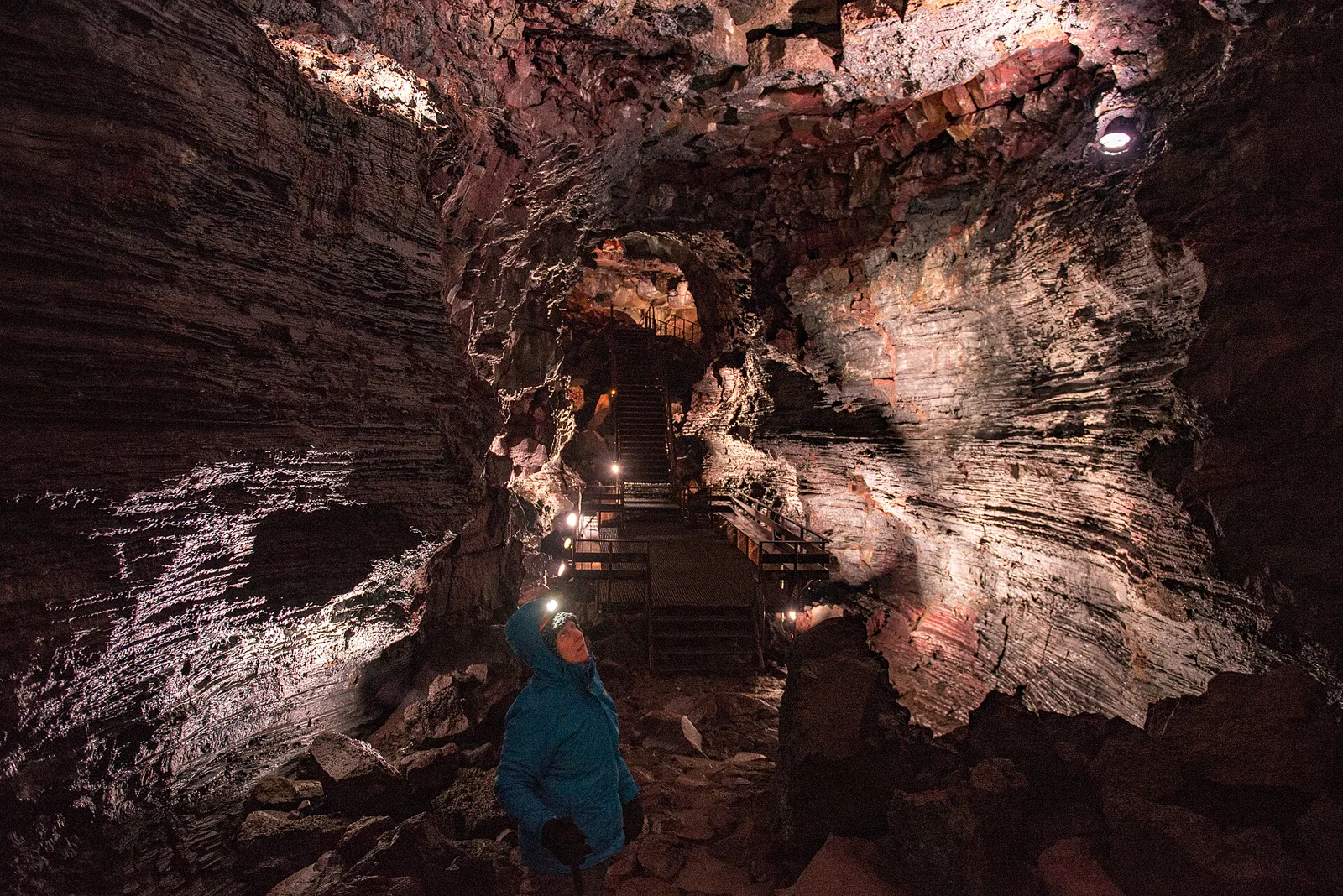
EXPERIENCE DECISION · RAUFARHÓLSHELLIR
This page does not decide whether anyone is brave enough. It separates two discomforts that are often lumped together: cold can usually be managed with clothing and the right tour version; confined spaces require you to identify whether the problem is a distant exit, low light, dripping sounds or being unable to stop easily on uneven ground. The answer changes which itinerary makes sense.
ICENAVI · LAVA TUNNEL PRACTICALITIES
Separate cold from losing control before choosing a tour version
These scores describe the activity’s demands on your body, half-day and route planning, not your courage. Cave conditions, age, health, clothing and available versions should be checked again for your travel date.
The cave is about 0–4°C; the standard tour provides a helmet and lighting, but visitors remain responsible for warmth, waterproofing and grip.
A managed path does not mean you can turn around whenever you wish; if exits, dripping sounds or group pace bother you, the standard tour may still feel difficult.
Lava Falls Adventure involves balancing across rough rocks, so back, knee and fitness differences directly affect whether the booking makes sense.
The tunnel is near Route 39 and suits a full afternoon; forcing it after the three Golden Circle stops leaves the return journey and changing clothes to consume the time.
The average of four checkable conditions: cold is manageable with the right gear, while low-light confinement and the adventure version’s physical demands are the real dividing lines.
Do not imagine every cave as the same experience
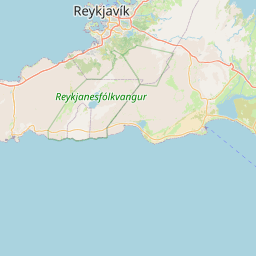
Raufarhólshellir lava tunnel lies east of Reykjavík, near Route 39. Visit South Iceland lists it as roughly half an hour outside the capital and open year-round; paths, platforms and lighting were later added so ordinary visitors can see, with a guide, the passage left by a volcanic eruption about 5,200 years ago. That makes the standard tour a managed introduction rather than a cave-exploration course, but it does not make every body feel the same inside it.
The common mistake is translating “there are lights and a path” into “it feels like a shopping centre”. It is still a natural cave: the operator warns that temperatures are about 0–4°C, water may drip from the ceiling, and recommends warm clothing, a waterproof outer layer and sensible shoes. This is not the wind-burn cold of standing on Iceland’s coast; it is the slow chill that appears while you stand listening, hold a phone and let dampness reach your shoes and socks.
If low temperatures are your only concern, I would not try to save money on the jacket and shoes. Grip underfoot and a dry warm base layer will shape the experience more directly than squeezing in another “nearby” waterfall. If you already know that low-light spaces make you want to leave immediately, there is no need to negotiate with yourself over a difficult-to-cancel ticket.
You can prepare for cold; with tight spaces, identify the exact trigger
“I am a little claustrophobic—can I still go?” No responsible website should answer yes or no for you. A more useful approach is to turn an abstract fear into specific scenes: is it the inability to see a distant exit, wearing a helmet and being unable to turn around freely with the group, or walking slowly because wet rock makes you feel that you are holding people back? The first two concern space and control; the last is mainly about footing. Do not collapse them into one idea of being timid.
The standard tour centres on managed paths, platforms and lighting, so it suits people who want to see lava textures without turning the afternoon into a fitness test. It is still not an open museum corridor, and no cave can promise that you will always see a full exit. If that prospect could cause panic, skipping the activity is a sound decision; do not lock yourself into it because everyone else wants to go.
This trade-off resembles the decision in how to choose an ice-cave tour: neither activity should be selected from photo colour alone. Ice caves also involve a glacier meeting point, season and conditions on the day; the lava tunnel is closer to the capital and available year-round, but you still need to take the ground and your sense of space seriously. If you want a blue ice cave, do not treat two activities as interchangeable just because both contain the word “cave”.
Standard tour or Lava Falls Adventure: the difference is not “a few extra steps”
| Version you are choosing | Ground and physical conditions | What kind of day suits it | When I would pause before paying |
|---|---|---|---|
| Standard tour | See the cave via managed paths, platforms and lighting; you still walk through a cold, naturally damp space where water may drip. | Give the cave a complete half-day near Reykjavík rather than treating it as an add-on to the Golden Circle. | Your clothing is not ready, or the same day includes a long self-drive or a fixed meeting time. |
| Lava Falls Adventure | The activity requires balance across rough rocks; you need good fitness, it is not recommended for back or knee problems, and the minimum age is 12. | The activity itself is the main event, with time before and after for changing clothes, resting and returning to the city. | “I want a challenge” really means the standard tour sounds too ordinary, or the group has a wide range of fitness. |
The adventure route is easily misread because of one word: adventure. It is not “the same cave with a few extra photographs”; rocks, balance and knee and back conditions directly affect your pace inside. Someone may be fine on a mountain path yet dislike unstable footing or bending through a lower section. Count that separately instead of treating a shared love of the outdoors as agreement from everyone.
Where should it go in the itinerary? Rule out two tempting plans
The first is “do the Golden Circle, then pop into the cave”. The tunnel branches from Route 1 towards Route 39; it is not an extension of the Golden Circle’s three core stops. If you want time for Þingvellir, Geysir and Gullfoss, use this guide to a one-day Golden Circle or a two-day self-drive to spread out accommodation and driving. Forcing two good activities together usually means watching the clock at both.
The second is “use it as an indoor rainy-day backup”. Conditions inside are less weather-dependent, but the road to the entrance, transfer and self-drive still have their own constraints. If weather changes your South Coast or other outdoor plans, read how to protect your stays and meeting times in the rain first, then put fixed rooms, drives and product terms at the front of the decision. The cave can be a strong alternative, but it should not disguise a day when another long move is already a poor idea.
Without a rental car, you do not need to turn the whole trip into a self-drive for this one cave. The useful comparison is whether this activity already deserves a city-base day; if you are choosing between a self-drive, day tour and hybrid plan, Iceland self-drive or day tour sets out who handles driving, waiting and luggage. Choose the transport shape first, then check the product’s transfer and meeting terms.
ICENAVI · A more honest deletion rule
You do not need to fear nothing; you only need not to endure it throughout.
If today is already a long driving day, someone is deeply uneasy in narrow dark spaces, or you simply want somewhere to wait out rain, returning to Reykjavík for coffee is entirely valid. Keep the lava tunnel for people willing to give the cave itself their time and attention; it is not a universal plug for an overfilled wet-weather plan.
Certain that you want the standard tour?
Now check the date, transfer version and cancellation terms
The link below goes only to the Raufarhólshellir standard lava-tunnel product checked for this article, not to an activity homepage. Confirm that you have selected the standard trail rather than another duration or transfer variant, then check the meeting point, clothing, age, cancellation terms and roads on the day; price and availability are set at checkout.
More reading
Q&A | Questions to settle before departure
Should I skip the lava tunnel if I hate cold?
Not necessarily. The cave is about 0–4°C and the standard tour has a helmet and lighting; the real question is whether you can accept low light, damp footing and the group’s pace.
Is Lava Falls Adventure an upgrade or a different activity?
It requires balance across rough rocks and has different demands on knees, back and fitness; do not apply the standard tour’s comfort level to the adventure version.
Can I do it with the three Golden Circle stops in one afternoon?
Do not work backwards from a fixed number of attractions. Route 39, changing clothes, the return journey and meeting times consume the afternoon, so it is better treated as a complete half-day.
References
- The Lava Tunnel: FAQ (cave temperature of about 0–4°C, helmet and lighting, clothing, Route 39 location, standard tour and Lava Falls Adventure conditions; checked 2026-08-24).
- Visit South Iceland: The Lava Tunnel Raufarhólshellir (year-round operation, about 30 minutes from Reykjavík, tunnel age and managed paths; checked 2026-08-24).
- Klook specified product page (product version, transfers and terms must be checked again at booking; checked 2026-08-24).
- Photo in this article: Winniepix / Wikimedia Commons, CC BY 2.0; ICENAVI only resized and compressed it to WebP. The image shows cave walls and lighting, not the area open that day, ground conditions, weather or group conditions.
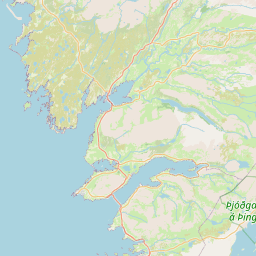
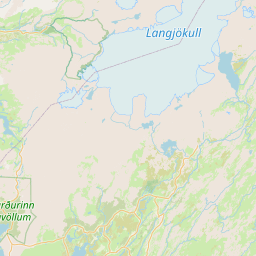
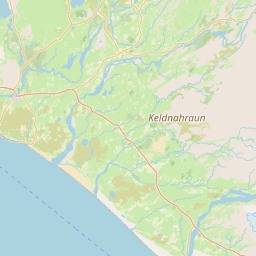
- OpenStreetMap: Raufarhólshellir tunnel entrance (public coordinates and base-map attribution for the location figure; for relative position only, not navigation or the supplier’s meeting address).
.jpg)