
ICENAVI LIGHT FIT
Is the light worth the return drive?
These scores weigh route control, shoreline time, wind and the drive after Stokksnes; they do not predict a particular sunrise.
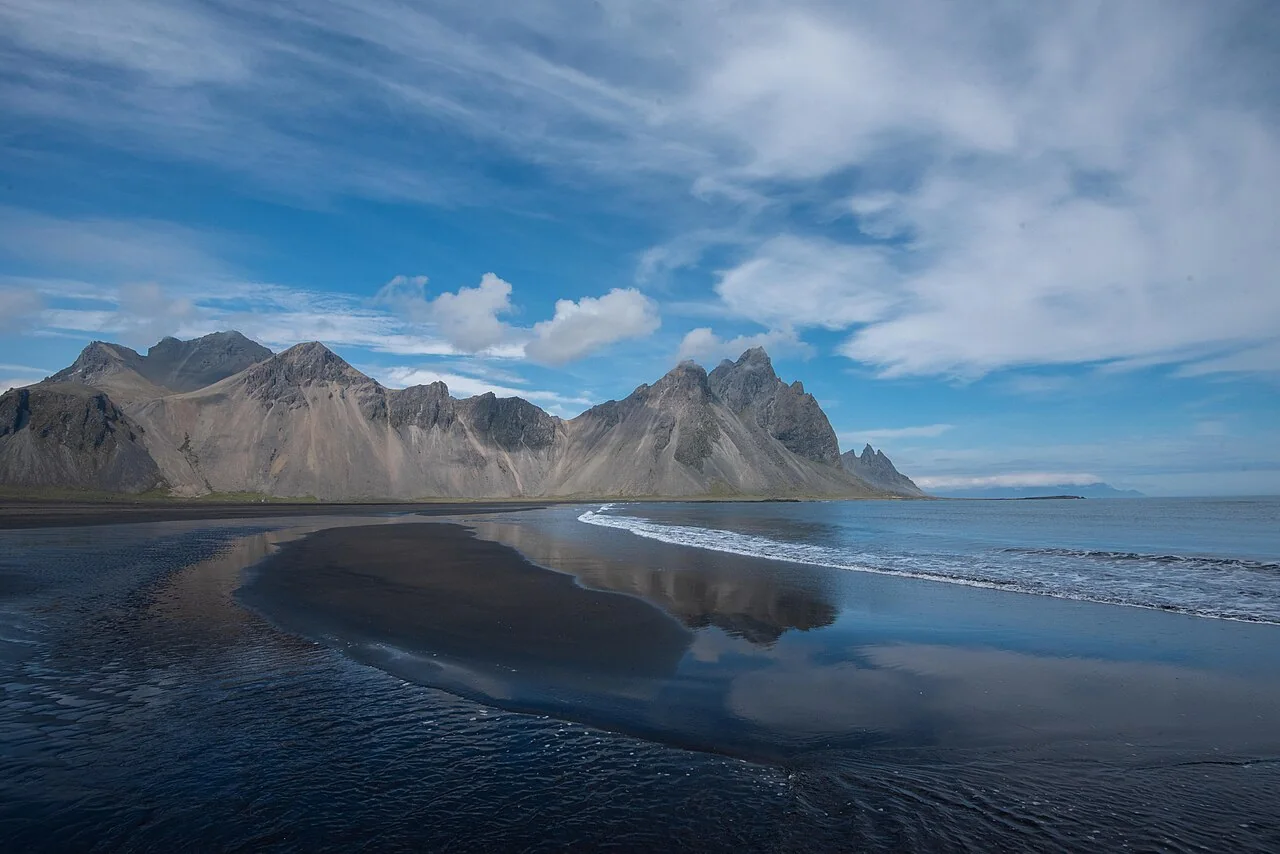
Early light over the black sand and mountain reflection gives the strongest controlled composition.
The diamond beach and Jökulsárlón can be folded into an eastbound day with fewer forced detours.
Loose gravel, wind and the walk from the entrance make the final approach slower than it looks.
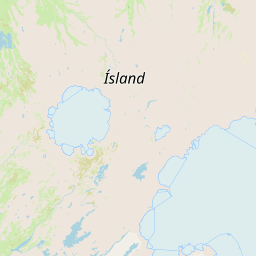
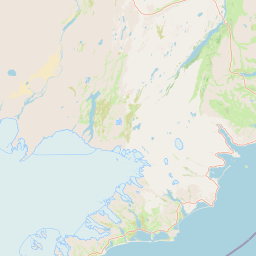
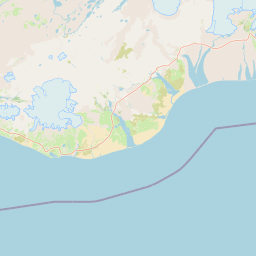
 Höfn
Town / supplies
Vestrahorn
Stokksnes entrance
Höfn
Town / supplies
Vestrahorn
Stokksnes entrance
Sunrise and sunset change the whole-day route
Arrive at Stokksnes before sunrise and the black-sand beach is usually quieter. The sky brightens first, and the mountain profile shifts from blue-grey to warmer tones; when the tide is calm, the reflection stretches the foot of the mountain. This timing suits travellers staying in Höfn or already settled on the southeast coast, because there is no pre-dawn long drive from Vík.
Sunset works well after the southeast-coast sights. Travel east from Jökulsárlón and the diamond beach, reach Vestrahorn in the afternoon, then return to Höfn for dinner. Winter light ends quickly, so fix your departure time before you arrive; summer light lasts late, but check the entrance hours and your accommodation check-in.
I would place today's overnight stop on the map first, then find the light window that does not make the car route backtrack. Driving from Reykjavík specifically for sunrise usually means moving closer the night before; leaving from Höfn makes sunrise the lower-cost, higher-return choice.
What the black-sand beach really costs
The entrance-to-beach walk is not a step-out-of-the-car stop. The most layered mountain-and-sea angles require moving over gravel and black sand, and every step is slower in strong wind. Keep camera gear in a dry bag, with a lens cloth and spare batteries in an accessible outer pocket, so sea mist does not wash out the whole set.
The tide changes the width of the walkable sand, and the waterline is not a place to chase waves. The mountain reflection needs a flatter surface and can break the moment the wind rises; no reflection does not mean the visit has failed, because a low angle on the ridge and sand ripples can still produce a strong frame. Reach a safe position first, then decide whether to wait.
With children or large luggage, the short stretch at the front of the beach is enough. Black sand works into shoe edges, so tap the soles outside the car before driving on; do not fill the seats with sand. These practical details affect whether you still want to get out at the next stop.
Höfn and the southeast base decide the sunrise plan
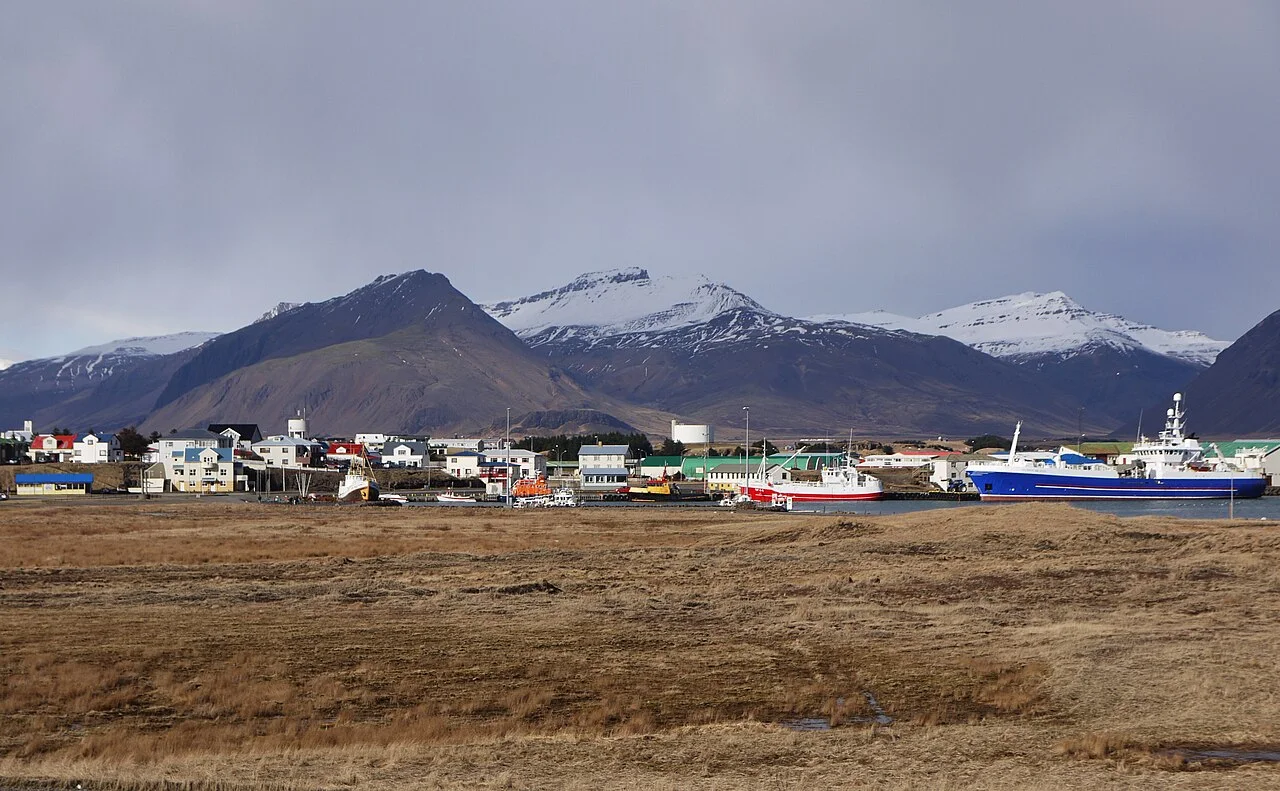
Höfn is the most comfortable base for sunrise. Stock up on a hot drink and fuel in town, drive east in the early morning, then return for breakfast before deciding between Jökulsárlón and the Eastfjords. From Vík, sunrise means an earlier start and a longer drive, so it makes sense only when Vestrahorn is the day's main stop.
Early winter roads may be icy, so set the departure time by visibility and road conditions. A beautiful sunrise is not worth speeding through darkness on black ice. Arrive early and wait in a safe place rather than searching for the car park in the last light.
After sunrise the light becomes hard quickly. If the mountain and sand are your priority, finish the main frames in the first half-hour; then return to Höfn or continue to Jökulsárlón. Allow 60 to 90 minutes for photography and the schedule is easier to protect.
How sunset connects with Jökulsárlón
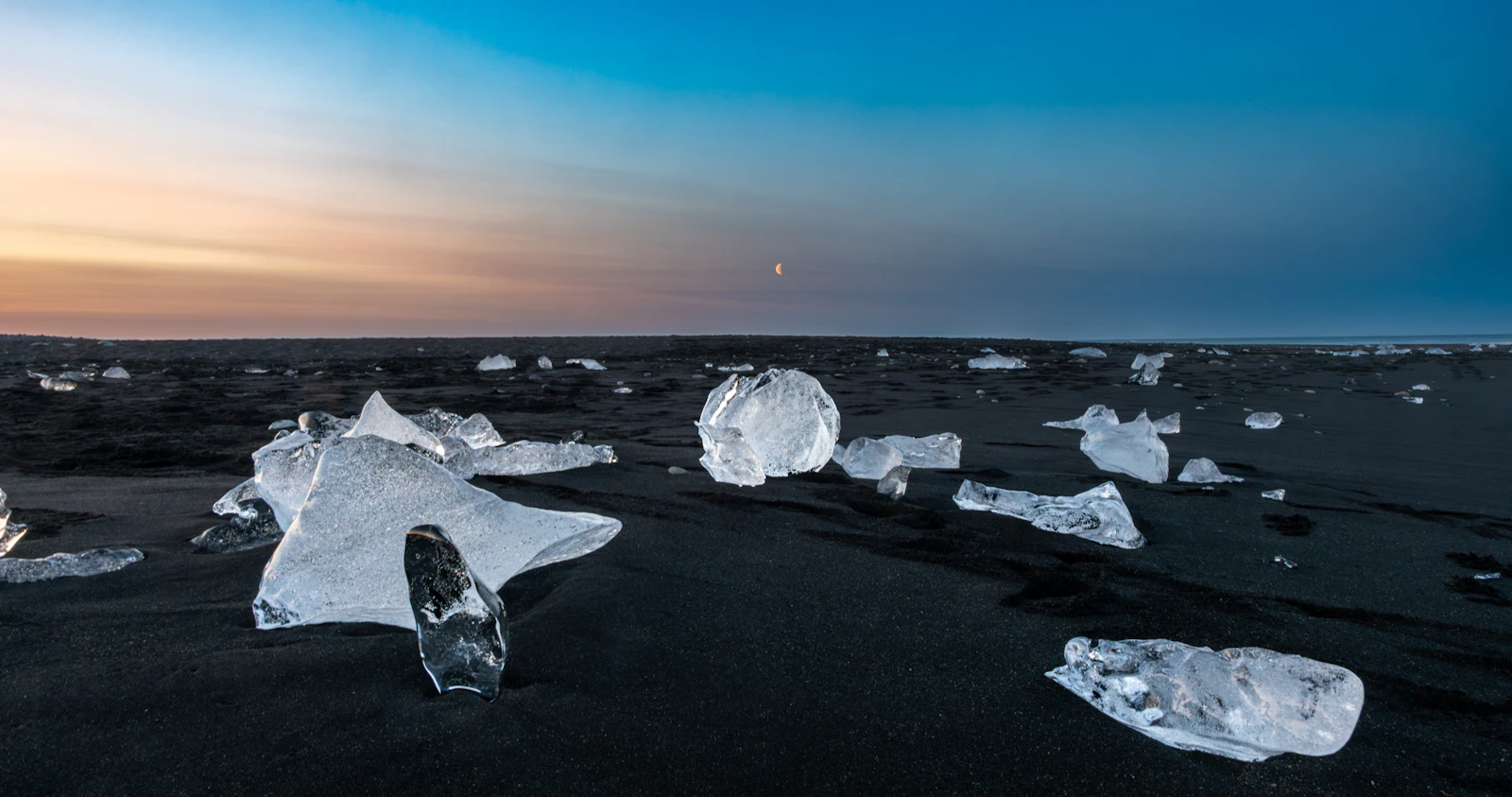
From west to east, finish Jökulsárlón and the diamond beach first, then reach Vestrahorn. Cover the longer walking stops before sunset and save your energy for the beach. If a boat trip or ice-cave activity runs late, shorten the beach stop rather than pushing the return to Höfn into darkness.
At sunset the mountain is backlit, so the profile reads darker and the colour gathers in the sand and water. Low cloud may hide the summit; that weather can still suit close views of sand ripples and people in the landscape. The subject changes, but the route can still work.
If you still need to drive east towards Egilsstaðir that evening, the post-sunset road becomes the main cost. Confirm the next night's accommodation first, then decide how late to stay on the beach. Travellers sleeping in Höfn have more flexibility; those staying farther away should set the boundary by a safe return.
Wind, seasons and photography alternatives
Spring and autumn wind direction changes quickly, and a rain jacket is more reliable than an umbrella. Summer is busier, so arriving early preserves a cleaner foreground; winter snow and low cloud alter the mountain's proportions, and even a short stop calls for footwear with grip. If the wind makes it hard to stand steadily, step back towards the entrance.
If the reflection is missing, switch to a diagonal composition of mountain and black sand; if the summit is hidden, photograph the wave line, sand ripples and nearby rock layers. The weather does not have to cancel the whole stop. Cancel the return drive or accommodation plan for a single photograph instead.
For more on the practical cost of the black-sand beach, keep the Vestrahorn destination guide in view, then choose the light window that fits your route.
Make the call before you leave Höfn
The previous night’s base usually answers the question. Stay in Höfn and drive east the next day for sunrise; come from Jökulsárlón or Vík and return towards Höfn for sunset. Put the entrance, parking and walk back into the itinerary, then leave a 30-minute weather buffer.
A glacier activity or boat trip already booked that day makes sunset less forgiving. If the plan is only the southeast-coast nature stops, sunrise gives the afternoon more room to absorb a late start or a change in cloud.
Check the tide to understand how narrow the walking line may become, not to chase a guaranteed reflection. At high tide stay on higher sand, keep sight of your group and turn back when the wind makes distance hard to judge.
Winter sunrise can mean waiting in the car after an early arrival. Keep warm layers, dry socks and a bag for sandy footwear ready; the entrance has no long indoor rest stop. When fixed items such as a boat departure, ice-cave meeting or hotel check-in are on the same day, write those times first and give the remaining window to Vestrahorn.
If you are travelling west from the Eastfjords, sunset can be the last landscape stop before Höfn. From Höfn heading east, sunrise keeps the rest of the day available if cloud or snow changes the plan. The safe return is the boundary, not the last possible frame.
BOOK THE ROUTE AROUND THE LIGHT
Choose a Vestrahorn stay and time
Use Höfn or the southeast coast as your base, then decide whether sunrise or sunset leaves the cleanest return to your next stop.
Start with the destination
Read the Vestrahorn destination guide for the entrance, overnight base and next-day direction before choosing the light window.
Continue the route
Continue to Höfn, Jökulsárlón and glacier-lagoon activities, an Eastfjords base when the route allows.
Q&A | When to photograph Vestrahorn
Is sunrise or sunset better?
Choose sunrise when Höfn is your base and quieter early light matters. Choose sunset when you are already coming east from Jökulsárlón.
How much time should I allow?
Allow 60 to 90 minutes for photography, plus the entrance walk and a weather buffer.
Can I visit in winter?
Yes, but check the road, wind and visibility first. Do not make the return depend on the last light.
References
- Visit Vatnajökull: Vestrahorn - Vestrahorn area information
- OpenStreetMap - map reference