
ICENAVI FAMILY FIT · CHILDREN'S CULTURE
With free activities, the real calculation is how many escape routes your family still has
Scores are based on official dates, activity formats and the free-admission principle that could be checked on 9 September 2026. The 2027 programme, venues, age groups, languages, capacity and registration requirements have not yet been fully published. This is not a rating of programme quality or a guarantee of entry.
The activities are free and varied, but the citywide venue list and practical information are incomplete. It suits a cancellable city stay, not a timetable filled before the programme is available.
The official pages provide a 2027 date window and a citywide approach, but individual addresses, times, ages, languages and capacities must wait for the programme. No family can sensibly choose a specific event yet.
The 2026 official page clearly states that activities are free and cover several art forms. Free admission does not guarantee entry, a seat, registration, or a language that suits your child.
A Reykjavík base makes it easy to arrange one main activity and dinner. If a venue is in Breiðholt, Árbær or another neighbourhood, bus waits, changing clothes and finding a bathroom can consume much of the family’s usable time.
City cultural institutions and indoor venues make a weather-adjusted day possible. Whether you can leave midway and return to the room depends on the address, transport and hotel location.
The dates still differ by one day, so either one or two nights should be covered by a cancellable room. Adjusting the stay after the programme appears preserves more choice than committing early to a non-refundable booking.
With children along, the most common problem is not finding no activities at all. It is opening a beautiful city festival page and seeing six possibilities at once: one in a school, one in a cultural centre, one with places only in the afternoon, and another across the city. None charges admission, yet every option requires leaving the hotel, putting on outer layers, finding a bathroom and locating a lunch that does not push everyone into a sudden meltdown. Free admission solves payment; it does not shorten the distance between venues.
This festival deserves its own planning guide because it is not a list of family attractions. The official description treats the whole city as the venue, including primary schools, preschools, community centres, cultural institutions and arts schools. The 2026 official page also clearly states that activities are free, while the complete 2027 programme, participating venues, registration process and age groups remain pending. You can decide now whether to stay in Reykjavík. You cannot responsibly buy a non-refundable room for a workshop that has not been published.
Do not rush to save the date: the official pages currently differ by one day
I treat the date difference as information rather than choosing whichever version looks tidier. The festival page currently shows 19–25 April 2027; Reykjavík’s general festivals page still shows 20–26 April. This may reflect different update schedules, or the programme may still be changing. For travellers, the useful response is not to guess which date is “really” correct. Mark the week as a possible window, then pay only once the programme, registration page and accommodation cancellation deadline make sense together.
| What the pages currently show | How to use it now | Decision to avoid making early | Check again before departure |
|---|---|---|---|
| Official festival page: 19–25 April | Place the week in your possible travel window | Do not assume every event is fixed within those seven days | The year’s programme, event times and registration page |
| General Reykjavík festivals page: 20–26 April | Recognise that the official pages are still being synchronised and keep cancellation flexibility | Do not use a one-day discrepancy to lock in a non-refundable hotel | Follow the organiser’s latest programme page |
| 2026 page: free activities held across the city | Understand that the festival is not one ticketed venue | Do not assume every 2027 event will be open without booking | Capacity, age, language and registration requirements |
| Schools, recreation centres and cultural institutions | Choose Reykjavík as your base before choosing a hotel near one particular venue | Do not treat “city centre” as proof that every venue is walkable | Each address, transport option and how easily a child can leave |
ICENAVI’s date ruleBefore the programme is published, the most sensible booking is cancellable accommodation in Reykjavík, not a non-existent event ticket. The date discrepancy itself is manageable; ignoring it is what removes a family’s way out.
When activities span the city, the map matters more than the words “family-friendly”
The map below is not an official 2027 programme map because the full venue list has not been fixed. It places the city roles shown in official material onto a real OpenStreetMap base: central Reykjavík/Grófin as the cultural-venue and indoor-alternative area, Breiðholt as the direction of a past BIG BANG event for young audiences, Árbær as another part of the city that may require transport, and finally the broader idea of a citywide community network. Once the programme appears, place each event into one of these categories instead of booking as soon as you recognise a name.
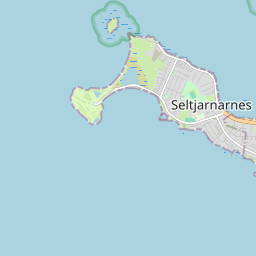
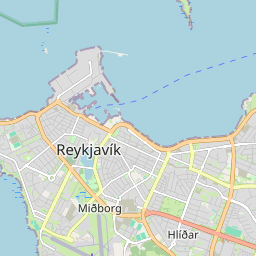
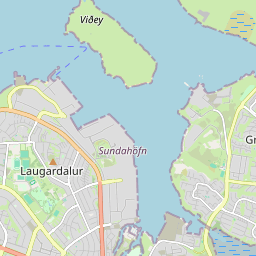
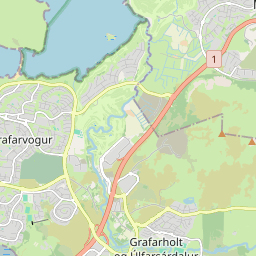
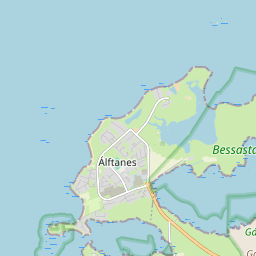
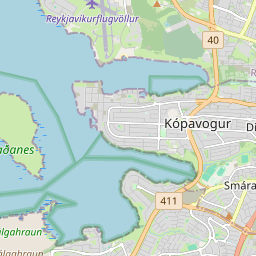
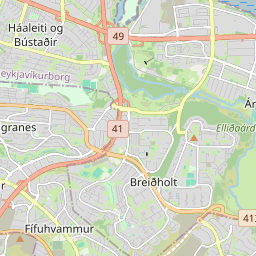
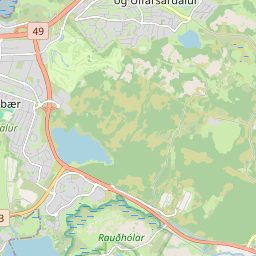
The point of this map is not to tell you how many minutes it takes to get from A to B. It is to prevent a common mistake: treating a citywide children’s festival as one ticketed venue close to the hotel. Until addresses are published, let the map remind you to keep a second version of the day available.
April wind and rain call for indoor alternatives planned to winter standards
A festival in April does not mean children will happily accept a full day of cold, wet walking. When Icelandic weather turns, an outdoor plan needs an indoor version that can be shortened immediately. If your family extends the trip into winter, the fact that activities are spread across the city is even less of a substitute for real time to nap, change clothes and warm up. The cultural institutions, schools, community centres and arts schools mentioned in the source material give you useful venue categories for thinking about alternatives, but the arrangements for each event still depend on the 2027 programme.
| Day’s conditions | Main activity to keep | Indoor or nap alternative | Arrangement to avoid |
|---|---|---|---|
| Dry but windy | One cultural-venue activity within a manageable walk | Keep lunch and the hotel on the same side of town, and do not chase a second area in the afternoon | Treating straight-line map distance as the actual stroller route |
| Persistent rain or wet snow | Choose a venue with seating, a bathroom and a clear end time | Switch to a cultural institution, library or hotel rest; keep the second event only as a backup | Leaving no time to change clothes between two events in different areas |
| A toddler misses a nap | Schedule the most important event during the child’s more alert half of the day | Keep time for the room, a hot drink, dry clothes and dinner; do not stay until the end simply because admission is free | Treating a registered event as something the whole family must complete |
| The venue changes at short notice | Keep only one item with a confirmed address | Recalculate buses, taxis and the exit plan from the new address; if it no longer works, return to the room | Having parents split up to chase events without a fixed meeting point |
One night or two? Start with whether your child wants one event or a gentler rhythm
| Family situation | How I would plan it | What you actually gain | What not to overestimate |
|---|---|---|---|
| You only want one workshop | Keep one city day and choose an indoor venue that is easy to leave | Your child gets a complete experience without the family rushing between venues | You will not also see every other event in the centre |
| Two children of different ages | Stay two nights and spread activities across two half-days | One child can attend while the other returns to the room or does something shorter | Everyone has to complete the same activity at the same time |
| One-night Reykjavík stop during a ring-road trip | Do not make the festival a fixed anchor; keep it as a city backup | A free option that can be dropped if road delays occur | Free admission cannot restore sleep already lost |
| Travelling with a toddler or a child who needs naps | Prioritise the hotel location over the number of events, with at most one main activity | Returning, changing clothes and eating do not break up the whole day | Activities being available throughout the day means every time slot suits a toddler |
If your child is looking forward to one specific performance, one night can work beautifully. If the festival name makes you want to fit every art form in the city into the itinerary, keep two nights. The Children’s Culture Festival offers choice, not a stamp-collecting challenge. Missing one event will not ruin the trip; making a family cross town in wet outerwear to reach the next address might.
Build a city day your family can actually finish
I would place the festival event in the middle of the day rather than rushing there as soon as you arrive. Keep the morning for sleep, breakfast and an unbooked short walk around the city. In the afternoon, schedule one programme item with a clear address, age range and end time. In the evening, eat near the hotel. If the final programme places the event in another neighbourhood, the first thing to remove is a distant second activity, not lunch or a bathroom break.
| Time | What to keep | How to leave when the child is tired | Confirm before departure |
|---|---|---|---|
| 09:00–11:00 | Breakfast, getting dressed and a short indoor activity | Return to the hotel or switch to a nearby café or library | Breakfast hours, outer layers and bathrooms |
| 11:30–14:00 | One main activity and lunch | Know the nearest exit; do not force everyone to stay until the end because it is free | Age, language, registration requirements and the actual address |
| 14:30–17:00 | A short second activity or a return to the room, depending on energy | Treat the second event as a backup, not a paid commitment | Transport, weather and seating |
| After 17:30 | Dinner near the hotel, dry clothes and information for the next day | Do not cross the city again to chase another event | Restaurant, supermarket and the route back to the room |
The hidden cost of free activities is bringing the family back together
Adults often place “no admission fee” straight into the savings column. With children, I use four separate columns: transport, waiting, supplies and regrouping. An event at a community centre may save the price of a ticket while adding a bus journey and the risk that someone urgently needs a bathroom. A city-centre event may be easier to leave, but then dinner and the crowds on the way back need handling. None of this needs to be calculated down to the króna, but you should see it before paying for the rest of the trip.
| Cost | What the free version appears to offer | What the family actually spends | A more honest approach |
|---|---|---|---|
| Transport | The event has no ticket price | Bus waits, transfers, a taxi or parking with a car | Choose a base you can return to and do not chase venues at opposite ends of town |
| Waiting | You can enter without paying | Queues, capacity limits, children’s moods and lunch time | Treat registered or capacity-limited events as fixed items; keep the rest as backups |
| Supplies | There are many events in one day | Wet clothes, hot drinks, snacks, bathrooms and rest | Set only one “must complete” item per half-day |
| Regrouping | The whole family can simply go together | Different ages want different things | Write down a meeting point before splitting up instead of relying on a live signal to find one another |
This is also why I would not publish a premature “Top 10 must-see events” list for the 2027 programme. Before the schedule appears, the useful work is not choosing pieces for readers. It is giving them a framework that can hold any event: address, age, timing, exit and return to the hotel. Once the list is published, you can compare which event genuinely justifies changing hotels or adding a night.
Keep room for change in the family itinerary
Check each family day across five dimensions, scoring each from 0 to 2. This does not judge whether an event is good; it measures whether the family can still have a comfortable version of the day if a child becomes tired, the weather worsens or the venue changes. Add a second activity only at 8 points or above. At 5 points or below, keep a clear version that ends back at the hotel.
| Dimension | 2 points | 1 point | 0 points |
|---|---|---|---|
| Clear address | The official programme lists the venue and meeting arrangements | You know the area but not the room or entrance details | You have only the festival name, with no usable address |
| Age fit | The child’s age, language and the event format match | It seems broadly suitable, but you still need to ask the organiser | You treat the word “children” as if it covered every age equally |
| Easy exit | You can leave at any time, with a bathroom and seating nearby | Leaving means finding transport again | Leaving would cause the entire day’s arrangement to collapse |
| Direction back to the hotel | The activity, dinner and hotel are on the same side of town | A short transfer is needed | The family must cross the city or change hotels with luggage after the event |
| Energy left for the next day | There is no early meeting or long drive the next day | There is a fixed commitment, but it can be adjusted | There is an early flight, a car return or an event you cannot be late for |
The value of this scoring method is that it stops “free activity” from being mistaken for “no obligation”. While the programme remains unpublished, address clarity and age fit can each earn no more than 1 point. A low score is not a reason to abandon the festival; it is a signal to book a cancellable room and avoid buying transport that cannot be changed.
Compare central Reykjavík hotels only after the dates and programme line up
Accommodation planning for the Children’s Culture Festival is different from a generic “family-friendly hotel” search. Until you know which neighbourhood each day will use, compare cancellability, breakfast, laundry, in-room rest and the transport route back to the hotel before chasing a property with a playroom. Once the programme is published, search the same dates, number of guests, room type and cancellation terms on three platforms. That is when you can see what a location is actually buying your family.
Compare accommodation only after the venues are confirmed
Compare Reykjavík accommodation for the Children’s Culture Festival dates
These are hotel-search gateways, not Children’s Culture Festival registration pages. Filter by venue direction, breakfast, laundry, room type, cancellation terms and the route back to the hotel, then compare the total price across all three platforms using identical conditions.
If you are staying one night, first make sure your child has one complete main activity without a rush. With two nights, the second day can absorb a venue change, bad weather or a sudden decision to rest. Once you decide to stay in the city, use the Reykjavík city planning guide to see how a city day connects with accommodation. If your family already has a seven-day route, check the seven-day Iceland family itinerary to make sure the festival is not displacing a day that genuinely needs rest.
Related reading
Put city activities back into a sensible base
Reykjavík city planning guideCity centre or Old Harbour accommodationSeven-day Iceland family itineraryMore reading
Make the next family decision
Iceland family budget: room types, child seats and activity limitsThree days in Reykjavík without a carPublic pool or commercial lagoonQ&A | What to clarify before departure
There are two versions of the dates. Should I book a room now?
You can hold cancellable accommodation in Reykjavík, but do not treat either version as confirmed. When the festival page and citywide calendar differ, keep the larger date window available.
Does free admission mean registration is unnecessary?
Not necessarily. Free only means the ticket price may be zero. Check the current programme for the venue, age range, capacity and registration requirements.
How many nights should a family stay?
For one event, fit it into an existing city day. To follow activities in different neighbourhoods, stay at least two nights and keep a rainy-day alternative available.
References | Sources and limitations
The activity information below was checked on 9 September 2026. The 2027 programme, dates, participating venues, entry arrangements, languages, ages and capacities may change, so check the official pages again before payment and departure.
- Reykjavík City | Children’s Culture Festival (the official festival page currently shows 19–25 April 2027; the 2026 page describes citywide venues and the free-activity principle, while the 2027 programme remains subject to the current page).
- Reykjavík City | Festivals in Reykjavík (the general festivals page currently still shows 20–26 April, differing from the festival page; it is used here as a reminder to recheck the dates rather than to correct the discrepancy).
- Reykjavík City | Children’s Culture Festival programme / About (activity formats, citywide communities and cultural-institution directions; each year’s programme, venues and free or registration conditions are subject to the current page).
- OpenStreetMap contributors (base map and publicly available geographic data used for the city-direction map; the map is not for navigation).
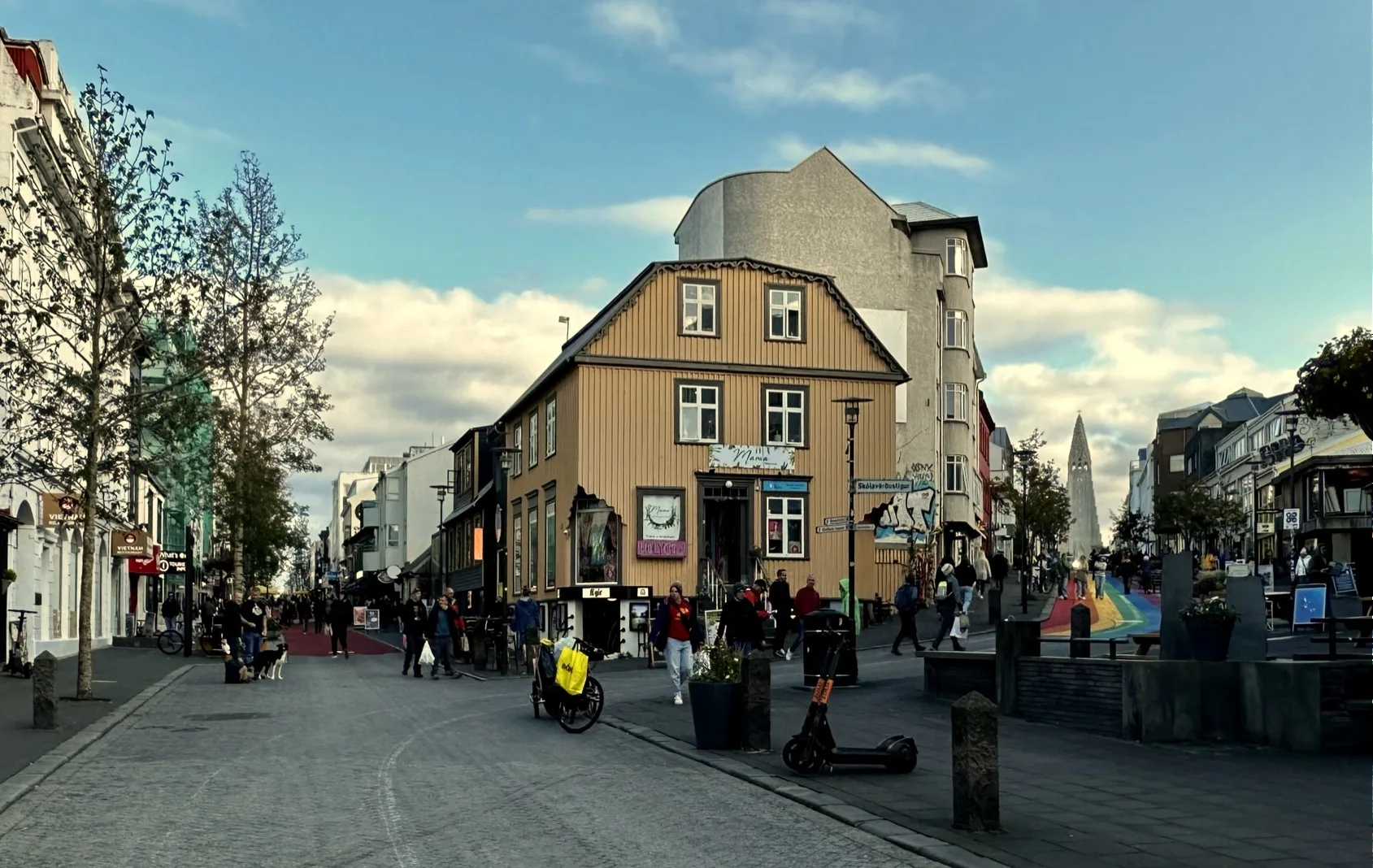
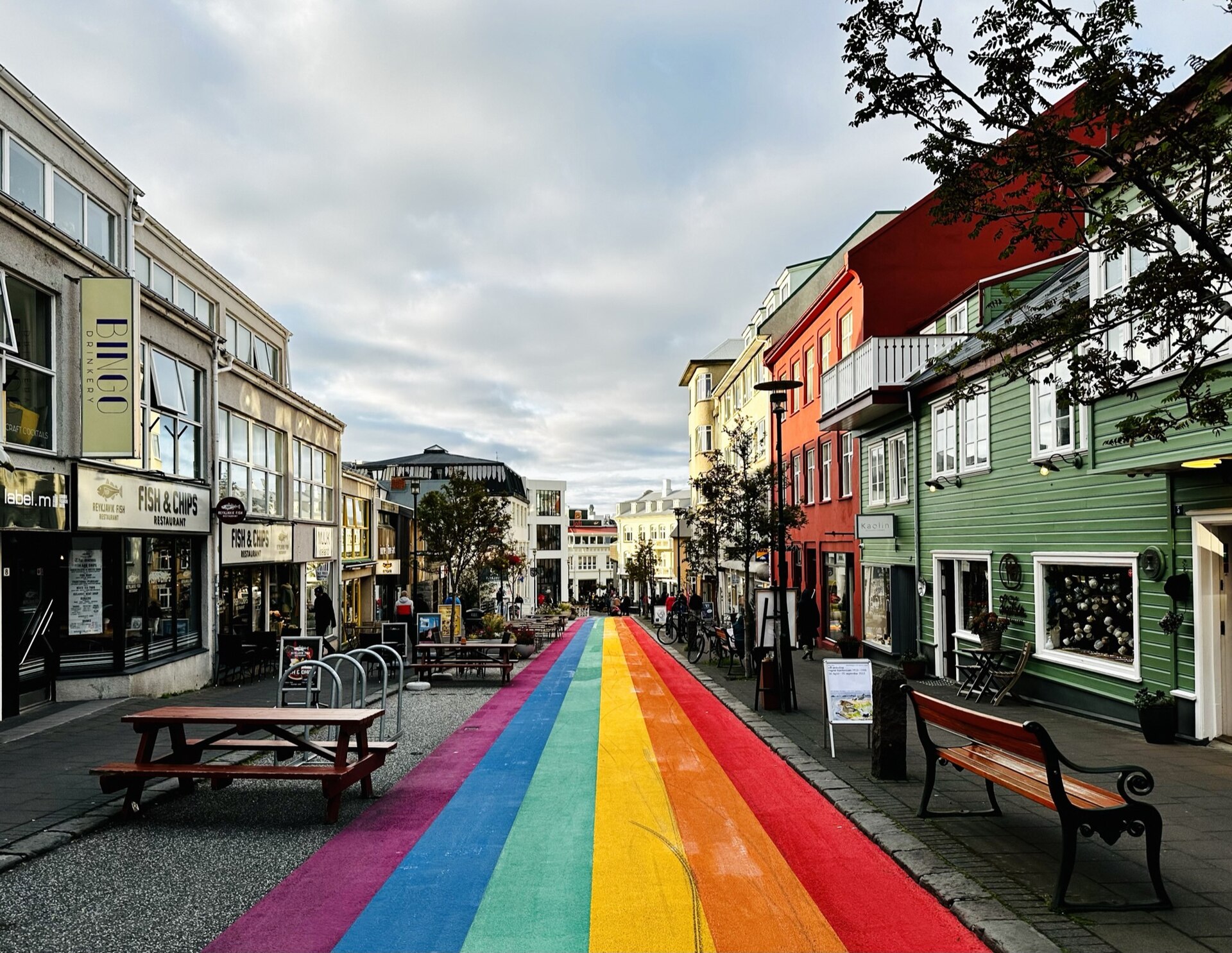
- Hero image: APK / Wikimedia Commons, CC BY-SA 4.0; the street scene is used only to illustrate Reykjavík’s walking scale and does not represent festival activity, crowds or weather on the day.
This page is an L1 entry point for a future event. Its purpose is to help families preserve the right city and accommodation choices without presenting an unpublished 2027 programme as a confirmed itinerary.