
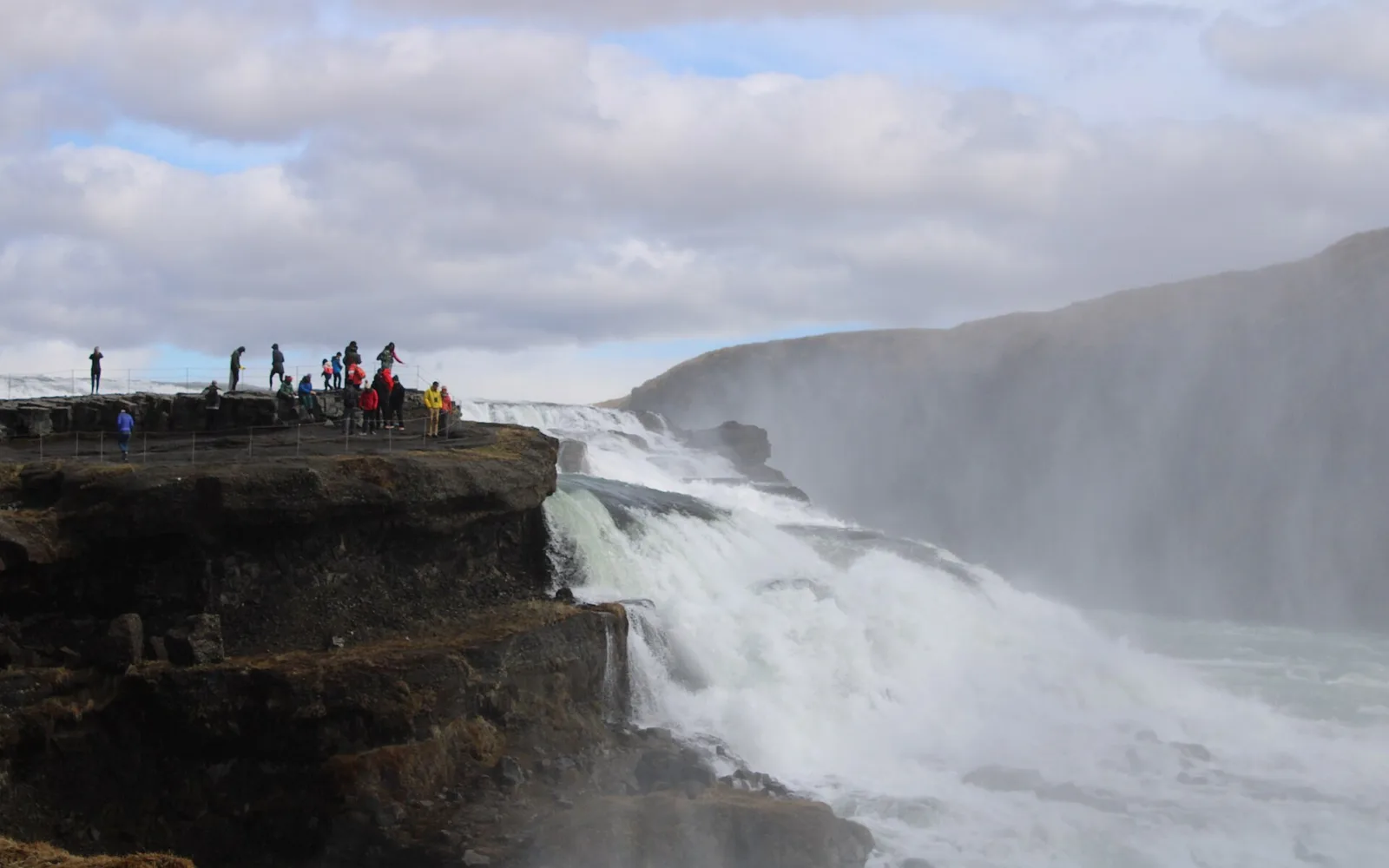
The Golden Circle looks like a small loop, but every car park breaks the drive into another leg. The Þingvellir paths, Geysir geothermal area and Gullfoss are not quick photo stops: parking, toilets, wind and visitor levels all add time. Two days earn their keep by giving you an afternoon for a hot spring or a short walk without rushing to the next stop.
ICENAVI GOLDEN CIRCLE FIT
Does one extra night buy useful buffer, or just another hotel bill?
Assessment based on route order, daylight and activity timing.
Starting from the eastern end on day two makes it easier to connect with the South Coast or the edge of the Highlands.
Splitting the three sights leaves room to change the order when the weather turns.
Laugarvatn lets you place Fontana after the sightseeing, without a late drive back.
Room, breakfast and moving luggage add up, so a short trip may not recoup the cost.
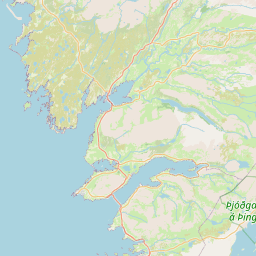
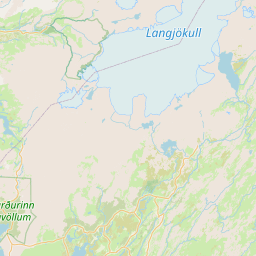
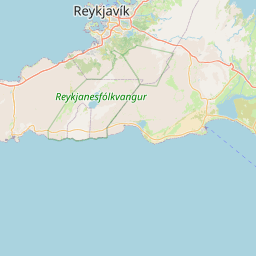
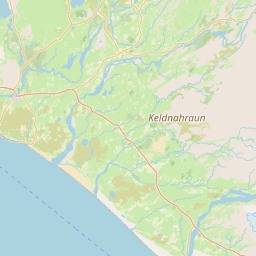 ÞingvellirLaugarvatnGeysir and Gullfoss
Geysir and Gullfoss: let the farthest stop set day two
Leave Reykjavík on day one and go to Þingvellir first. From the city centre, the one-way drive is about 45 minutes, but the paths deserve more than 20 minutes; allow 2 to 3 hours if you want the rift and lakeside viewpoints. Walk the downhill section in the calmer morning air, then take roads 36 and 365 towards Laugarvatn. The distance is short, but winter road conditions and sunset still matter.
In the afternoon, choose the Fontana geothermal baths or simply stop in Laugarvatn for lunch. Fontana admission varies by date and package; a common adult price is about ISK 6,000–8,000 (about HK$330–440/NT$1,350–1,800). You are paying for a bookable period of rest, not trying to make the sightseeing list longer. Stay in Laugarvatn after the soak: dinner and supplies are closer, and you will not need to backtrack the next morning.
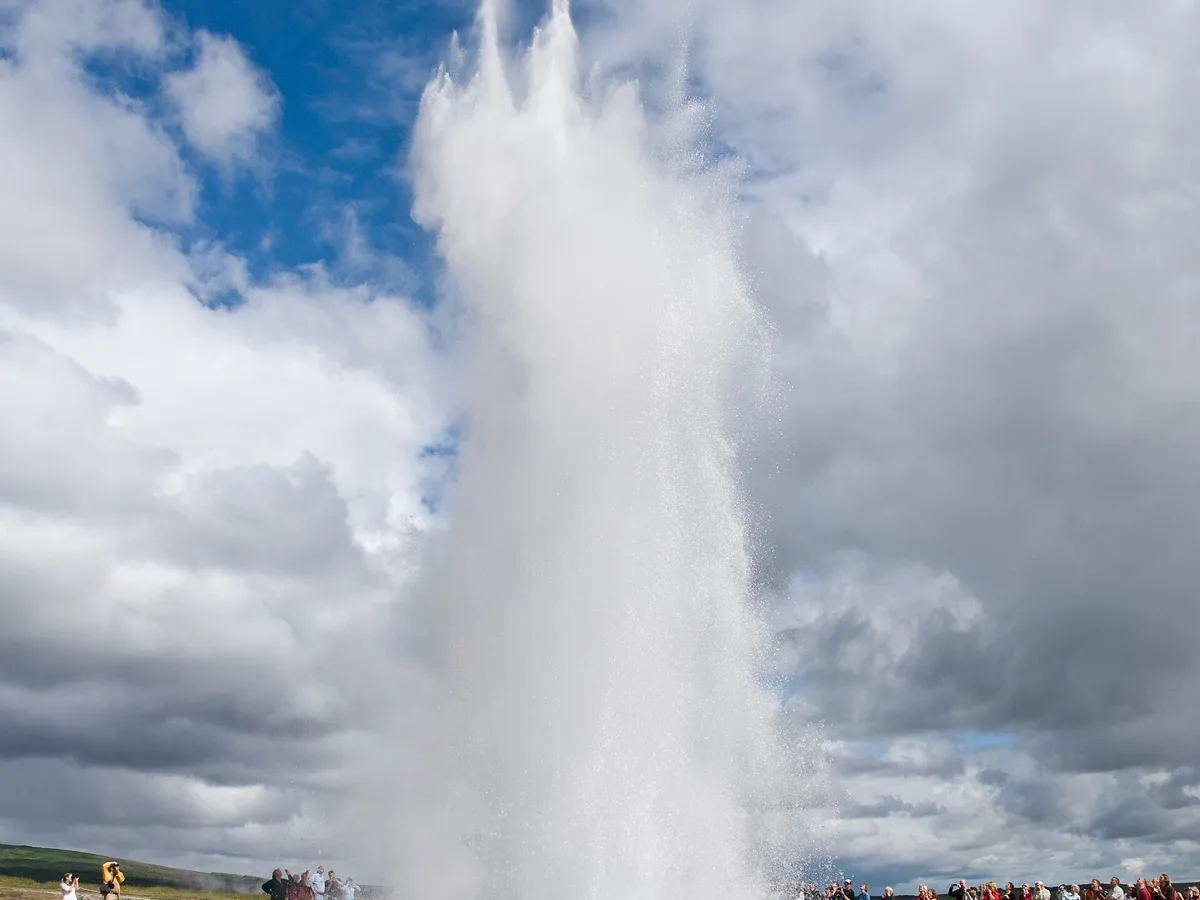
Save Geysir and Gullfoss for day two. Strokkur erupts at short intervals, so photography does not need half a day; allow 45 to 75 minutes in the geothermal area for wet ground, wind and visitor levels. Gullfoss has upper and lower viewpoints, and snow or ice makes the walk slower. Laugarvatn to Geysir takes under an hour, and Geysir to Gullfoss takes a little over ten minutes. With parking, paths and toilets included, allow at least three hours for the morning.
Where to stay, and what changes the next day
| Base | Best-fit route | What it buys you | Trade-off |
|---|---|---|---|
| Laugarvatn | Þingvellir → Fontana → Geysir | No night drive after the hot spring, with supplies close by | A longer drive to Gullfoss on day two |
| Geysir | Þingvellir on day one; geothermal area and waterfall early on day two | Easier to reach Gullfoss at opening time, and the most direct South Coast connection | Fewer dinner choices; confirm late check-in in advance |
| Reykjavík | All three stops as a day trip | No luggage move, with more city restaurants and hotels | You still drive back to the capital after sightseeing; the winter return uses the most daylight |
If day two continues south to Seljalandsfoss, Geysir's location matters more: after Gullfoss, take roads 30 and 1 south, avoiding another loop from Reykjavík. If you are returning to the capital or continuing to the Blue Lagoon, one Reykjavík base is simpler and you do not need to force a two-day stay.
A compressed one-day route is not always better than two days
A one-day drive from Reykjavík can start at Þingvellir, continue to Geysir and Gullfoss after lunch, and return to the city in the evening. Driving alone takes about 4 hours; walking and parking at three stops add about 4 to 5 hours, so the day needs 9 to 11 hours in practice. In winter, cut intermediate stops when visibility is poor. If you have only one day, check the meeting and return times for a Golden Circle day tour before deciding whether to rent a car.
The real advantage of two days is the ability to reorder around the weather. If visibility is poor on day one, shorten Þingvellir and see Geysir on day two; a fixed tour usually cannot hold that space for you. Conversely, if Strokkur and Gullfoss are your only priorities, Þingvellir does not have to be forced into the same loop, and that saved night may be more useful on the South Coast.
Cost table: the half-day that does not appear on the room rate
| Item | Typical two-day self-drive budget | How it affects the decision |
|---|---|---|
| Mid-range accommodation for two | About HK$1,800–3,800 / NT$7,400–15,500 | Changes with dates, breakfast and cancellation terms |
| Additional fuel | About HK$180–350 / NT$730–1,430 | The difference between returning to the city and staying at the eastern end |
| Fontana admission | About HK$330–440 / NT$1,350–1,800 per person | Only useful when you have set aside time to soak |
| Food and supplies | About HK$500–900 / NT$2,000–3,700 per day for two | Fewer dinner choices east of Geysir |
These are planning estimates, not fixed prices. When booking, ask first whether you need to leave early on day two: breakfast hours, parking and cancellation terms will change the route more than a bathtub photo.
Weather and season can reorder every stop
With long daylight from June to August, you can extend the lakeside walk at Þingvellir and visit Gullfoss early on day two before the tour groups arrive. From September to May, daylight is shorter, so check Iceland road conditions first and put the furthest Gullfoss stop in a period when there is still light. When wind and snow arrive, swap the geothermal area and hot spring as needed, and save slippery paths for better visibility.
Icelandic weather is a time limit on every stop, not a footnote to the itinerary. At Þingvellir, strong wind makes photography quick but getting rain trousers on and off slow; spray and ice at Gullfoss can halve your stair pace. For a genuine buffer, book only one non-refundable hot-spring time and leave the other sights movable.
If you are heading to the South Coast after the Golden Circle, read the Laugarvatn destination guide first, then choose your driving time based on whether you sleep near Hella, Hvolsvöllur or Vík. For an extended route, see how to combine the Golden Circle and South Coast in one day; do not estimate it from a straight line on the map.
Winter daylight, parking and road conditions need one plan
Visit South Iceland describes the Golden Circle as a year-round self-drive route, but “open all year” does not mean copying a summer timetable. Average daylight runs from about five hours in January to roughly twenty in July, so winter walks and the return drive should stay inside the useful light. Þingvellir also has several parking areas; check which one serves your intended entrance and how payment works before arriving, rather than circling the park for a space. If a warning or road report no longer fits the plan, delay or remove a stop instead of driving after dark to complete the three headline sights. Check the South Iceland Golden Circle route and daylight notes, Þingvellir parking information and SafeTravel’s current safety advice.
Do not enter only three sights into navigation
Save each leg separately: Reykjavík to Þingvellir, Þingvellir to Laugarvatn, the accommodation to Geysir, and Geysir to Gullfoss. Save the South Coast exit as another destination. If a road closes or the weather worsens, you can see immediately which leg to remove instead of guessing the remaining time on one long route. Download offline maps where the phone signal is unreliable, and put fuel and toilet locations on the same itinerary sheet before departure.
Do not leave luggage on the seats after parking. Short stops are common at Golden Circle sights, so remove valuables and lock the doors; spending fifteen minutes checking rain gear and shoe soles is usually quicker than looking for lost items on the way back. These small choices determine whether you finish the last stop before dark.
If you have already paired the Golden Circle with a hot spring, compare Fontana and Secret Lagoon, then choose one based on your overnight location rather than putting both into the same day.
After confirming the accommodation, record each sight's last admission time and parking location. That is what keeps breakfast from pushing back your day-two departure.
If strong wind arrives on day two, keep a short stop near the accommodation and move Gullfoss to the most stable road conditions; this is closer to real Iceland driving than fixing every stop to an exact minute.
Compare Golden Circle stays for a two-day route
Enter your dates and party size, then compare breakfast, parking, cancellation terms and next-day direction in Laugarvatn, Geysir and Reykjavík.
Q&A: Two-day Golden Circle self-drive
Is the Golden Circle worth an overnight stay?
It helps if you want Fontana, to avoid winter night driving or to continue to the South Coast the next day; it is not essential if you only want the three main sights and a Reykjavík return.
Should I stay in Laugarvatn or Geysir?
Laugarvatn suits a hot spring and dinner; Geysir suits an early geothermal and Gullfoss start before heading south.
Can I see all three sights in one day?
Yes, but allow about nine to eleven hours, and reduce walking in winter according to road conditions and daylight.
Do I need a four-wheel-drive vehicle for the Golden Circle?
Choose the vehicle by season, road conditions and the rest of your trip. The main Golden Circle roads do not mean every side road suits a standard car, so check conditions before departure.
Should I book Fontana in advance?
If it is central to your two-day plan, confirm a time slot for your date first; a last-minute visit can force the Þingvellir or dinner timing to move.
Related reading
To connect the Golden Circle with the South Coast, read how to plan the Golden Circle and South Coast in one day; if the focus is accommodation and hot springs, see the Laugarvatn destination guide.
More to read
Secret Lagoon and the Golden Circle, Hotel Geysir, and Héraðsskólinn.
References
- Þingvellir National Park (park location and trail information).
- Visit South Iceland (Golden Circle and South Coast regional information).
- OpenStreetMap contributors (base map for the location map in this article).