
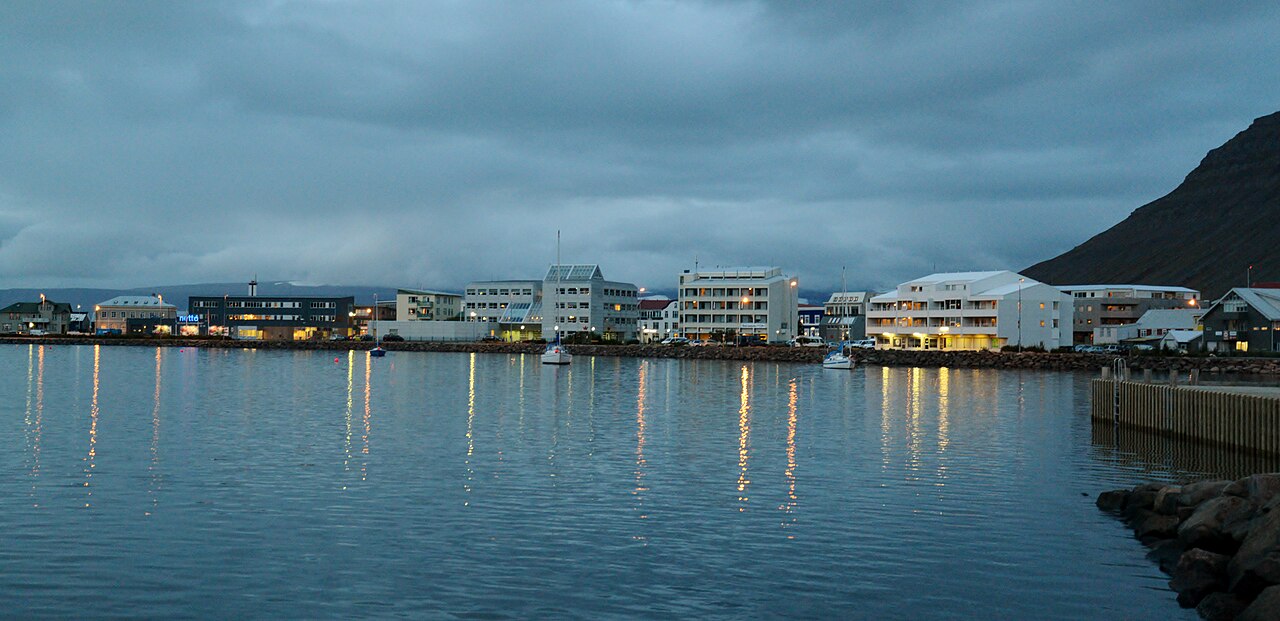
WESTFJORDS · BUS · BALDUR FERRY · BASE STAYS
The most disappointing moment for car-free travelers in the Westfjords is waiting at a small-town bus stop for an afternoon, only to realize the next bus will take you to another town, not the waterfall you wanted to see. The issue isn’t whether public transport exists, but that transport hubs and sight entrances don’t overlap.
Map the Westfjords first: buses are not scenic shuttles
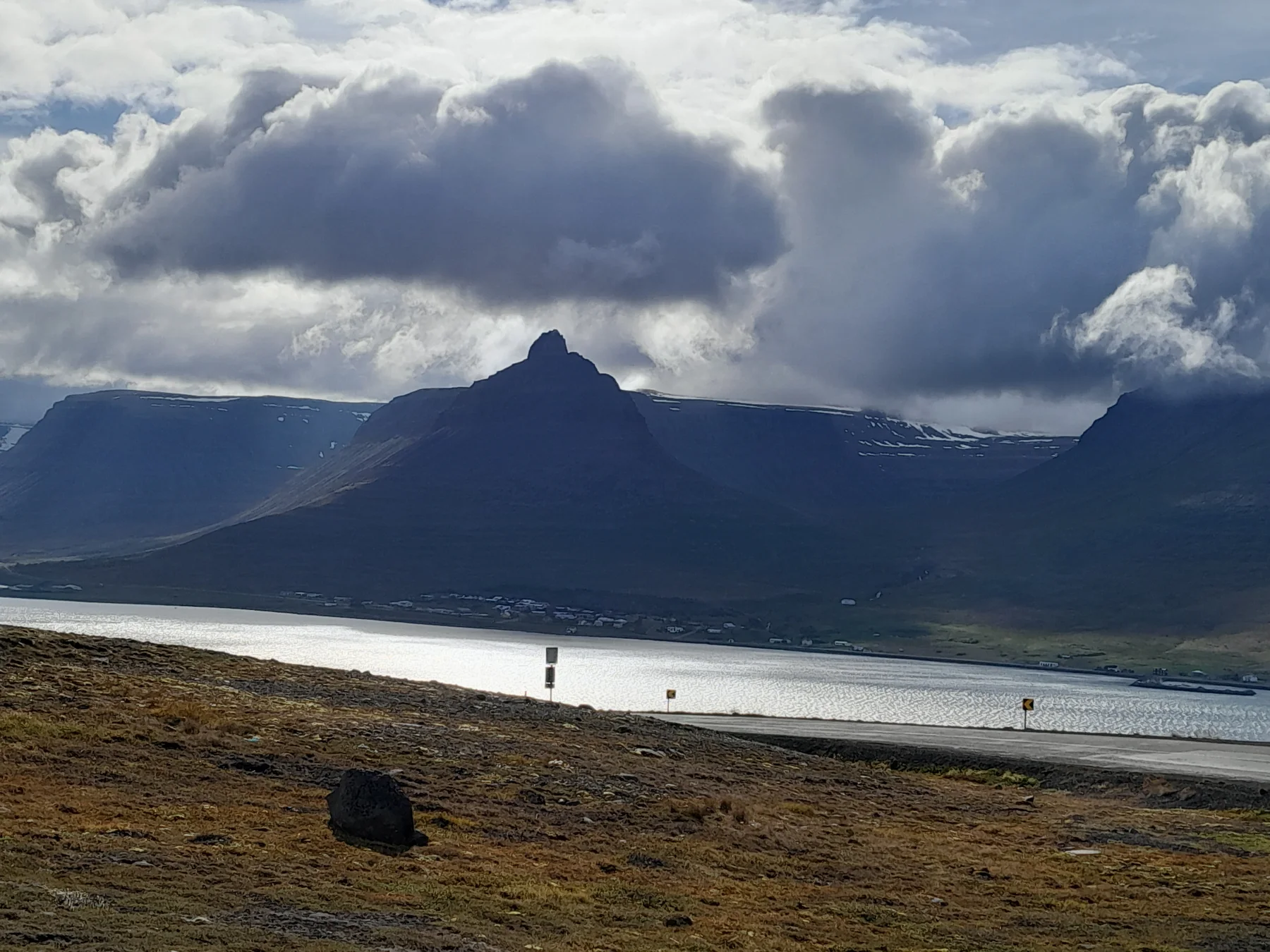
On the map, Ísafjörður is in the northern Westfjords, Patreksfjörður is in the south, and Brjánslækur is the ferry entrance on the south side of Breiðafjörður. There are routes between towns, but attractions are often on separate side roads. Dynjandi is located inland toward Arnarfjörður, Látrabjarg requires a turn onto Route 612, and Rauðasandur (Red Beach) requires a separate trip on Route 614. Public transport can get you close to a direction, but it won’t cover the final stretch of scenic road for you.
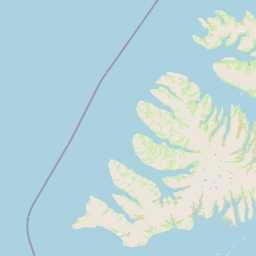
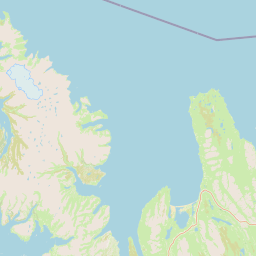
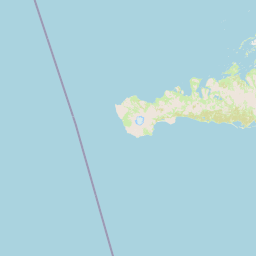
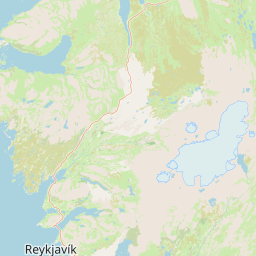 BrjánslækurBaldur Ferry / Southern EntranceÍsafjörðurNorthern City BasePatreksfjörðurSouthern Accommodation / Cape Side Routes
Bus schedule windows are really determined by which two nights you stay
The most stable approach for a car-free itinerary is to choose a base with good services first, then pick sights from there. Ísafjörður suits two full days in the town, Bolungarvík, Suðureyri, or activities picked up by local tours. Patreksfjörður is closer to Dynjandi, Látrabjarg, and Rauðasandur, but services are sparse, so you must confirm transfers, activity departure points, and accommodation together. Splitting your stay with one night in each place looks like you are seeing more names, but often costs half a day to waiting for buses and moving luggage.
There are three key points about schedule windows. First, early buses may not align with accommodation check-out; without luggage storage, you may have to drag your suitcase to the station first. Second, arriving in the afternoon does not mean you have afternoon sightseeing time; the next bus to a side route may have already left. Third, the day of the week matters more than the kilometers on the map; routes served in summer may not maintain the same frequency in shoulder seasons or winter. Before you go, write each leg as 'boarding time—arrival—available sightseeing time—last return,' rather than just copying a total travel time.
| The work you want to get done | More reasonable bases for car-free travel | What is easiest to lose |
|---|---|---|
| Town, museums, and harbor activities | Consecutive nights in Ísafjörður | Remote waterfalls and headland side routes |
| Dynjandi plus southern fjords | Two nights in Patreksfjörður | Flexibility to change stops on the day |
| Breiðafjörður transfer | One night in Blönduós / Flókalundur | Northern town activities |
| Multiple remote natural sights | Not recommended to rely on buses alone | Waiting time eats into sightseeing time |
The Baldur ferry is worth using, but do not treat it as a shortcut
The Baldur car ferry across Breiðafjörður connects Stykkishólmur and Blönduós, with the option to disembark at Flatey. Without a car, the ferry’s value is turning a land leg into a fixed-time sea transfer; the cost is that check-in, waiting for the boat, and waiting for a bus after landing are all tied to the same day. If you are coming from the Snæfellsnes Peninsula direction to the Westfjords, a suitable schedule can save you a stretch of road; if the schedule does not connect with the bus, waiting at the pier may instead create an afternoon with no sights.
Luggage is the dividing line for this choice. Boarding with a small backpack and making one base change remains manageable; with large bags, a stroller, or multiple pieces of equipment, you must first ask your accommodation about early drop-off and shore transfers. Flatey itself suits a slow pace, but squeezing it into a 'quick stop on the boat' leaves very little room for subsequent bus connections. To see the practical trade-offs between the ferry ride and time on the island, readFlatey: Day Trip or Overnight Stay; if your main goal is a ferry transfer,Baldur or Route 60is more direct.
Low attraction density does not mean less daily content
A common misconception in Westfjords itineraries is placing three landmarks on the same line and assuming that constitutes three tasks for the day. On the ground, the turns, parking, and trails on the coastal road can turn a single attraction into a half-day. The main Dynjandi waterfall requires walking up and down from the parking area; Látrabjarg involves the final stretch of Route 612 and time spent on the cliffs; Rauðasandur depends on tides, wind, and the return journey. If driving, you can drop stops based on weather; without a car, you usually need to decide on shuttles the day before, and dropping a stop may not free up a seat on another bus.
So, the no-car version should treat 'one themed day' as a complete outcome. For example, one day in Ísafjörður can cover the old town, the harbor, the pool, and one bay activity with a set meeting point; one day in Patreksfjörður should focus on Dynjandi or the southern coast, without treating two remote branches as extras. To see how the southern attractions are separated,the Patreksfjörður destination pageis more useful than a simple list of sights, as it aligns the number of nights with the next day's direction.
Three days vs. five days: the answer isn't 'can you do it' but 'what do you drop'
Three-day version:I would choose one base. After transferring from Reykjavik, stay in Ísafjörður for two days to cover the city and one pre-confirmed activity; or stay in Patreksfjörður to focus on Dynjandi and the southern scenery. One night in each location only works if ferry schedules and accommodation transfers align perfectly; otherwise, the second day easily becomes a straight line between the station, the pier, and your room. For the difference between three and four nights in the Westfjords, seeThree Nights or Four Nights, which factors in road buffers rather than just counting nights.
Five-day version:You can split it into two nights in the north, two in the south, plus one night for ferry or transfer buffers. This version is still not suitable for chasing every stop at Látrabjarg, Rauðasandur, Dynjandi, and the northern coast, as every transfer without a car must follow the schedule. If you keep the fifth day as a weather or schedule buffer, you can actually accept a last-minute cancellation on one of the other days. There is already aWestfjords Five-Day Routebased on roads and ferries, which can be adapted for a no-car version: drop the branches requiring door-to-door driving and keep the nights at transport hubs.
South Coast Day Tours: Why They Sometimes Suit No-Car Travelers Better
If your trip is only three to five days and you want to see waterfalls, black sand beaches, glacier lagoons, and ice caves, South Coast day or two-day tour groups are usually closer to 'one pickup, one complete route.' You are paying not just for the activity, but also for outsourcing the driver, parking, road navigation, and return trip responsibility. South Coast attractions are denser along Route 1, and there are more pickup points departing from Reykjavik; Westfjords landscapes are more open, but public transport cannot increase the density of attractions.
This does not mean you have to give up on the Westfjords. If you have already visited the South Coast, or if you truly want small towns, harbors, slow bay pacing, and fewer crowds, the Westfjords trade-offs are different. You can start by looking atIceland 5–7 Day Itinerary Without a Car, compare the fixed South Coast activities against the Westfjords overnight segment separately; if you still feel like you’re chasing buses every day, save the Westfjords for a future trip where you have a car. That decision will be far more comfortable than waiting at a cape bus stop until dark.
The Real Cost of Moving Accommodation: Even One Bag Has a Schedule
The most underestimated part of a car-free trip is the walk from your door to the bus stop. In Ísafjörður, a ten-minute walk with uphill and downhill slopes is enough to change how you feel; in southern towns, accommodations may be scattered along the road, with the bus stop, supermarket, and your room all in different directions. Before booking, confirm check-in times, luggage storage, Sunday services, and distance to the station—not just the price. Saving on rental car costs can vanish quickly if you rely on taxis to move your bags every day.
I would structure the luggage strategy in two layers: keep large bags at one base, and carry only a waterproof jacket, charger, and food during the day. When changing rooms, first ask if the previous and next accommodations can hold your luggage before arranging a ferry or bus. This is also whyWestfjords Accommodation Base Guideshould be read before the hotel list: the location and service density of the base directly determine whether a car-free trip is worth it.
One Pre-Departure Worksheet Is Enough to Debunk False Optimism
| Fields to Fill In | Minimum Answer for a Car-Free Trip | How to Handle It When There Is No Answer |
|---|---|---|
| Last Return Service | Earlier than sunset and activity end, with a walking buffer | Remove that branch and do activities near the base instead |
| Luggage Handover | Accommodation can store it or the station has viable storage | Stay consecutive; do not change rooms for just one night |
| Weather Backup | At least one indoor or town day | Move remote sights to activities with transfers |
| Transport Window | Outbound, return, and next-day connections can all be verified | Don't fill in the blanks with the search page's 'approximate' estimates |
Ask the most important question one last time: do you want to have 'seen' the Westfjords, or do you want to have 'lived' in them? The former usually means budgeting for a South Coast transfer tour to complete the three-day itinerary efficiently; the latter allows you to slow down, choose consecutive nights in Ísafjörður or Patreksfjörður, and accept doing only a few specific things. Public transport is not a synonym for deficiency; it simply requires you to respect the schedule nodes before arranging the scenery.
Related Reading
First, choose your Westfjords base
More Reading
Then decide on transport and number of nights
Five-Day Westfjords Itinerary
Baldur Ferry or Route 60
Iceland 5–7 Days Without a Car
Q&A | Westfjords Without a Car
Can I visit Dynjandi without a car?
Yes, but first confirm that there is a transfer or activity transport available that day; fixed-route buses usually cannot serve as shuttles to the waterfall entrance. If you have no return plan, you should stay at a base with activity pickups.
How many days are needed for the Westfjords without a car?
For three days, we recommend only one base and one or two themes; five days provide enough space to include ferry buffers and a second base.
Can the Baldur Ferry connect directly to a same-day bus?
The ferry schedule, check-in, and same-day bus each have their own time windows; you cannot calculate based solely on the arrival time. Include luggage handover and waiting time in your plan.
Is the South Coast or the Westfjords more suitable for traveling without a car?
If you want to see multiple famous sights intensively, South Coast transfer tours are smoother; if you want to stay in a small town, move slowly, and do a few fixed activities, the Westfjords are the logical choice.
References
- Visit Westfjords(Regional location and attraction details).
- Icelandic Road and Coastal Administration(Road and departure day conditions).
- Baldur ferry information(Ferry schedules verified by date).
- OpenStreetMap contributors(Base map for this article).