
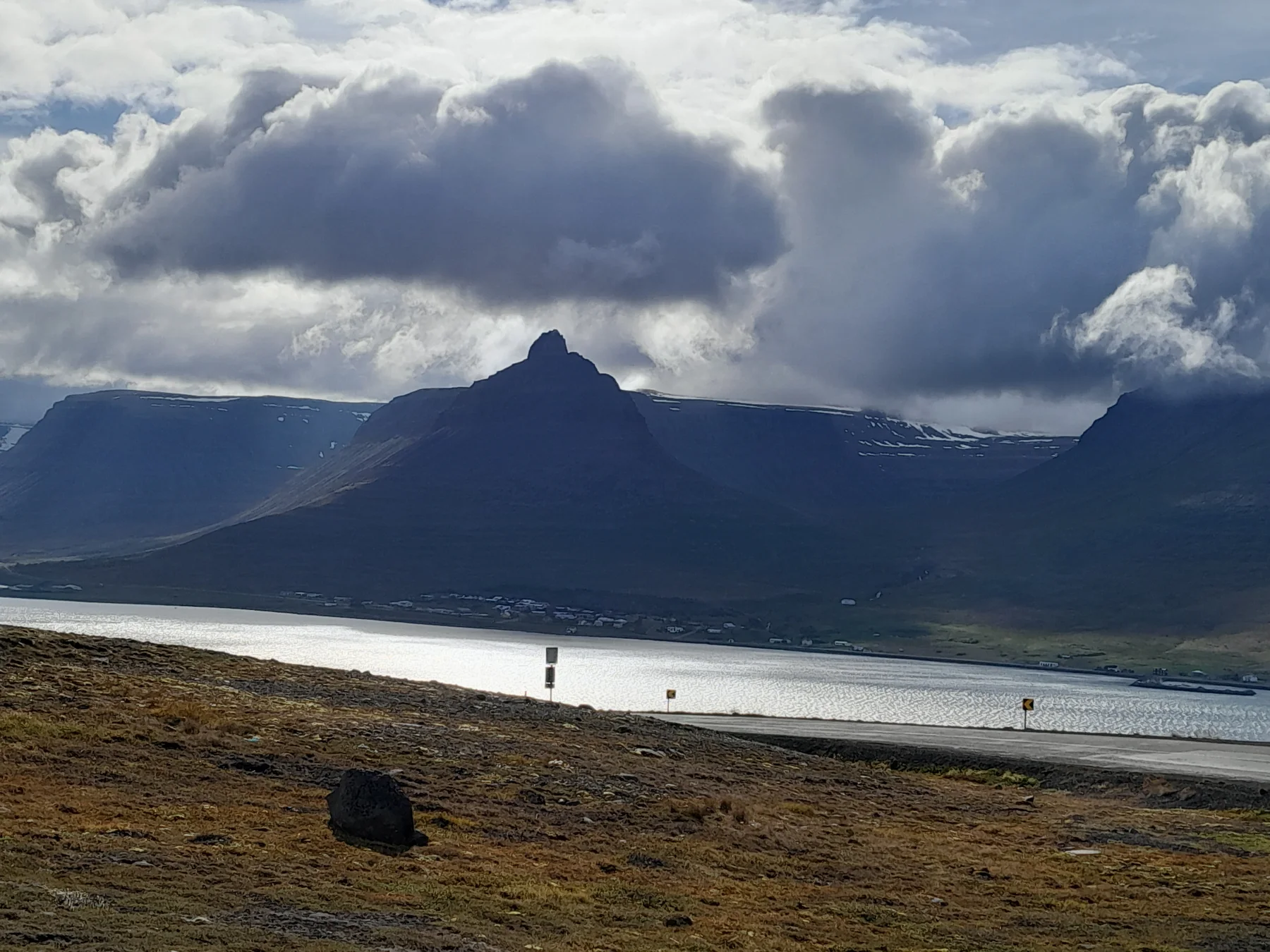
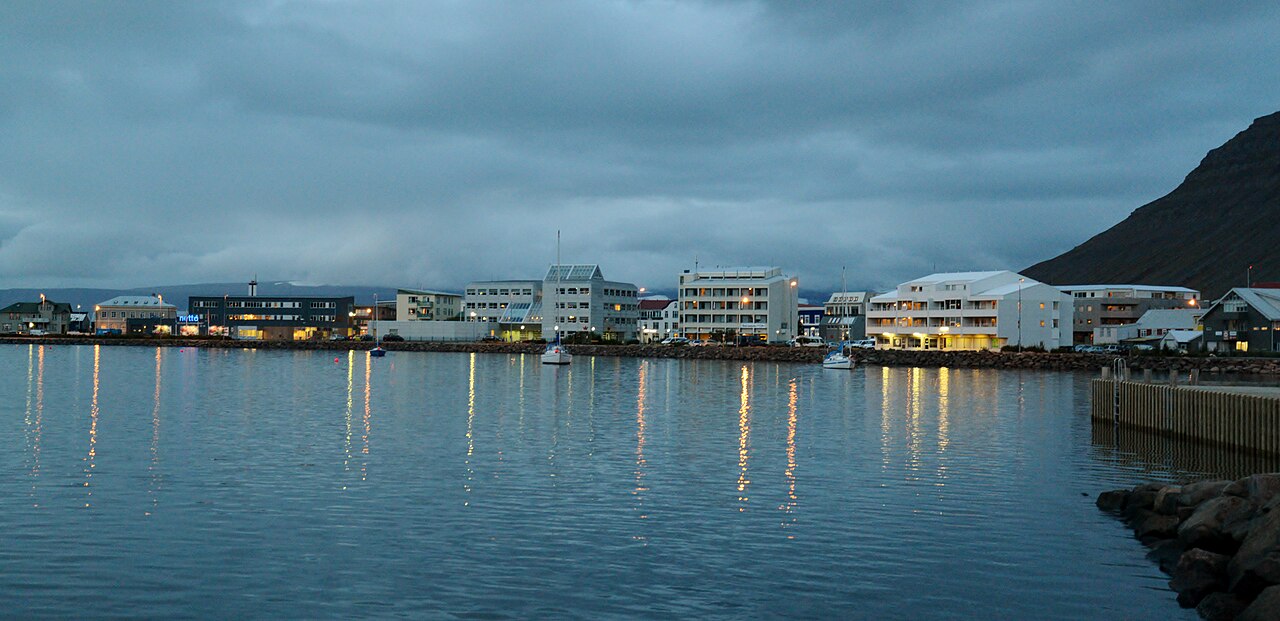
Let the children’s energy set the Westfjords finish line
The Westfjords string together fjords, gravel sections, single-lane bridges and long stretches without signal. A navigation app may show forty minutes; a child experiences forty more minutes without a toilet, a proper walk or a clear sense of arrival. Leave room for that difference before the car starts climbing the next pass.
I divide a day into three observable jobs: one long drive, one sight where everyone can genuinely get out, and one accommodation stop where you can eat and use the toilet. A roadside viewpoint can sit between two longer sections; Dynjandi's path or a cliff walk at Látrabjarg needs extra time for the walk from the parking area, coats and finding a toilet. A child asleep in the car does not count as fully rested: getting out still means adjusting to wind, slopes and cold.
Three signs that the next sight should wait
If two of these signals appear, I would replace the next sight with an early check-in. First, a child no longer wants to get out at each stop, or the car has become unusually quiet; that usually means the planned reserve has gone. Second, the next sight has no toilet and the nearest one is still more than 45 minutes away. Third, tomorrow has a fixed-time commitment, such as boarding the Baldur at Brjánslækur, joining an activity departing from Ísafjörður or reaching the airport by a set time.
There is one especially Westfjords-specific signal: you start persuading yourself that you will “only stay ten minutes”. Látrabjarg is not finished when you reach the parking area; cliff-edge wind, birding spots and the walk back to the car can all extend the visit. Dynjandi is not a one-photo stop either; allow for the return walk from the parking area. If ten minutes is the plan, the children usually end up waiting in the car while the next drive begins at the worst point of the day.
| Situation now | Sound choice | What it protects | Next move |
|---|---|---|---|
| The children are alert and the next stop has a toilet | Complete one short sight | A second return drive | Eat straight after the stop |
| Two long drives are done; wind is strong or rain is starting | Check in early | Toilet time, dinner and sleep | Move the free coastal view to tomorrow |
| You need the Baldur ferry tomorrow morning | Stay near Brjánslækur or Flókalundur | Morning backtracking and late-arrival risk | Sort dinner near the accommodation |
| You have seen Dynjandi but still need to reach a northern base | Keep only one roadside stop | The family's last-hour fatigue | Stay in Ísafjörður and do the town section tomorrow |
Dynjandi day: leave the afternoon loose after the waterfall
Dynjandi suits a day with a full block of daylight. The walk up from the parking area passes several smaller waterfalls, so the path itself is an activity if the children want to walk. In strong wind, on wet ground or when someone needs frequent rests, the foot of the waterfall can be the right turning point. Reaching the very top does not need to be the family's success measure; the priority is a safe descent and enough energy left to reach the accommodation.
After the waterfall, accommodation in Ísafjörður usually brings dinner, a supermarket and toilets together in one base. That helps on a family route staying two nights or more: if the next day's weather rules out a long drive, a town walk or museum can become a lower-effort alternative. Start with the Ísafjörður destination guide, then decide whether it is a rest base or simply a northern transfer point.
If you are staying in Súðavík or driving farther north that night, finish your supplies in Ísafjörður. Once you leave town, options become limited; forgetting water, snacks or a child's medicine can turn a small omission into an evening without a suitable shop. Accommodation is not just about the room rate—it should also prevent another fjord drive after dinner.
Látrabjarg day: keep the sea cliffs and red beach negotiable
Látrabjarg and Rauðasandur are both in the southwest, but whether they fit in one day depends on your base, the tide, wind and road conditions. From Patreksfjörður, visit the more distant sea cliffs first, then decide whether the children have enough left for Rauðasandur. From near Breiðavík, the sights have more breathing room, but dinner and supply options are fewer. Both stops consume time on remote roads; straight-line distance between the sights is not enough.
When children are watching seabirds, give them a clear finish they can understand in the wind. Explain in the car which safe viewpoint you will reach, then return for water and food; do not wait for one bird until everyone is cold. If you are back at the car close to afternoon, return to the accommodation. A Patreksfjörður base simplifies the evening and makes it easier to take Route 60 or head north the next day.
If you are taking the Baldur the following day, an early check-in has extra value. Returning from the remote headland to the Brjánslækur area requires time for fuel, finding food and confirming where to board, in addition to driving. Removing a long evening transfer before an early meeting time often protects the whole Westfjords trip better than another 90 minutes of sunset.
Ferry connections: stay closer the night before
The Baldur ferry connects Stykkishólmur and Brjánslækur. Families travelling with a car need to allow for vehicle check-in, queuing and getting organised again after disembarking; even if the children rest on the boat, they may still need a toilet and a proper breakfast on shore. If the previous evening ends with a sunset at Patreksfjörður and a late return, the next day carries an early start, luggage, driving and the sailing all at once.
For a fixed sailing, prioritise accommodation around Brjánslækur or Flókalundur; travelling north to south, make Ísafjörður or a nearby base your last full evening. This may remove one stretch of coast, but it protects the family from a pre-dawn departure, a toilet hunt on the road and a full-day transport reshuffle after a late arrival. Pair the Westfjords base areas with the Westfjords destination overview and the five-day route.
Choose the accommodation base by tomorrow morning, not tonight's photos
Patreksfjörður works well for a southern day covering Látrabjarg and Rauðasandur, with a return to a place offering basic supplies. Flókalundur suits the nights before or after the ferry, or splitting the southern sights over two days; its value is its position, not a packed evening programme. Ísafjörður suits a rest and resupply after Dynjandi, with northern-fjord activities left for the following day. Work backwards from the first thing you need to do tomorrow.
I add a column to the booking sheet for “latest time the children need to leave the room”. If you must reach the pier by 8:00, calculate the base from the actual drive and a road buffer; if tomorrow is only a town walk, dinner choices and whether the room lets the children sleep properly matter more than being closer to another viewpoint. For ways to divide nights on a long family drive, see how to plan Iceland accommodation nights, then account for the Westfjords' remoteness.
ICENAVI · FAMILY CHECK-IN RULE
One fewer stop today can give you half a day tomorrow
After Dynjandi, checking in directly in Ísafjörður, or returning to Patreksfjörður or Flókalundur after Látrabjarg, puts the route back into a manageable shape. If the children need frequent stops or you have a ferry in the morning, an early check-in is part of the route plan. Use Patreksfjörður, Ísafjörður and the Westfjords overview to assign your accommodation base.
Leave the most road-sensitive night as the one with a cancellation option. A family self-drive in the Westfjords is not a city hotel hop; moving one base can affect the next coast section, ferry and the day's entire drive. If a child is asleep in the back, you have enough water, and the next accommodation is still within an hour on the map, the extra sight may be reasonable. Otherwise, an early check-in keeps tomorrow's options open.
Before booking, also confirm check-in hours, parking and the distance to dinner; remote accommodation may not accept a late arrival. Putting these three details in the itinerary saves more effort than asking at the desk after arrival.
Q&A | Westfjords family driving and early check-in
Can we reach Ísafjörður after Dynjandi?
Yes, if the children still have energy, the road and weather allow it, and you have included the waterfall walk and a toilet stop. If you leave in the afternoon, checking in directly is the steadier choice.
Can Látrabjarg and Rauðasandur fit into one day?
They can from a nearby southern base, but both require time on remote roads. In strong wind, with tired children or a ferry the next morning, keeping one is more sensible.
Where should we stay before the Baldur ferry?
Start with Brjánslækur or Flókalundur, working backwards from the sailing and vehicle check-in time; do not use a normal city-drive estimate.
What do family drivers underestimate most in the Westfjords?
It is not one sight's distance. It is the evening delay created by bends, parking, slopes, toilets and food stops accumulating.
Does an early check-in mean the itinerary has failed?
No. It trades an uncertain night drive for time to sleep, resupply and organise the next day, which matters especially on a remote route.
References
- Baldur Ferry sailing information (sailing and vehicle boarding arrangements).
- Iceland road conditions (check roads and weather on the day of departure).
- Visit Westfjords (regional and sightseeing information).
- OpenStreetMap contributors (map base data).